
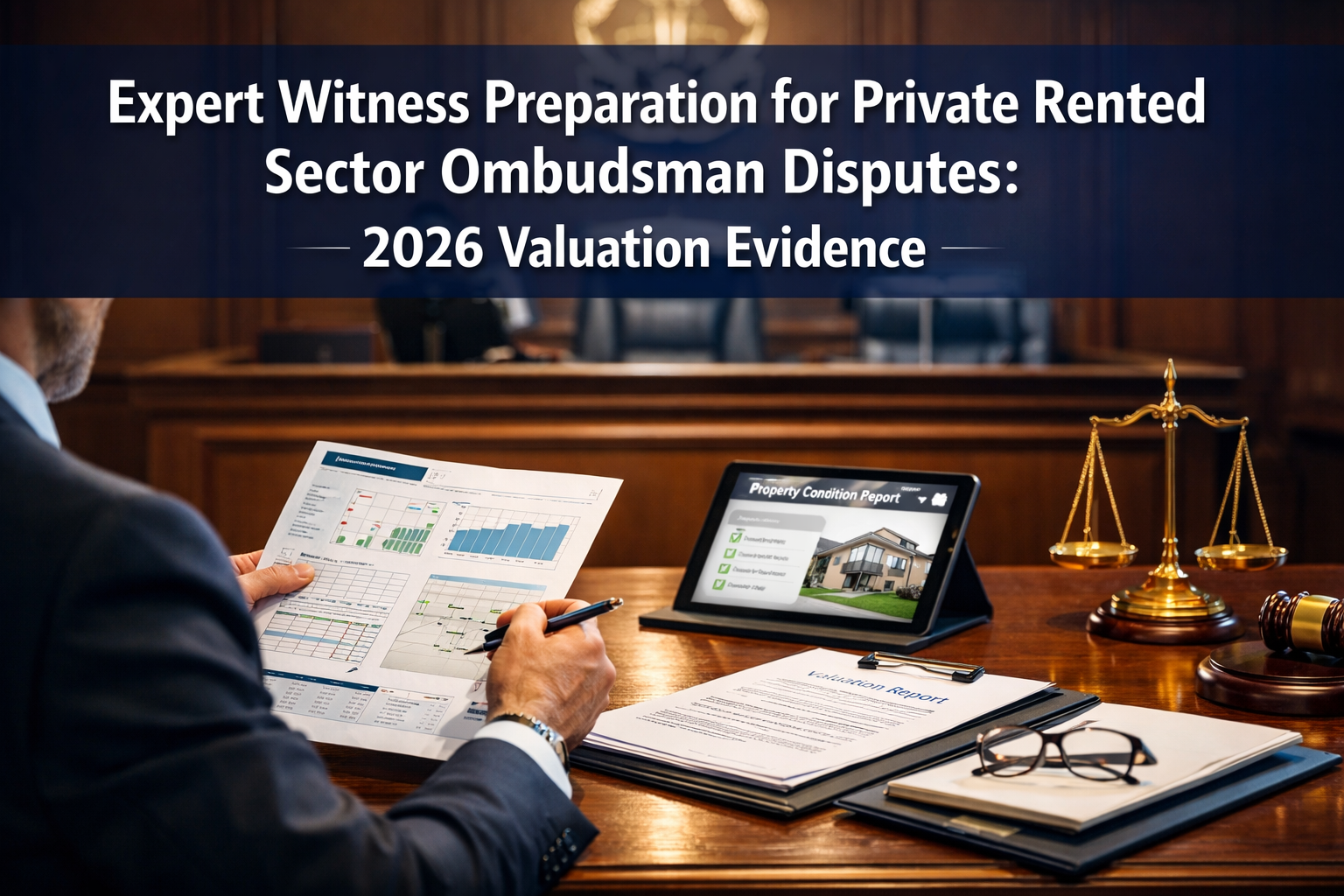
The Private Rented Sector Ombudsman received over 18,000 formal complaints in its first operational year, with property condition and rent disputes accounting for 63% of all cases requiring expert valuation evidence. As the regulatory landscape transforms under the Renters' Rights Act 2026, surveyors face unprecedented scrutiny when preparing expert witness testimony for ombudsman proceedings.
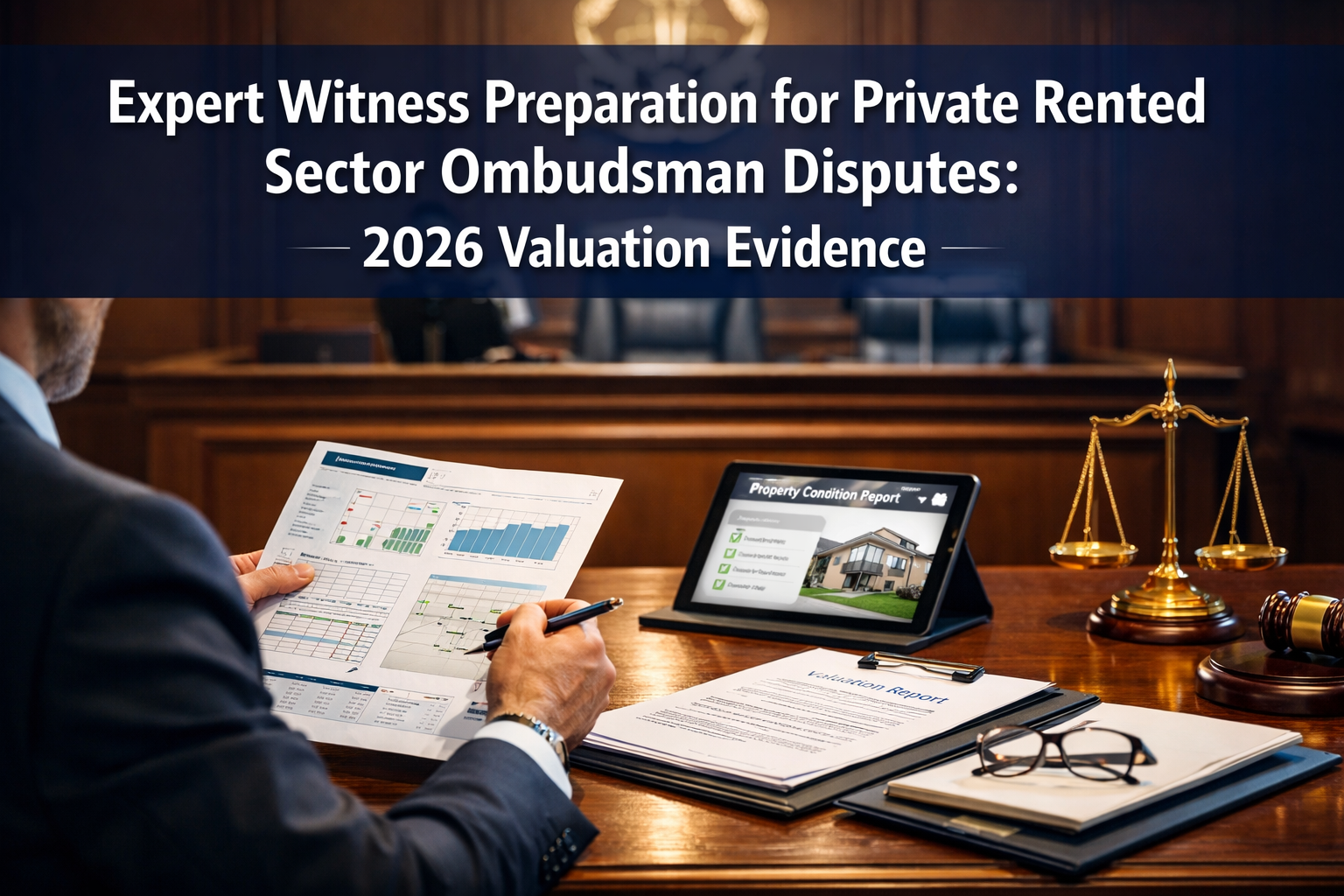
Expert Witness Preparation for Private Rented Sector Ombudsman Disputes: 2026 Valuation Evidence has become a critical competency for RICS-accredited professionals navigating the intersection of property valuation, tenant rights enforcement, and dispute resolution mechanisms. The stakes are high: inadequate preparation can result in testimony exclusion, professional liability claims, and reputational damage. Recent federal appellate decisions in 2026 have already demonstrated how courts exclude expert valuation testimony deemed irrelevant or methodologically unreliable[2].
This comprehensive guide equips surveyors with proven techniques for crafting tribunal-ready expert reports addressing rent disputes, pet damage assessments, and condition compliance failures under the new Ombudsman and Database rules.
Key Takeaways
- Regulatory compliance: The Renters' Rights Act 2026 fundamentally changes valuation methodologies for rental properties, requiring experts to incorporate new compliance standards into every assessment
- Evidence standards: Expert witness reports must meet heightened scrutiny requirements, with clear methodology documentation and RICS-backed valuation accuracy
- Specialized assessments: Pet damage, rent reasonableness disputes, and property condition failures each require distinct valuation approaches and evidence presentation techniques
- Professional liability: Proper preparation protects surveyors from testimony exclusion and maintains professional credibility in ombudsman proceedings
- Documentation protocols: Comprehensive photographic evidence, measurement records, and comparable property data form the foundation of defensible expert opinions
Understanding the Private Rented Sector Ombudsman Framework in 2026
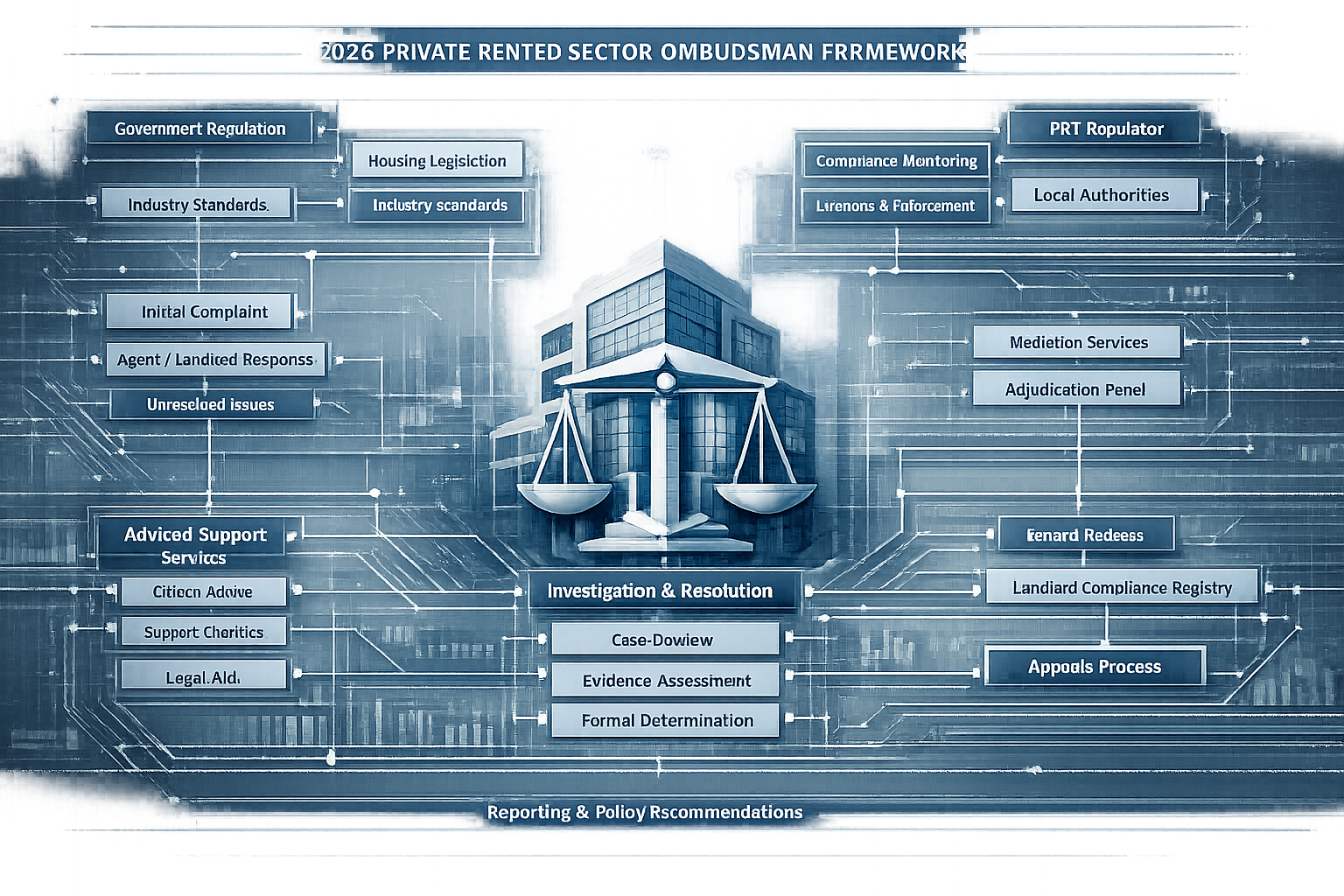
The Private Rented Sector Ombudsman operates as an independent dispute resolution body designed to handle complaints between tenants and landlords without requiring costly court proceedings. In 2026, the ombudsman's jurisdiction has expanded significantly under the Renters' Rights Act, creating new categories of disputes requiring expert valuation evidence.
Key Dispute Categories Requiring Expert Testimony
The ombudsman handles several dispute types where Expert Witness Preparation for Private Rented Sector Ombudsman Disputes: 2026 Valuation Evidence becomes essential:
Rent Reasonableness Disputes 💰
Tenants challenging rent increases or initial rent levels require expert analysis comparing the subject property against comparable rentals in the local market. Surveyors must demonstrate that their valuation methodology accounts for property condition, location amenities, and recent market movements.
Property Condition Failures 🏚️
When landlords fail to maintain properties to required standards, experts must quantify the impact on rental value. This involves assessing the diminution in value caused by disrepair, calculating reasonable compensation amounts, and determining appropriate rent reductions during remediation periods.
Deposit Disputes with Damage Claims 🔍
Landlords claiming excessive wear-and-tear or tenant-caused damage need expert assessment distinguishing normal deterioration from actionable damage. This requires detailed condition analysis, depreciation calculations, and repair cost validation.
Pet Damage Assessments 🐕
With new pet ownership rights under the 2026 legislation, disputes over pet-related property damage have surged. Experts must differentiate between reasonable wear from pet occupation and excessive damage requiring compensation beyond normal deposit deductions.
Our property valuation specialists regularly provide expert testimony in these complex scenarios, ensuring compliance with evolving regulatory standards.
The Ombudsman's Evidence Requirements
The ombudsman expects expert witnesses to provide clear, impartial, and methodologically sound evidence. Unlike court proceedings, ombudsman hearings follow less formal procedures, but this doesn't diminish the quality standards expected from expert testimony[3].
Key requirements include:
- Independence: Experts must demonstrate they serve the tribunal, not the party engaging them
- Transparency: Complete disclosure of methodology, assumptions, and limitations
- Proportionality: Evidence must be appropriate to the dispute's value and complexity
- Accessibility: Reports written in plain language accessible to non-technical readers
- Timeliness: Evidence submitted within prescribed deadlines with no last-minute surprises
Essential Components of Expert Witness Preparation for Private Rented Sector Ombudsman Disputes: 2026 Valuation Evidence
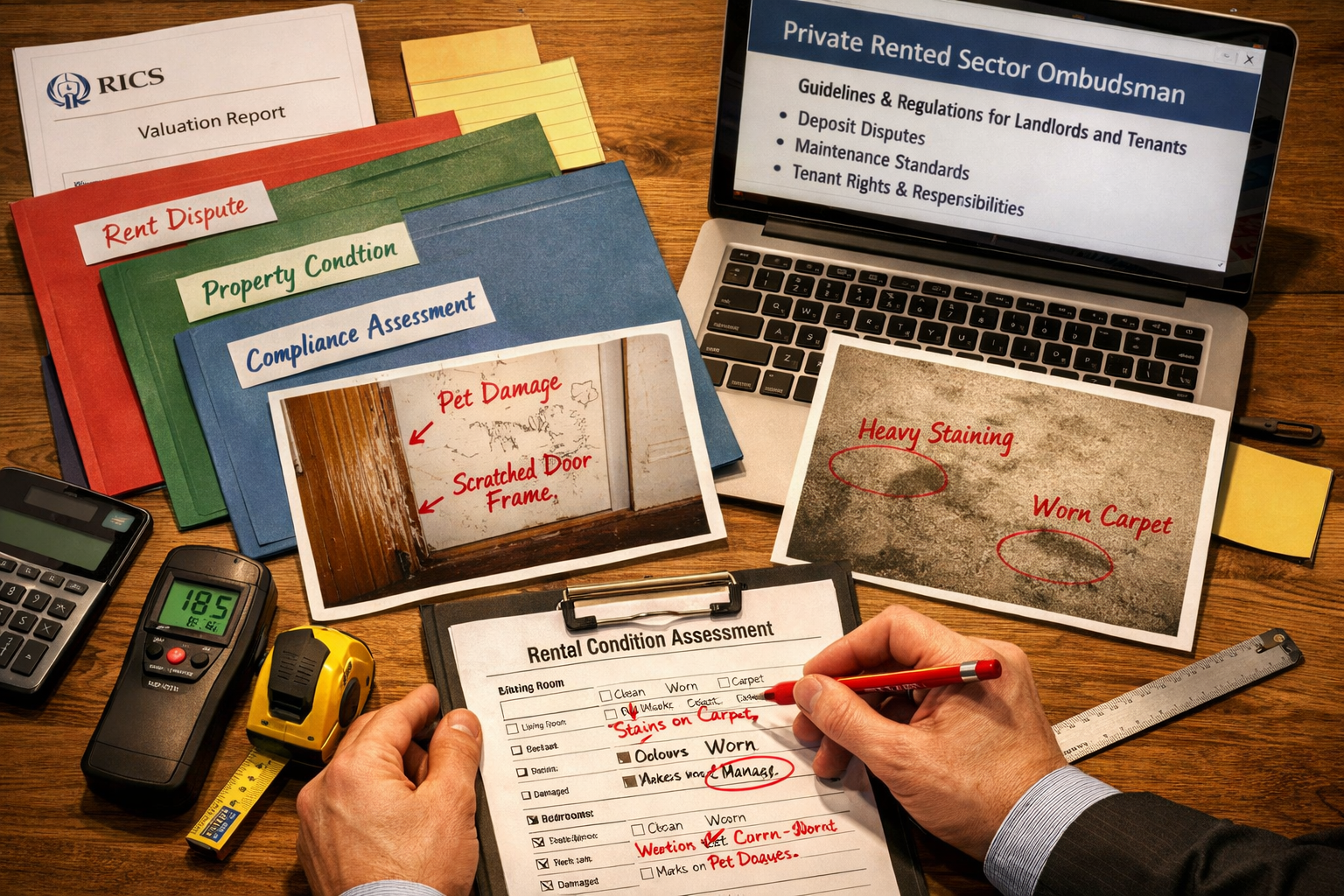
Preparing robust expert evidence requires systematic methodology that withstands cross-examination and alternative expert challenge. The following components form the foundation of credible testimony.
Comprehensive Property Inspection Protocols
Thorough property inspection remains the cornerstone of defensible valuation evidence. In 2026, experts must document conditions with unprecedented detail:
Pre-Inspection Preparation 📋
- Review all tenancy documentation, including inventory reports, check-in/check-out records, and maintenance logs
- Obtain historical photographs and previous inspection reports
- Research local market conditions and identify comparable properties
- Prepare standardized inspection checklists addressing specific dispute issues
On-Site Documentation Standards 📸
- Photograph every room from multiple angles with consistent lighting
- Capture close-up images of all claimed defects or damage
- Use measurement tools to document dimensions, moisture levels, and structural issues
- Record video walkthroughs providing context for still photographs
- Note ambient conditions (temperature, humidity, occupancy status)
Post-Inspection Analysis 🔬
- Compare current condition against baseline documentation
- Identify changes attributable to tenant occupation versus landlord maintenance failures
- Calculate depreciation using industry-standard methodologies
- Quantify repair costs using reliable contractor estimates or pricing databases
Professional house inspection techniques ensure comprehensive documentation that supports expert conclusions.
Valuation Methodology Under the Renters' Rights Act 2026
The Renters' Rights Act 2026 has fundamentally altered how surveyors must assess landlord-tenant compliance issues, triggering significant recalibration of rental property valuations[4]. Experts must now incorporate these regulatory requirements into their valuation methodologies:
Compliance-Adjusted Valuation Approach ⚖️
Traditional rental valuations focused primarily on market comparables. The 2026 framework requires additional compliance layers:
- Baseline Market Valuation: Establish rental value assuming full regulatory compliance
- Compliance Gap Assessment: Identify specific non-compliance issues (safety standards, energy efficiency, maintenance obligations)
- Value Adjustment Calculation: Quantify the rental value impact of each compliance failure
- Temporal Considerations: Account for how long non-compliance has persisted
Comparable Property Selection Criteria 🏘️
Selecting appropriate comparables has become more nuanced under 2026 regulations:
| Selection Factor | Traditional Approach | 2026 Enhanced Approach |
|---|---|---|
| Location | Same neighborhood | Same neighborhood + similar amenity access |
| Property Type | Similar size/bedrooms | Similar size/bedrooms + comparable energy rating |
| Condition | General condition match | Specific compliance status match |
| Tenancy Terms | Similar lease length | Similar lease length + pet policy alignment |
| Age/Quality | Comparable age | Comparable age + safety certification status |
Pet Damage Valuation Methodology 🐾
With expanded pet ownership rights, experts must develop specialized approaches for pet-related damage assessment:
- Normal Wear Analysis: Establish baseline deterioration expectations for pet-occupied properties
- Excessive Damage Identification: Document damage exceeding reasonable pet-related wear
- Repair vs. Replace Decisions: Apply consistent standards for when replacement becomes necessary
- Depreciation Adjustments: Calculate remaining useful life of damaged items before pet occupation
Documentation and Evidence Management
Expert Witness Preparation for Private Rented Sector Ombudsman Disputes: 2026 Valuation Evidence demands meticulous documentation practices that create an audit trail supporting every conclusion.
Evidence Hierarchy Framework 📊
Organize evidence according to reliability and persuasiveness:
- Primary Evidence: Direct property inspection findings, measurements, photographs
- Secondary Evidence: Comparable property data, market reports, rental indices
- Tertiary Evidence: Industry standards, depreciation tables, repair cost guides
- Supporting Evidence: Tenant/landlord statements, maintenance records, correspondence
Digital Evidence Management 💻
Modern expert practice requires robust digital systems:
- Cloud-based evidence repositories with version control
- Metadata-preserved photographs with embedded location and timestamp data
- Searchable PDF reports with hyperlinked cross-references
- Secure sharing platforms for confidential information exchange
- Backup protocols ensuring evidence preservation
Working with experienced building surveyor services ensures proper evidence management throughout the dispute resolution process.
Crafting the Expert Report: Structure and Content Standards
The written expert report serves as the primary vehicle for presenting valuation evidence to the ombudsman. Report quality directly impacts credibility and persuasiveness.
Report Structure and Essential Elements
Executive Summary 📝
Begin with a concise summary (250-300 words) stating:
- The expert's qualifications and independence
- The specific questions addressed
- Principal conclusions with supporting rationale
- Key valuation figures or damage assessments
Instructions and Scope 📋
Clearly document:
- Who engaged the expert and when
- Specific questions or issues to address
- Documents and evidence reviewed
- Site inspection details and access limitations
- Any assumptions or constraints affecting the opinion
Expert Qualifications and Experience 🎓
Establish credibility through:
- Professional qualifications (RICS membership, specialized certifications)
- Relevant experience in rental property valuation
- Previous expert witness experience
- Continuing professional development in 2026 regulatory changes
- Published works or recognized expertise in the field
Factual Background 📄
Present objective facts without opinion:
- Property description and location
- Tenancy history and terms
- Chronology of relevant events
- Condition at tenancy commencement vs. termination
- Maintenance and repair history
Methodology and Approach 🔍
Explain the valuation or assessment methodology:
- Standards and guidance followed (RICS Red Book, industry protocols)
- Comparable selection criteria and analysis
- Depreciation calculations and assumptions
- Repair cost estimation methods
- Adjustments for specific property characteristics
Analysis and Findings 📊
Present detailed analysis supporting conclusions:
- Comparable property data with adjustments
- Condition assessment findings
- Damage quantification and cost calculations
- Rent reasonableness analysis
- Compliance gap identification and impact assessment
Conclusions and Opinion ✅
State clear, unambiguous conclusions:
- Direct answers to instructed questions
- Valuation figures with confidence ranges where appropriate
- Damage assessments with supporting calculations
- Rent adjustment recommendations
- Limitations or qualifications to the opinion
Writing Style and Presentation
Clarity and Accessibility 💡
The ombudsman process serves parties who may lack technical expertise. Experts must:
- Avoid unnecessary jargon or define technical terms when first used
- Use short sentences and paragraphs (grade 7 readability level)
- Include visual aids (photographs, diagrams, comparison tables)
- Highlight key findings with formatting (bold text, bullet points)
- Provide clear logical flow from evidence to conclusion
Objectivity and Balance ⚖️
Maintain impartiality throughout:
- Acknowledge evidence that doesn't support your conclusion
- Present alternative interpretations where reasonable
- Avoid advocacy language or emotional appeals
- Distinguish between facts observed and opinions formed
- Disclose any limitations or uncertainties in the analysis
Professional Presentation ✨
First impressions matter:
- Professional cover page with expert credentials
- Table of contents for reports exceeding 15 pages
- Consistent formatting and numbering systems
- High-quality photographs with clear captions
- Appendices for supporting documentation
- Page numbering and cross-referencing
For guidance on professional surveying standards, consult our resources on why choose RICS surveyors.
Preparing for Oral Testimony and Cross-Examination
While written reports form the foundation of expert evidence, oral testimony often proves decisive in ombudsman proceedings. Preparation for questioning separates competent experts from exceptional ones.
Pre-Hearing Preparation Strategies
Report Mastery 📚
- Reread your report multiple times before the hearing
- Memorize key figures, dates, and conclusions
- Anticipate questions about methodology and assumptions
- Prepare concise explanations for complex technical concepts
- Review all supporting documentation and evidence
Opposing Expert Analysis 🔎
If the other party has engaged an expert:
- Thoroughly analyze their report identifying weaknesses
- Prepare responses to alternative methodologies or conclusions
- Identify areas of agreement and narrow disputes
- Anticipate how opposing counsel might use their expert's evidence
- Prepare questions for cross-examination if permitted
Mock Questioning Sessions 🎭
Practice with colleagues or instructing parties:
- Simulate hostile cross-examination scenarios
- Refine explanations of complex technical matters
- Practice maintaining composure under pressure
- Time responses to ensure conciseness
- Identify verbal habits or weaknesses to address
Effective Testimony Techniques
Direct Examination Best Practices 🗣️
When presenting your evidence:
- Speak to the decision-maker: Address the ombudsman directly, not the questioning party
- Use plain language: Translate technical concepts into accessible explanations
- Reference visual aids: Direct attention to photographs, diagrams, or exhibits
- Maintain measured pace: Speak slowly enough for note-taking
- Show confidence: Project authority through posture, tone, and eye contact
Handling Cross-Examination 🛡️
Cross-examination tests expert credibility and opinion reliability:
- Listen carefully: Ensure you understand the question before answering
- Answer only what's asked: Don't volunteer additional information
- Admit limitations: Acknowledge when something falls outside your expertise
- Don't speculate: If you don't know, say so clearly
- Stay calm: Maintain professionalism even with aggressive questioning
- Correct mischaracterizations: Politely clarify if your evidence is misrepresented
Common Cross-Examination Challenges ⚠️
Be prepared for these typical attack strategies:
-
Qualification challenges: "You've never valued a property in this specific neighborhood, have you?"
- Response: Emphasize transferable skills and general expertise
-
Methodology attacks: "Isn't your approach outdated given the 2026 regulatory changes?"
- Response: Explain how methodology incorporates current standards
-
Bias suggestions: "Your client is paying you £X for this opinion, correct?"
- Response: Affirm independence and duty to the tribunal
-
Alternative interpretation: "Couldn't this damage have been caused by [alternative cause]?"
- Response: Explain why evidence supports your conclusion over alternatives
-
Comparable challenges: "This comparable property isn't really similar, is it?"
- Response: Defend selection criteria and adjustment methodology
Understanding what does a surveyor do helps contextualize the expert's role within broader property assessment practices.
Common Pitfalls and How to Avoid Them
Even experienced surveyors encounter challenges when transitioning to expert witness roles. Awareness of common mistakes enables proactive prevention.
Methodological Errors
Insufficient Comparable Analysis ❌
Using too few comparables or poorly matched properties undermines valuation credibility. Solution: Document at least 3-5 comparable properties with detailed adjustment explanations.
Ignoring 2026 Regulatory Changes ❌
Failing to incorporate Renters' Rights Act 2026 compliance factors into valuations creates vulnerability to challenge[4]. Solution: Systematically assess compliance status and adjust valuations accordingly.
Inadequate Damage Documentation ❌
Relying on limited photographs or superficial inspection notes weakens damage assessments. Solution: Implement comprehensive documentation protocols with multiple photographic angles and detailed condition notes.
Professional Conduct Issues
Advocacy Rather Than Objectivity ⚠️
Crossing the line from expert to advocate damages credibility irreparably. Landmark cases demonstrate how expert testimony can shape outcomes when properly balanced[1]. Solution: Maintain independence, acknowledge contrary evidence, and present balanced analysis.
Scope Creep ⚠️
Offering opinions beyond your expertise or instructions invites challenge. Solution: Clearly define and adhere to your scope, explicitly noting limitations.
Poor Communication ⚠️
Using excessive jargon or failing to explain technical concepts alienates decision-makers. Solution: Write for educated lay readers, define technical terms, use visual aids.
Practical Preparation Failures
Inadequate Time Management ⏰
Rushing report preparation or inspection leads to errors and omissions. Solution: Establish realistic timelines with buffer periods for quality review.
Evidence Organization Problems 📁
Disorganized evidence creates confusion and undermines testimony effectiveness. Solution: Implement systematic evidence management systems with clear indexing.
Insufficient Peer Review 👥
Failing to have colleagues review reports before submission misses opportunities to identify weaknesses. Solution: Build peer review into standard workflow for all expert reports.
For complex disputes, consider engaging specialists through other property services to ensure comprehensive expertise.
Leveraging Technology and Data in 2026 Expert Evidence
Modern expert witness practice increasingly relies on technological tools and data analytics to enhance evidence quality and presentation effectiveness.
Digital Inspection Tools
Advanced Measurement Technology 📐
- Laser distance measurers providing precise dimensions
- Thermal imaging cameras identifying hidden moisture or insulation issues
- Moisture meters documenting damp conditions objectively
- 3D scanning technology creating detailed property models
Photographic Evidence Enhancement 📷
- High-resolution cameras capturing fine detail
- Drone photography for exterior and roof condition assessment
- 360-degree cameras providing immersive property documentation
- Time-stamped and GPS-tagged images ensuring authenticity
Data Analytics and Market Intelligence
Rental Market Data Platforms 📊
Leverage subscription services providing:
- Real-time rental value data by postcode and property type
- Historical rent trend analysis
- Comparable transaction databases
- Market velocity and demand indicators
Depreciation and Cost Databases 💷
Access standardized resources for:
- Building component lifecycle expectations
- Repair and replacement cost benchmarking
- Regional cost variation adjustments
- Inflation-adjusted historical cost data
Compliance Tracking Systems ✅
Utilize databases monitoring:
- Energy Performance Certificate (EPC) requirements and ratings
- Safety certification status and expiration dates
- Local authority enforcement actions and compliance orders
- Regulatory change implementation timelines
Presentation Technology
Visual Evidence Presentation 🖥️
Create compelling presentations using:
- Before-and-after comparison slides
- Annotated photographs highlighting specific defects
- Interactive property condition maps
- Video walkthroughs with voiceover narration
Data Visualization 📈
Transform complex data into accessible formats:
- Rent comparison charts and graphs
- Depreciation curve illustrations
- Cost breakdown pie charts
- Timeline graphics showing condition deterioration
Professional surveyors increasingly rely on these technological advances to deliver more persuasive and defensible expert evidence in ombudsman proceedings.
Continuing Professional Development for Expert Witnesses
Expert Witness Preparation for Private Rented Sector Ombudsman Disputes: 2026 Valuation Evidence requires ongoing education as regulations, market conditions, and best practices evolve.
Essential Training Areas
Regulatory Updates 📚
- Renters' Rights Act 2026 implementation guidance
- Ombudsman procedural rule changes
- RICS Red Book updates and valuation standards
- Building safety and compliance requirements
Technical Skills Development 🔧
- Advanced inspection techniques and technology
- Specialized damage assessment methodologies
- Market analysis and comparable selection refinement
- Report writing and communication skills
Expert Witness Skills ⚖️
- Testimony and cross-examination training
- Ethics and professional conduct workshops
- Report structure and presentation seminars
- Mock tribunal participation exercises
Professional Networks and Resources
RICS Expert Witness Community 🤝
- Specialist expert witness panels and forums
- Practice guidance and technical notes
- Peer support networks and mentoring
- Continuing professional development (CPD) programs
Industry Publications 📰
- Property valuation journals and updates
- Rental market analysis reports
- Legal case summaries and precedent analysis
- Technology and methodology innovations
Local Market Intelligence 🏘️
Maintain current knowledge through:
- Regular market research and comparable analysis
- Networking with local letting agents and property managers
- Monitoring local authority planning and enforcement actions
- Attending property industry events and conferences
For those seeking specialized expertise, our network includes professionals across multiple locations, from Richmond property surveyors to Hammersmith property surveyors, ensuring access to local market knowledge.
Case Studies: Successful Expert Evidence in PRS Ombudsman Disputes
Examining real-world applications illustrates how proper Expert Witness Preparation for Private Rented Sector Ombudsman Disputes: 2026 Valuation Evidence achieves successful outcomes.
Case Study 1: Pet Damage Assessment Dispute 🐕
Background: Landlord claimed £4,200 in pet damage to carpets, walls, and doors. Tenant argued damage was normal wear-and-tear for a three-year tenancy with two small dogs.
Expert Approach:
- Conducted detailed inspection with photographic documentation
- Analyzed carpet wear patterns distinguishing pet damage from general deterioration
- Calculated expected useful life and depreciation for affected items
- Researched comparable properties with similar pet occupation histories
- Prepared detailed cost analysis separating reasonable wear from excessive damage
Outcome: Expert determined £1,800 in excessive damage beyond normal pet-related wear. Ombudsman accepted the expert's analysis, finding the landlord's claim excessive but awarding partial compensation based on the expert's assessment.
Key Success Factors: Objective methodology, clear depreciation calculations, and balanced presentation acknowledging both parties' positions.
Case Study 2: Rent Reasonableness Challenge 💰
Background: Tenant challenged 12% rent increase as excessive given property condition issues including outdated kitchen, poor energy efficiency, and minor disrepair.
Expert Approach:
- Conducted market analysis of comparable properties in the area
- Documented condition issues with photographic evidence
- Calculated value impact of each identified deficiency
- Prepared adjusted valuation reflecting property's actual condition
- Presented clear comparison showing market rent for similar condition properties
Outcome: Expert determined reasonable rent increase of 6% accounting for market movements but adjusting for condition issues. Ombudsman adopted the expert's recommendation, ordering landlord to reduce the increase and address identified deficiencies.
Key Success Factors: Comprehensive comparable analysis, condition-adjusted valuation methodology, and clear presentation of adjustment rationale.
Case Study 3: Condition Deterioration Dispute 🏚️
Background: Landlord claimed tenant caused significant property deterioration. Tenant argued landlord failed to maintain property during five-year tenancy, causing natural deterioration.
Expert Approach:
- Reviewed check-in and check-out inventory reports
- Analyzed maintenance request history and landlord response records
- Conducted detailed condition assessment with component-by-component analysis
- Applied industry-standard lifecycle expectations for building components
- Distinguished tenant-caused damage from landlord maintenance failures
Outcome: Expert identified £2,400 in tenant-caused damage but also £6,800 in landlord maintenance failures. Ombudsman ordered offset, with landlord owing tenant £4,400 plus compensation for diminished enjoyment during disrepair periods.
Key Success Factors: Thorough historical document review, objective application of lifecycle standards, and balanced assessment of both parties' responsibilities.
These cases demonstrate how rigorous methodology and balanced presentation enhance expert credibility and influence ombudsman decisions favorably.
Conclusion
Expert Witness Preparation for Private Rented Sector Ombudsman Disputes: 2026 Valuation Evidence represents a specialized and increasingly critical competency for property surveyors navigating the transformed rental sector regulatory landscape. The Renters' Rights Act 2026 has fundamentally altered how experts must approach valuation evidence, requiring comprehensive understanding of compliance requirements, enhanced documentation standards, and sophisticated assessment methodologies.
Successful expert witness practice demands more than technical valuation skills. It requires meticulous preparation, objective analysis, clear communication, and unwavering professional integrity. Surveyors who invest in developing these competencies position themselves as trusted advisors capable of delivering credible, defensible evidence that withstands scrutiny and influences dispute outcomes.
Actionable Next Steps
For Surveyors Developing Expert Witness Capabilities 🎯
- Enhance qualifications: Pursue RICS expert witness training and specialized rental sector education
- Develop systems: Implement robust inspection protocols and evidence management procedures
- Build experience: Start with smaller disputes to develop skills before tackling complex cases
- Seek mentorship: Connect with experienced expert witnesses for guidance and peer review
- Stay current: Commit to ongoing CPD focusing on regulatory changes and methodology developments
For Property Professionals Engaging Experts 🤝
- Select carefully: Choose experts with relevant qualifications, experience, and demonstrated objectivity
- Instruct clearly: Provide comprehensive documentation and specific questions requiring expert opinion
- Allow adequate time: Ensure realistic timelines for thorough inspection and report preparation
- Respect independence: Avoid pressuring experts toward predetermined conclusions
- Facilitate access: Provide complete property access and all relevant documentation
For Landlords and Tenants in Disputes ⚖️
- Recognize value: Understand that quality expert evidence can resolve disputes efficiently and fairly
- Cooperate fully: Provide experts with complete access and documentation
- Ask questions: Ensure you understand the expert's methodology and conclusions
- Consider early engagement: Expert input during negotiations may prevent formal ombudsman proceedings
- Respect expertise: While you may disagree with conclusions, recognize the expert's professional judgment
The evolving Private Rented Sector regulatory framework creates both challenges and opportunities for property professionals. Those who master Expert Witness Preparation for Private Rented Sector Ombudsman Disputes: 2026 Valuation Evidence will find themselves in high demand as essential contributors to fair and efficient dispute resolution.
By combining rigorous methodology, comprehensive documentation, clear communication, and unwavering objectivity, expert witnesses serve the critical function of bringing technical clarity to complex property disputes—ultimately ensuring that ombudsman decisions rest on solid evidentiary foundations rather than speculation or advocacy.
Whether you're preparing your first expert report or refining established practices to meet 2026's enhanced standards, commitment to excellence in expert witness preparation protects your professional reputation while serving the broader goal of fair dispute resolution in the private rented sector.
For professional surveying services and expert guidance on complex property matters, explore our comprehensive range of surveying and valuation services designed to meet the evolving needs of the 2026 property landscape.
References
[1] Leasing Expert Witness Testimony Shapes Outcome In Emmons V Jesso A Landmark Expert Witness Case – https://www.expertwitnessblog.com/leasing-expert-witness-testimony-shapes-outcome-in-emmons-v-jesso-a-landmark-expert-witness-case/
[2] Valuation And Litigation Briefing March April 2026 – https://wm-cpa.com/accounting-insight/valuation-and-litigation-briefing-march-april-2026/
[3] Expert Witness Testimony – https://steinsperling.com/areas-of-interest/expert-witness-testimony/
[4] Valuation Adjustments For Renters Rights Act 2026 How Building Surveyors Must Assess Landlord Tenant Compliance – https://nottinghillsurveyors.com/blog/valuation-adjustments-for-renters-rights-act-2026-how-building-surveyors-must-assess-landlord-tenant-compliance
[5] Expert Witness Roles In 2026 Building Safety Act Disputes Evidence Standards For Mid Rise Residential Blocks – https://nottinghillsurveyors.com/blog/expert-witness-roles-in-2026-building-safety-act-disputes-evidence-standards-for-mid-rise-residential-blocks