


More than 40% of UK home extension projects trigger party wall procedures, yet most homeowners discover this requirement only after their builder breaks ground—often resulting in costly work stoppages and neighbour disputes that could have been prevented with proper advance planning. Understanding Party Wall Awards in Practice: Drafting, Negotiating, and Enforcing for UK Home Extensions transforms what seems like bureaucratic red tape into a protective framework that safeguards both your investment and your relationship with neighbours.
The Party Wall etc. Act 1996 creates a statutory process that many find confusing, but when executed correctly, it prevents the injunctions, court battles, and relationship breakdowns that plague poorly managed extension projects. This comprehensive guide walks through the complete lifecycle of party wall awards—from initial notice service through post-construction inspections—revealing how experienced surveyors navigate this process to keep projects on track.
Key Takeaways
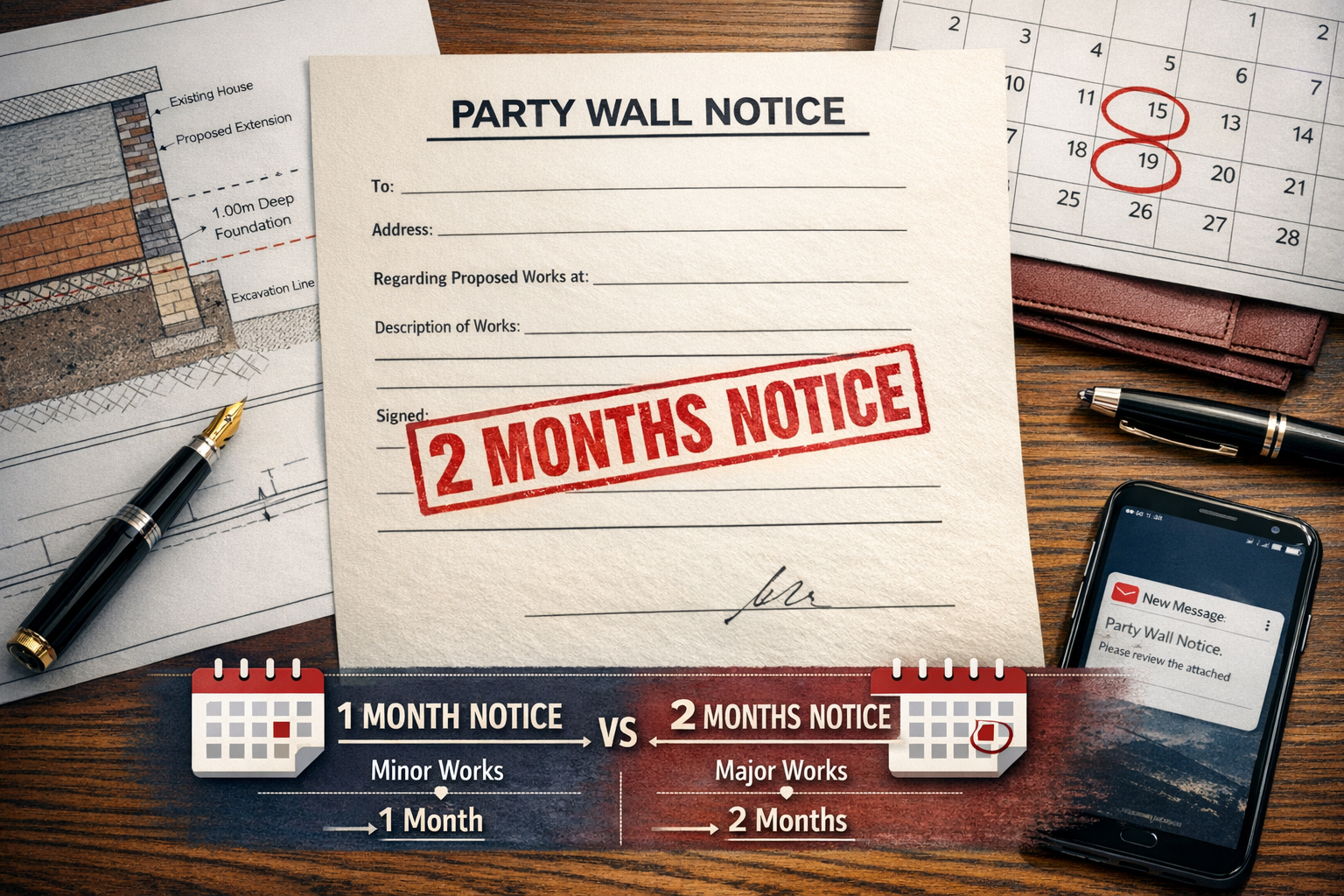
- Notice timing matters critically: Serve party wall notices 2 months before building work or 1 month before excavation—failure to comply can result in injunctions halting your entire project [1]
- Awards protect all parties: Properly drafted Party Wall Awards include schedules of condition with photographic evidence, creating legal protection against false damage claims
- Surveyor independence is non-negotiable: The appointed surveyor must remain independent from your project team to maintain credibility and enforceability
- Response deadlines drive the process: Neighbours have just 14 days to respond to notices, after which the surveyor appointment process begins automatically
- Appeals remain available: Both parties retain 14-day appeal rights to County Court if they disagree with award terms or conditions
Understanding the Legal Framework for Party Wall Awards
The Party Wall etc. Act 1996 applies exclusively to England and Wales, creating a statutory framework that governs building work affecting shared walls, boundaries, and nearby excavations [1]. Scotland and Northern Ireland operate under different legal systems without equivalent statutory protection, making this distinctly English and Welsh legislation.
When Party Wall Procedures Apply to Extensions
Three specific scenarios trigger mandatory party wall procedures for home extensions:
🏗️ Building on or near the party wall: Any work directly affecting the shared wall structure, including inserting damp proof courses, cutting into the wall for beams, or raising the wall height for loft conversions [1].
🔨 Excavation within 3-6 metres: Foundation digging for extensions within 3 metres of a neighbour's structure (when going deeper than their foundations) or within 6 metres (when excavating within a 45-degree plane from the bottom of their foundations) [1].
🧱 New boundary walls: Constructing new walls directly on the boundary line, even when not attached to existing structures.
Many homeowners mistakenly believe party wall procedures only apply to attached properties. In reality, detached houses frequently require party wall notices when excavating foundations for side or rear extensions near boundary lines.
The Notice Period Requirements
The Act establishes clear timelines that cannot be shortened without neighbour agreement:
| Work Type | Required Notice Period | Maximum Advance Notice |
|---|---|---|
| Building work on party wall | 2 months | 12 months |
| Excavation near boundaries | 1 month | 12 months |
| New boundary wall | 1 month | 12 months |
Strategic homeowners serve notices at the maximum advance period, allowing time to resolve disputes before construction schedules become fixed [1]. This forward planning proves particularly valuable when dealing with neighbours who travel frequently or require extended consideration time.
For more background on the statutory framework, see our detailed guide on the Party Wall Act 1996.
The Party Wall Award Drafting Process: Essential Components
Once a neighbour receives notice, they face a critical 14-day decision window [1]. If they dissent or fail to respond, the formal party wall award process begins—a structured procedure that results in a legally binding document governing how work proceeds.
Appointing the Right Surveyor
The surveyor appointment determines whether the process runs smoothly or becomes contentious. Three appointment scenarios exist:
Agreed Surveyor: Both parties jointly appoint a single surveyor who acts impartially for both sides. This proves most cost-effective but requires mutual trust.
Two Surveyors: Each party appoints their own surveyor, who then jointly prepare the award. These surveyors must agree on a "Third Surveyor" to resolve any disputes between them.
Deemed Appointment: If the neighbour fails to respond within 14 days, the building owner can appoint a surveyor on their behalf—though this surveyor must still act impartially [1].
Critical Independence Requirement: The appointed surveyor cannot be the same professional already advising on your building project. Using your architect or structural engineer as the party wall surveyor destroys perceived impartiality and undermines the award's credibility [1].
Understanding party wall surveyor fees helps budget appropriately for this essential professional service.
Conducting the Schedule of Condition
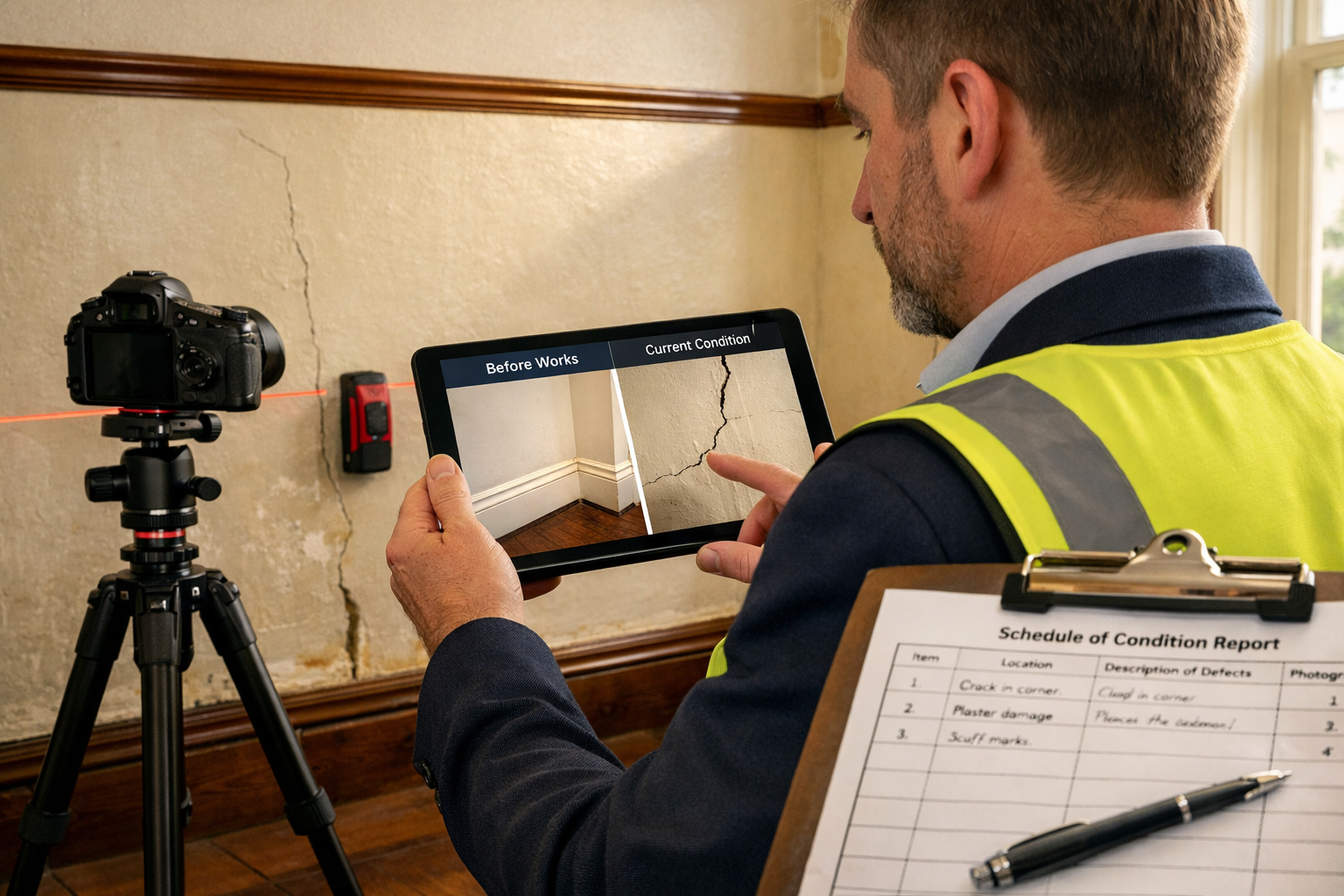
Before any work commences, the surveyor must document the neighbouring property's existing condition through a comprehensive schedule of condition. This critical document includes:
- Detailed photographic evidence of all rooms, walls, ceilings, and external elevations
- Written descriptions of existing cracks, settlement, decorative condition, and structural features
- Measurements of any existing defects or movement
- Video documentation for particularly complex or valuable properties
This schedule serves dual protective purposes. For building owners, it prevents neighbours from falsely attributing pre-existing damage to construction work. For neighbours, it creates baseline evidence proving any deterioration caused by the works [1].
Experienced surveyors photograph everything—even minor hairline cracks or cosmetic imperfections—because disputes often arise months after work completion when memories fade and positions harden.
Drafting the Award Document
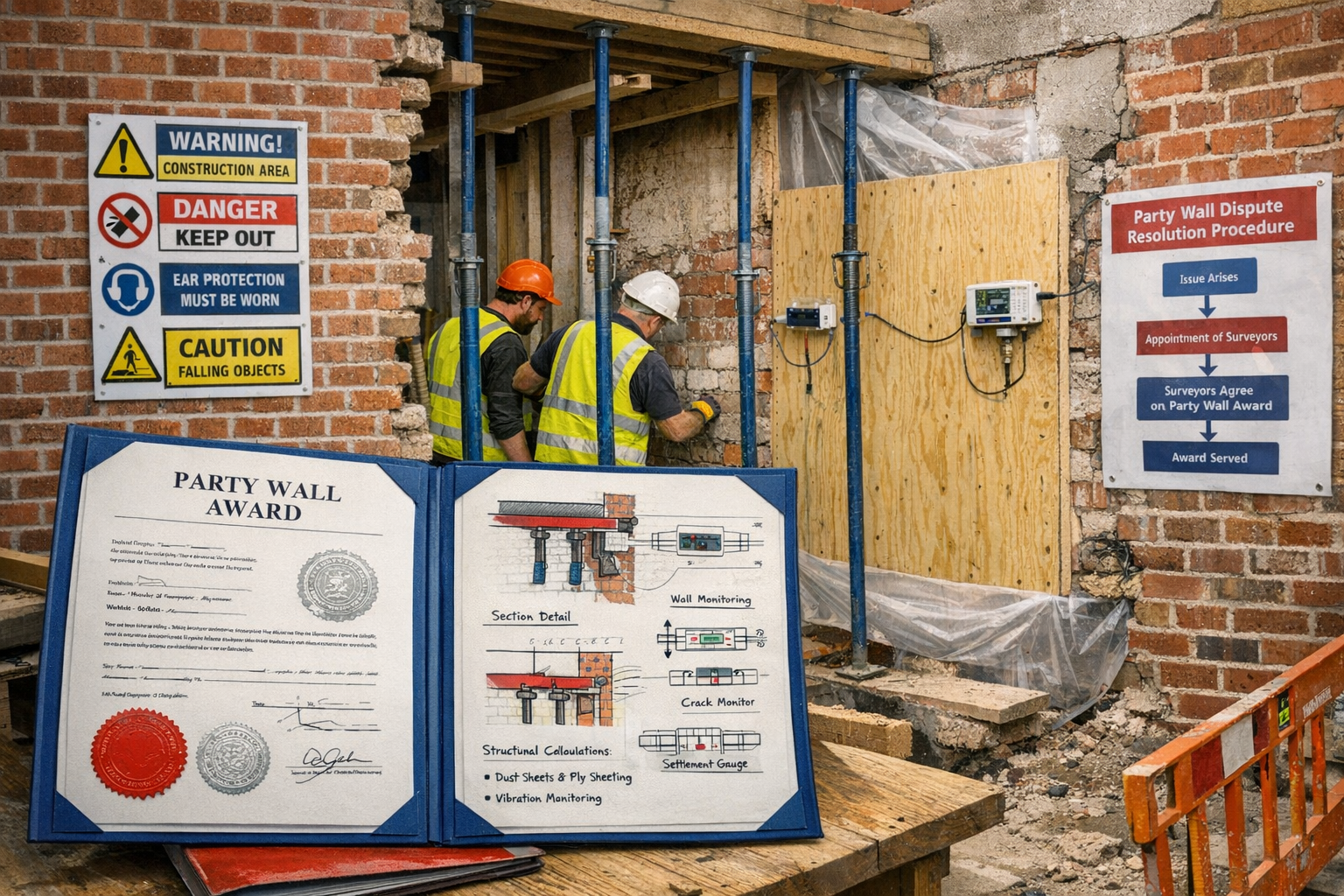
The Party Wall Award itself constitutes a legally binding document that must include:
📋 Detailed Work Description: Precise specifications of all proposed works affecting the party wall or requiring excavation, including depths, methods, and structural alterations.
⏰ Working Hours and Access: Specific times when work may occur, access arrangements to neighbouring property if required, and advance notice requirements for particularly disruptive activities.
🛡️ Protective Measures: Required structural supports, vibration monitoring, dust control, and other measures protecting the neighbouring property during construction.
💰 Cost Allocation: Clear statement of who pays surveyor fees (typically the building owner pays all reasonable costs, including the neighbour's surveyor fees).
📸 Schedule of Condition: The photographic and written record attached as a formal schedule to the award.
🔍 Inspection Rights: The surveyor's right to inspect work progress and the neighbouring property to monitor for damage.
⚖️ Dispute Resolution: Procedures for addressing disagreements during work execution, including the Third Surveyor's role.
Well-drafted awards anticipate potential problems and establish clear procedures for resolution before disputes escalate. For comprehensive information on the agreement process, review our guide to party wall agreements.
Negotiating Party Wall Awards: Practical Strategies
Negotiation occurs at multiple stages—from initial notice through final award terms. Understanding negotiation leverage and common sticking points prevents unnecessary delays and maintains neighbourly relations.
Managing the Initial Notice Response
The 14-day response window creates the first negotiation opportunity [1]. Neighbours can:
- Consent in writing: Eliminating the need for surveyors and awards entirely
- Dissent or not respond: Triggering the formal surveyor appointment process
- Request modifications: Proposing alternative working methods or protective measures
Smart building owners accompany formal notices with friendly explanatory letters, project visualizations, and offers to discuss concerns. This personal approach often secures written consent, saving thousands in surveyor fees and weeks in timeline.
When neighbours express concerns about specific aspects—noise during school holidays, access disruptions, or structural safety—addressing these proactively in the notice or accompanying letter demonstrates good faith and often prevents formal dissent.
Common Negotiation Points in Award Terms
Even after surveyors are appointed, negotiation continues around specific award provisions:
Working Hours: Neighbours frequently request restrictions beyond standard 8am-6pm weekdays, particularly for noisy excavation or demolition phases. Reasonable compromises might include:
- Later start times (9am) on weekends if weekend work is essential
- Advance notice for particularly disruptive activities
- Complete restrictions during specific family events or exam periods
Access Requirements: When work requires temporary access to neighbouring property (for scaffolding, structural support installation, or external wall repairs), negotiations address:
- Specific access dates and duration
- Supervision requirements (must the neighbour be present?)
- Making good any damage to gardens, driveways, or access routes
- Insurance coverage for access-related incidents
Protective Measures: Neighbours may request enhanced protection beyond standard requirements:
- Vibration monitoring equipment with agreed trigger levels for work stoppage
- Additional structural supports or underpinning
- Dust barriers and air quality monitoring
- More frequent progress inspections by the surveyor
Financial Security: In high-value properties or complex works, neighbours sometimes request:
- Advance payment into escrow for potential damage repairs
- Enhanced insurance coverage with them named as additional insured
- Personal guarantees from the building owner beyond standard contractor insurance
Experienced surveyors balance these requests against reasonableness and proportionality. Excessive demands that would make the project economically unviable can be challenged, but reasonable protective measures should be accommodated.
The Role of 2026 Compliance Developments
Recent infrastructure developments have influenced party wall practice standards. Northern England's 2026 infrastructure expansion has established new norms for documentation and compliance, particularly for larger projects [2]. While residential extensions operate at smaller scale, these evolving standards inform best practices around:
- Enhanced photographic documentation using 360-degree cameras
- Digital condition monitoring with timestamped evidence
- More detailed structural calculations for excavation near boundaries
- Improved communication protocols with affected neighbours
Additionally, 2026 net zero mandates are creating new party wall considerations, particularly where home extensions incorporate EV charging infrastructure or heat pump installations that may affect neighbouring properties [3]. Surveyors increasingly address these modern building elements in award drafting.
For professional surveyor services navigating these complexities, explore our party wall surveyor offerings.
Enforcing Party Wall Awards During Construction
The award's value depends entirely on effective enforcement. Without proper monitoring and intervention when problems arise, even well-drafted awards fail to protect either party.
Surveyor's Monitoring Role
The appointed surveyor maintains oversight responsibilities throughout construction:
🔍 Progress Inspections: Regular site visits (typically at key stages: excavation completion, foundation pour, party wall work, and project completion) to verify compliance with award terms.
📊 Condition Monitoring: Periodic inspections of the neighbouring property to identify any damage or movement attributable to the works, comparing against the original schedule of condition.
⚠️ Intervention Authority: Power to halt work immediately if it deviates from award specifications or threatens damage to neighbouring property.
📝 Additional Awards: Authority to draft supplementary awards if work scope changes during construction, ensuring the legal framework adapts to project evolution [1].
Common Enforcement Challenges
Real-world construction rarely proceeds exactly as planned. Typical enforcement scenarios include:
Scope Creep: The builder discovers additional work requirements (unexpected soil conditions requiring deeper excavation, structural issues requiring more extensive wall work). The surveyor must assess whether these changes require a revised award and additional neighbour notification.
Damage Claims: The neighbour reports new cracks or damage allegedly caused by construction. The surveyor compares against the schedule of condition, assesses causation, and determines responsibility. Pre-work photographic evidence proves invaluable in these disputes.
Working Hours Violations: Contractors start early or work late, violating award restrictions. The surveyor must enforce compliance, potentially requiring work stoppages or financial penalties.
Access Disputes: Contractors need temporary access to neighbouring property not specified in the original award. The surveyor negotiates additional access terms and ensures proper compensation.
Inadequate Protection: The surveyor identifies insufficient structural support, dust control, or vibration management. They have authority to require enhanced measures before work continues.
The Appeals Process
Both parties retain appeal rights if they disagree with surveyor decisions or award terms. The appeals framework includes:
- 14-day appeal window from award service to file County Court appeal [1]
- Third Surveyor resolution for disputes between two appointed surveyors before court involvement
- Court costs risk discouraging frivolous appeals (losing party typically pays all legal costs)
Appeals remain relatively rare because experienced surveyors draft balanced awards that courts would likely uphold. The threat of court costs also encourages reasonable negotiation rather than litigation.
Understanding the costs involved in party wall agreements helps parties assess whether appeals make financial sense compared to accepting surveyor decisions.
Post-Construction: Final Inspections and Making Good
The party wall process doesn't end when construction completes. Final procedures ensure all obligations are fulfilled and relationships are properly concluded.
Final Condition Survey
The surveyor conducts a comprehensive final inspection of the neighbouring property, comparing current condition against the original schedule. This inspection identifies:
- Any damage attributable to the construction work
- Pre-existing defects that have worsened during construction
- Areas requiring making good or repair
- Confirmation that no damage occurred (the ideal outcome)
This final survey should occur promptly after construction completion, before memories fade and before any intervening events could cause confusion about causation.
Making Good Obligations
When damage is identified and attributed to the works, the building owner must "make good" the damage. This obligation includes:
Structural Repairs: Fixing any cracks, movement, or structural damage caused by excavation, vibration, or direct work on the party wall.
Decorative Restoration: Repairing and redecorating affected areas to match the pre-existing condition (not necessarily improving beyond original condition).
External Repairs: Addressing any damage to gardens, driveways, boundary treatments, or external walls.
Consequential Damage: Repairing secondary damage caused by the primary works (water damage from disturbed drainage, for example).
Disputes frequently arise over making good standards. The neighbour may demand complete room redecoration when only a small area was damaged. The building owner may offer minimal patch repairs when more extensive work is reasonable. The surveyor's role includes determining appropriate making good scope based on the schedule of condition evidence.
Releasing the Award
Once all making good is completed to the surveyor's satisfaction, the award obligations are discharged. However, the award document and schedule of condition should be retained permanently because:
- Future property sales may require disclosure of party wall works
- Disputes can arise years later about long-term settlement or movement
- The schedule of condition protects against future unfounded claims
For properties undergoing extensive renovation, consider comprehensive building surveys before and after major works to document overall property condition beyond party wall issues.
Preventing Disputes: Best Practices for Homeowners
Prevention proves far more effective than enforcement. These practical strategies minimize party wall disputes:
🗣️ Communicate Early and Often: Discuss extension plans with neighbours before serving formal notices. Personal relationships matter enormously in dispute prevention.
📸 Document Everything: Take your own photographs before work begins, even if the surveyor will do the same. Multiple evidence sources strengthen your position if disputes arise.
💼 Hire Experienced Professionals: Choose builders familiar with party wall requirements who won't trigger unnecessary neighbour concerns through poor site management.
⏰ Respect Award Terms: Strictly comply with working hours, access restrictions, and protective measures. Small violations erode trust and invite retaliation.
💰 Budget Appropriately: Understand the cost of party wall surveyors and include these fees in project budgets from the outset.
🤝 Be Reasonable: When neighbours request reasonable modifications to work methods or timing, accommodate where possible. Goodwill pays dividends throughout the project.
📞 Maintain Contact: Keep neighbours informed of project progress, expected noisy phases, and completion timeline. Regular updates prevent anxiety and complaints.
Regional Considerations Across London and Beyond
Party wall practice varies somewhat across different London boroughs and UK regions based on local building density, property values, and enforcement cultures.
High-Value Areas (Chelsea, Knightsbridge, Marylebone): Expect more detailed schedules of condition, higher surveyor fees, and more protective award terms reflecting property values. Our Chelsea property surveyors and Knightsbridge surveyors specialize in these demanding environments.
Dense Urban Areas (Clerkenwell, Wimbledon, Chiswick): Terraced properties and close building proximity mean most extensions trigger party wall procedures. Local surveyors in Clerkenwell, Wimbledon, and Chiswick handle high volumes of residential extension awards.
Suburban Areas (Barnet, Enfield, Wembley): More detached properties mean fewer party wall triggers, but excavation notices for extensions near boundaries remain common. Regional surveyors in Barnet, Enfield, and Wembley adapt approaches to local building patterns.
Understanding local practices and typical award terms in your area helps set realistic expectations for the process timeline and requirements.
Conclusion
Party Wall Awards in Practice: Drafting, Negotiating, and Enforcing for UK Home Extensions represents a protective legal framework that, when properly executed, prevents the disputes, injunctions, and relationship breakdowns that plague poorly managed extension projects. The process transforms from bureaucratic obstacle to valuable safeguard when homeowners understand the complete lifecycle from notice service through post-construction making good.
Success requires recognizing that party wall procedures exist to protect both parties—not as obstacles to construction, but as structured frameworks ensuring work proceeds safely while preserving neighbouring properties and relationships. The schedule of condition provides objective evidence preventing false claims, while the award document establishes clear expectations and procedures for addressing problems before they escalate to litigation.
Your Next Steps
If you're planning a home extension that may trigger party wall requirements:
- Assess applicability at least three months before your planned construction start date
- Consult experienced party wall surveyors to understand specific requirements for your project
- Communicate with neighbours before serving formal notices to build goodwill
- Budget appropriately for surveyor fees, typically £700-£1,500 per neighbour for straightforward residential extensions
- Serve notices at the required 1-2 month minimum (or earlier for complex projects)
- Comply strictly with award terms throughout construction to maintain legal protection
The investment in proper party wall procedures—both financial and time—proves minimal compared to the cost of injunctions halting construction, court battles over damage claims, or permanently damaged neighbour relationships that affect your daily quality of life and future property value.
For expert guidance on party wall awards for your specific extension project, contact experienced chartered surveyors who understand both the legal requirements and the practical realities of maintaining good neighbour relations throughout the construction process.
References
[1] Party Wall Agreement – https://hoa.org.uk/advice/guides-for-homeowners/i-am-improving/party-wall-agreement/
[2] Party Wall Surveys For Liverpool Infrastructure Megaprojects 2026 Compliance Amid Northern Growth – https://nottinghillsurveyors.com/blog/party-wall-surveys-for-liverpool-infrastructure-megaprojects-2026-compliance-amid-northern-growth
[3] Party Wall Surveys For Ev Infrastructure Retrofits Compliance Amid 2026 Net Zero Mandates And Neighbour Disputes – https://nottinghillsurveyors.com/blog/party-wall-surveys-for-ev-infrastructure-retrofits-compliance-amid-2026-net-zero-mandates-and-neighbour-disputes









