


"

The artificial intelligence revolution has transformed data centres from mere infrastructure into the most sought-after commercial property class in the United Kingdom. As global tech giants pour an estimated US$660 billion into data centre infrastructure in 2026[6], surveyors face unprecedented challenges in accurately valuing these complex assets. With London's data centre vacancy rate projected to hit a record low of 5.9% by end of 2026[2], understanding Valuation Techniques for Data Centre Investments: Surveyor Strategies in the UK's 2026 AI Boom has become essential for professionals navigating this white-hot market.
The stakes have never been higher. Small measurement errors or incorrect plant classifications can translate into millions in valuation discrepancies, directly impacting investor returns and operational budgets. This article explores the specialized methodologies, regulatory frameworks, and market dynamics that define data centre valuations in 2026's AI-driven landscape.
Key Takeaways
- 🏢 London dominates with over 80% of UK data centre supply, creating concentrated valuation comparables and market-specific methodologies
- 📊 Dual valuation approach combining rental evidence with cost-based assessment is critical for accurately valuing complex plant and machinery components
- ⚡ AI workload demands require surveyors to assess power capacity (measured in megawatts) as a primary value driver alongside traditional square footage
- 📅 2026 business rates revaluation (effective 1 April 2026) introduces new multipliers that materially impact net operating income projections
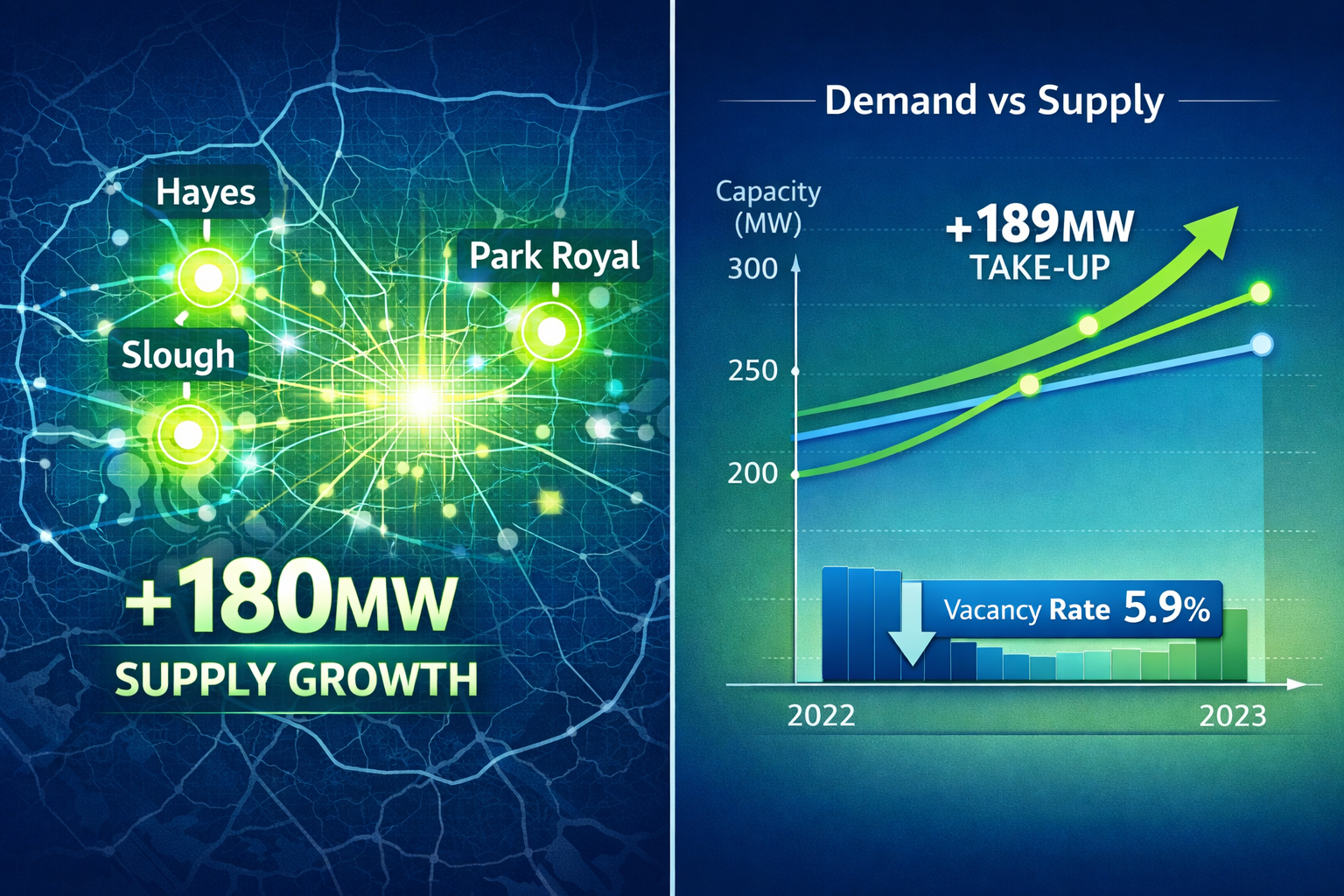
- 🎯 Supply-demand imbalance continues with 189MW take-up forecast against 180MW new supply, creating valuation premiums in tight markets

Understanding Data Centre Asset Complexity in 2026
What Makes Data Centres Different from Traditional Commercial Property?
Data centres represent a fundamentally different asset class compared to conventional warehouses, offices, or retail spaces. These facilities house critical digital infrastructure that powers everything from cloud computing to AI model training. The UK Data Center Industry is projected to reach $15.23 billion by 2025, growing at a compound annual growth rate (CAGR) of 23.7%[3], reflecting the sector's explosive expansion.
The complexity stems from several unique characteristics:
Power Infrastructure 🔌 – Modern data centres require massive electrical capacity to support high-density AI workloads. Power is measured in megawatts (MW) rather than traditional square footage, fundamentally changing how surveyors assess value. A facility's power capacity often matters more than its physical size.
Plant and Machinery Components – Data centres contain extensive rateable and non-rateable plant and machinery items including cooling systems, backup generators, uninterruptible power supplies (UPS), fire suppression systems, and specialized HVAC equipment. The Valuation Office Agency guidance recognizes this complexity, requiring surveyors to employ sophisticated categorization methods[1].
Operational Intensity – Unlike passive real estate investments, data centres operate 24/7 with significant ongoing operational expenditure. Cooling, power consumption, and maintenance costs directly impact net operating income calculations.
Technological Obsolescence Risk – Rapid technology advancement means equipment can become outdated faster than traditional building components, affecting depreciation schedules and residual value assumptions.
For professionals seeking comprehensive property assessment expertise, understanding these distinctions is foundational to accurate valuation work.
The RICS Framework for Specialized Property Valuation
The Royal Institution of Chartered Surveyors (RICS) provides the professional framework that governs data centre valuations in the UK. RICS surveyors apply standardized methodologies while adapting to the unique characteristics of technology infrastructure.
The Red Book Valuation Standards require surveyors to:
- Clearly define the purpose and basis of valuation
- Identify all assumptions and special assumptions
- Apply appropriate valuation approaches (market, income, or cost)
- Consider market conditions at the valuation date
- Document all material factors affecting value
For data centres, this framework must accommodate both traditional real estate metrics and technology-specific variables. Surveyors conducting commercial property inspections must possess specialized knowledge of power systems, cooling infrastructure, and connectivity requirements.
Core Valuation Methodologies for Data Centre Investments
The Dual Valuation Approach: Rental Evidence Plus Cost Assessment
Valuation Techniques for Data Centre Investments: Surveyor Strategies in the UK's 2026 AI Boom center on a sophisticated dual methodology that addresses the sector's unique characteristics. This approach combines rental evidence analysis with cost-based assessment, creating a comprehensive valuation framework[1].
Rental Evidence Method
The rental evidence approach examines comparable lease transactions in the market. For 2026, this methodology faces several challenges:
Limited Comparable Data – With London accounting for over 80% of national supply[2], most rental comparables concentrate in specific clusters like Slough, Hayes, and Park Royal. Surveyors must carefully adjust for location, specification, and timing differences.
Lease Structure Variations – Data centre leases often include complex power pricing mechanisms, service level agreements, and connectivity provisions that differ from standard commercial leases. These must be normalized for comparison purposes.
Market Segmentation – The emergence of "neocloud" providers alongside traditional hyperscalers creates distinct submarkets with different rental dynamics[2]. Retail colocation facilities command different rates than wholesale hyperscale developments.
Rental Growth Trajectories – With demand forecast to reach 189MW in 2026 against 180MW of new supply[2], rental growth expectations significantly impact discounted cash flow models. Surveyors must project sustainable growth rates based on supply pipeline analysis.
Cost-Based Assessment (Contractors Basis)
For specialized plant and machinery components, surveyors employ the contractors basis valuation method. This approach estimates the cost to replace the asset, then applies depreciation adjustments for age, obsolescence, and condition[1].
The contractors basis calculation follows this framework:
- Determine Replacement Cost – Estimate current construction costs for equivalent facilities and equipment
- Apply Depreciation – Adjust for physical deterioration, functional obsolescence, and economic obsolescence
- Calculate Rateable Value – Determine which plant items are rateable versus non-rateable under VOA guidance
- Aggregate Components – Combine building shell value with rateable plant value
This methodology proves particularly important for data centres because rateable plant valued on the contractors basis often results in significant additions to overall valuations[1]. A surveyor's treatment of cooling systems, backup power, or specialized electrical infrastructure can materially impact the final valuation.
Multiplier Sensitivity and Financial Modeling
The 2026 business rates revaluation introduces new complexities that directly affect data centre investment returns. The revaluation takes effect 1 April 2026 and is based on rental values as at 1 April 2024 (the Assessment Valuation Date)[1].
England is introducing new multipliers from April 2026, including a higher multiplier specifically for higher value properties[1]. For large data centres, this creates significant financial modeling challenges:
| Valuation Variable | Impact on NOI | Surveyor Control |
|---|---|---|
| Measurement methodology | High | Direct |
| Area categorization | High | Direct |
| Plant treatment (rateable vs. non-rateable) | Very High | Direct |
| Multiplier application | High | Indirect |
| Rental growth assumptions | Medium | Analytical |
Relatively small shifts in measurement, area categorization, and plant treatment translate into material recurring impacts on net operating income[1], making surveyor methodology a determinative variable in financial models rather than a secondary operating line.
For investors conducting due diligence, engaging qualified professionals who understand these nuances is critical. Those familiar with real estate assessment principles can better evaluate the robustness of valuation assumptions.
Power Capacity as a Primary Value Driver
Traditional commercial property valuation focuses on rentable square footage as the primary unit of measure. Data centre valuation in 2026 has fundamentally shifted toward power capacity measured in megawatts (MW) as the critical metric.
This shift reflects several market realities:
AI Workload Requirements – Training large language models and running AI inference requires significantly more power per square foot than traditional computing workloads. Hyperscalers prioritize power availability over physical space[2].
Supply Constraints – Grid connection capacity has become a primary bottleneck for new development. Sites with secured power allocations command substantial premiums.
Pricing Mechanisms – Lease rates increasingly incorporate power pricing components that can exceed base rent. A facility offering 10MW of capacity at competitive power rates may justify higher valuations than a larger facility with only 5MW available.
Market Comparables – Industry reporting now standardizes on MW-based metrics. London's 180MW supply growth in 2026[2] and 189MW demand forecast[2] demonstrate this measurement convention.
Surveyors must therefore assess:
- Contracted power capacity – The maximum power allocation from utility providers
- Installed capacity – The facility's current electrical infrastructure
- Deployable capacity – The power available for client equipment after accounting for cooling and operational overhead
- Power usage effectiveness (PUE) – The efficiency ratio affecting operational costs
This power-centric approach requires surveyors to possess technical knowledge beyond traditional property expertise, bridging real estate and electrical engineering disciplines.
Geographic Considerations and Market Dynamics

London's Dominant Position and Cluster Effects
London accounts for over 80% of national UK supply[2], creating a highly concentrated market with unique valuation dynamics. This dominance stems from several factors:
Connectivity Advantages 🌐 – London offers superior network connectivity with multiple fiber routes, internet exchange points, and subsea cable landing stations. This connectivity infrastructure creates network effects that reinforce London's position.
Demand Concentration – Financial services, media, and technology companies cluster in London, generating localized demand for low-latency data centre services.
Established Clusters – Traditional hubs in Slough, Hayes, and Park Royal benefit from ecosystem effects including skilled labor, specialized contractors, and established utility relationships.
Supply Growth Patterns – More capacity is being built outside these established clusters as land and power constraints force geographic expansion[2]. This creates valuation challenges as surveyors assess emerging locations without extensive comparable data.
For 2026, supply growth in London is forecast to be 180MW compared with 193MW in 2025[2]. During 2025-2026 combined, London will receive 373MW of new supply—more than double the previous two-year period (147MW)[2]. This accelerated development pace requires surveyors to carefully analyze absorption rates and competitive positioning.
Other UK markets show much smaller scale:
- Newport and Cardiff: 9% of national supply
- Manchester: 2% of national supply
- Emerging locations: AI Growth Zones in Culham, Teesside, Newcastle, and Wales
Professionals providing services across locations throughout London must adapt valuation approaches to account for these geographic variations.
AI Growth Zones and Government Incentives
The UK Government's AI Growth Zones initiative represents a strategic effort to expand data centre capacity beyond London's constrained market. These designated zones offer:
Streamlined Planning – Expedited approval processes for data centre development
Infrastructure Support – Government coordination on power grid upgrades and connectivity
Capacity Scale – Each zone supports up to 500MW of capacity[2]
Designated locations include:
- Culham (Oxfordshire) – Leveraging proximity to research institutions
- Teesside – Industrial regeneration focus with available power
- Newcastle – Northern expansion with grid capacity
- North and South Wales – Geographic diversification
For surveyors, these zones create both opportunities and challenges. The lack of established rental comparables requires greater reliance on cost-based methodologies and careful analysis of demand drivers. However, government backing provides some risk mitigation that may justify valuation premiums compared to purely speculative developments.
The expansion beyond London also affects Valuation Techniques for Data Centre Investments: Surveyor Strategies in the UK's 2026 AI Boom by creating regional submarkets with distinct characteristics. A facility in an AI Growth Zone with secured 500MW power allocation but limited current demand requires different analytical treatment than a fully leased London facility with expansion constraints.
Supply-Demand Dynamics and Vacancy Rate Impact
The UK data centre market in 2026 continues a remarkable trend: demand exceeds supply for the fifth consecutive year[2]. This persistent imbalance creates powerful valuation dynamics.
2026 Market Projections:
- London take-up forecast: 189MW
- London new supply: 180MW
- Net absorption: 9MW supply deficit
- Projected vacancy rate: 5.9% (record low)[2]
This tight market environment affects valuations in several ways:
Rental Growth Expectations – Sustained demand pressure supports aggressive rental growth assumptions in discounted cash flow models. Surveyors must balance optimistic growth projections against potential supply responses and economic cycle risks.
Lease-Up Risk – New developments face minimal lease-up risk in tight markets, reducing required risk premiums and supporting higher valuations for development projects.
Tenant Quality – Landlords can be selective about tenant credit quality, potentially improving long-term cash flow stability.
Exit Capitalization Rates – Low vacancy rates support compressed cap rates, increasing terminal values in investment models.
However, surveyors must also consider mean reversion risks. The substantial supply pipeline (373MW over 2025-2026)[2] may eventually ease market tightness, potentially moderating rental growth in outer years of cash flow projections.
For investors evaluating opportunities, understanding these market dynamics is as important as technical valuation methodology. Those conducting comprehensive building surveys should incorporate market positioning analysis alongside physical assessment.
Practical Surveyor Strategies for 2026
Documentation and Due Diligence Requirements
Accurate data centre valuation requires extensive documentation beyond typical commercial property assessments. Surveyors should compile:
Technical Documentation 📋
- Electrical single-line diagrams showing power distribution
- Cooling system specifications and capacity calculations
- Generator and UPS equipment schedules with age and condition
- Fire suppression system details
- Building management system (BMS) capabilities
- Network connectivity specifications and carrier agreements
Operational Data 📊
- Historical power consumption and PUE metrics
- Maintenance records and capital expenditure history
- Utility rate structures and power purchase agreements
- Service level agreement (SLA) performance data
- Incident reports and downtime analysis
Financial Information 💰
- Detailed lease abstracts including power pricing mechanisms
- Operating expense breakdowns by category
- Capital reserve schedules
- Business rates assessments and appeals history
- Insurance valuations and coverage details
Regulatory Compliance ✅
- Planning permissions and conditions
- Environmental permits and monitoring reports
- Health and safety certifications
- Data protection and security audit results
- Building control completion certificates
This comprehensive documentation enables surveyors to properly categorize plant and machinery, assess depreciation, validate rental comparables, and support valuation conclusions. The depth of due diligence required exceeds typical commercial property work, reflecting the asset class's technical complexity.
Bridging Buyer-Seller Valuation Gaps
In hot markets like the UK's 2026 data centre sector, valuation gaps between buyers and sellers frequently emerge. These gaps stem from different assumptions about:
- Rental growth trajectories
- Technology obsolescence rates
- Business rates treatment
- Exit capitalization rates
- Required capital expenditure
Professional surveyors play a crucial role in bridging these gaps through:
Transparent Methodology – Clearly documenting all assumptions, data sources, and calculation methods allows parties to identify specific disagreement points rather than debating overall valuations.
Sensitivity Analysis – Presenting valuation ranges based on different assumption sets helps parties understand which variables drive value differences. A sensitivity table showing valuation impact of ±50 basis points in cap rate or ±2% in rental growth clarifies negotiation priorities.
Market Evidence – Compiling comprehensive comparable data from recent transactions, lease signings, and market surveys provides objective anchoring for subjective assumptions.
Technical Validation – Independent verification of power capacity, equipment condition, and operational performance removes information asymmetries that can inflate valuation gaps.
Scenario Modeling – Developing base case, upside, and downside scenarios with probability-weighted valuations acknowledges uncertainty while providing decision frameworks.
For parties engaged in negotiations, involving qualified surveyors early in the process—similar to obtaining property assessment services before making offers—can prevent costly delays and failed transactions.
Adapting to Regulatory Changes
The 2026 business rates revaluation (effective 1 April 2026) represents the most significant regulatory change affecting data centre valuations this year[1]. Surveyors must adapt their methodologies to account for:
New Multiplier Structure – England's introduction of higher multipliers for higher value properties requires careful analysis of which facilities cross applicable thresholds and how this affects net operating income projections[1].
Assessment Valuation Date – The revaluation uses rental values as at 1 April 2024[1], creating a two-year lag between market conditions and tax assessments. Surveyors must understand how this timing affects current valuations.
Plant and Machinery Treatment – VOA guidance on rateable versus non-rateable plant continues to evolve. Staying current with classification precedents is essential for accurate business rates forecasting.
Appeals Process – Understanding grounds for challenging assessments and the appeals timeline allows surveyors to factor potential adjustments into valuation models.
Beyond business rates, surveyors should monitor:
- Planning policy changes affecting data centre development
- Environmental regulations on energy efficiency and carbon emissions
- Grid connection policies and power allocation frameworks
- Data protection regulations affecting facility security requirements
Maintaining awareness of these regulatory developments—similar to staying informed about party wall agreements in residential work—ensures valuation methodologies remain compliant and current.
Conclusion
Valuation Techniques for Data Centre Investments: Surveyor Strategies in the UK's 2026 AI Boom have evolved into a specialized discipline requiring technical expertise, market knowledge, and regulatory awareness far beyond traditional commercial property valuation. As AI workloads drive unprecedented demand and global tech firms invest US$660 billion in infrastructure[6], accurate valuation has become critical for investors, lenders, and operators navigating this dynamic sector.
The key principles for successful data centre valuation in 2026 include:
✅ Employ dual methodology combining rental evidence with cost-based assessment for plant and machinery
✅ Prioritize power capacity (MW) alongside traditional square footage metrics
✅ Account for business rates impacts from the April 2026 revaluation and new multiplier structures
✅ Analyze geographic factors including London's dominance and emerging AI Growth Zones
✅ Understand supply-demand dynamics driving record-low 5.9% vacancy rates
✅ Conduct comprehensive due diligence covering technical, operational, and regulatory factors
✅ Apply transparent methodologies that bridge buyer-seller valuation gaps
For surveyors entering this specialized field, continuous professional development is essential. The rapid pace of technological change, evolving regulatory frameworks, and unprecedented capital flows create a challenging but rewarding practice area. Those who master these complexities position themselves as invaluable advisors in one of commercial real estate's most dynamic sectors.
Actionable Next Steps
For Investors: Engage qualified surveyors with demonstrated data centre expertise early in your acquisition process. Request detailed sensitivity analysis showing how key assumptions affect valuation conclusions.
For Surveyors: Pursue specialized training in data centre infrastructure, power systems, and cooling technology. Build relationships with operators and developers to access market intelligence and comparable data.
For Property Professionals: Monitor the AI Growth Zones for emerging opportunities outside London's constrained market. Develop expertise in commercial property inspections specific to technology infrastructure.
For All Stakeholders: Stay informed about the April 2026 business rates revaluation impacts and consider engaging specialists to review assessments and identify potential appeal grounds.
The UK's data centre sector stands at the intersection of real estate, technology, and artificial intelligence—three of the most dynamic forces shaping the 2026 economy. Mastering valuation techniques for these complex assets opens doors to significant professional opportunities and investment returns in this transformative market.
References
[1] Data Centres And Business Rates Tax On Megawatts – https://www.brownejacobson.com/insights/data-centres-and-business-rates-tax-on-megawatts
[2] Data Centres – https://www.cbre.co.uk/insights/books/uk-real-estate-market-outlook-2026/data-centres
[3] Data Center Industry In The Uk 10858 – https://www.datainsightsmarket.com/reports/data-center-industry-in-the-uk-10858
[6] Unlocking Data Centre Growth In The Uk Four Recommendations – https://insights.aecom.com/insights/article/unlocking-data-centre-growth-in-the-uk-four-recommendations