
The UK rental market has entered a pivotal transition phase in 2026. After years of intense competition and rapid rent increases, valuing rental properties in tightening lettings markets now requires surveyors to navigate a dramatically different landscape. Tenant demand pressures are easing, supply constraints are gradually loosening, and rental growth has moderated to sustainable levels. For property professionals, these shifts demand refined valuation methodologies that balance historical performance with emerging market dynamics.
Understanding how to accurately assess rental property values amid these 2026 market conditions is essential for investors, landlords, and financial institutions alike. The techniques that worked during the high-pressure markets of 2023-2025 must now adapt to reflect changing tenant behaviour, improved affordability metrics, and regional performance variations that are reshaping the investment landscape.
Key Takeaways
- Rental growth has moderated to 1.9-2% annually in March 2026, down from 2.8% previously, requiring surveyors to adjust income projection models accordingly
- Tenant competition has eased significantly with enquiries per property falling to 4.8—the lowest in six years—affecting void period assumptions and risk assessments
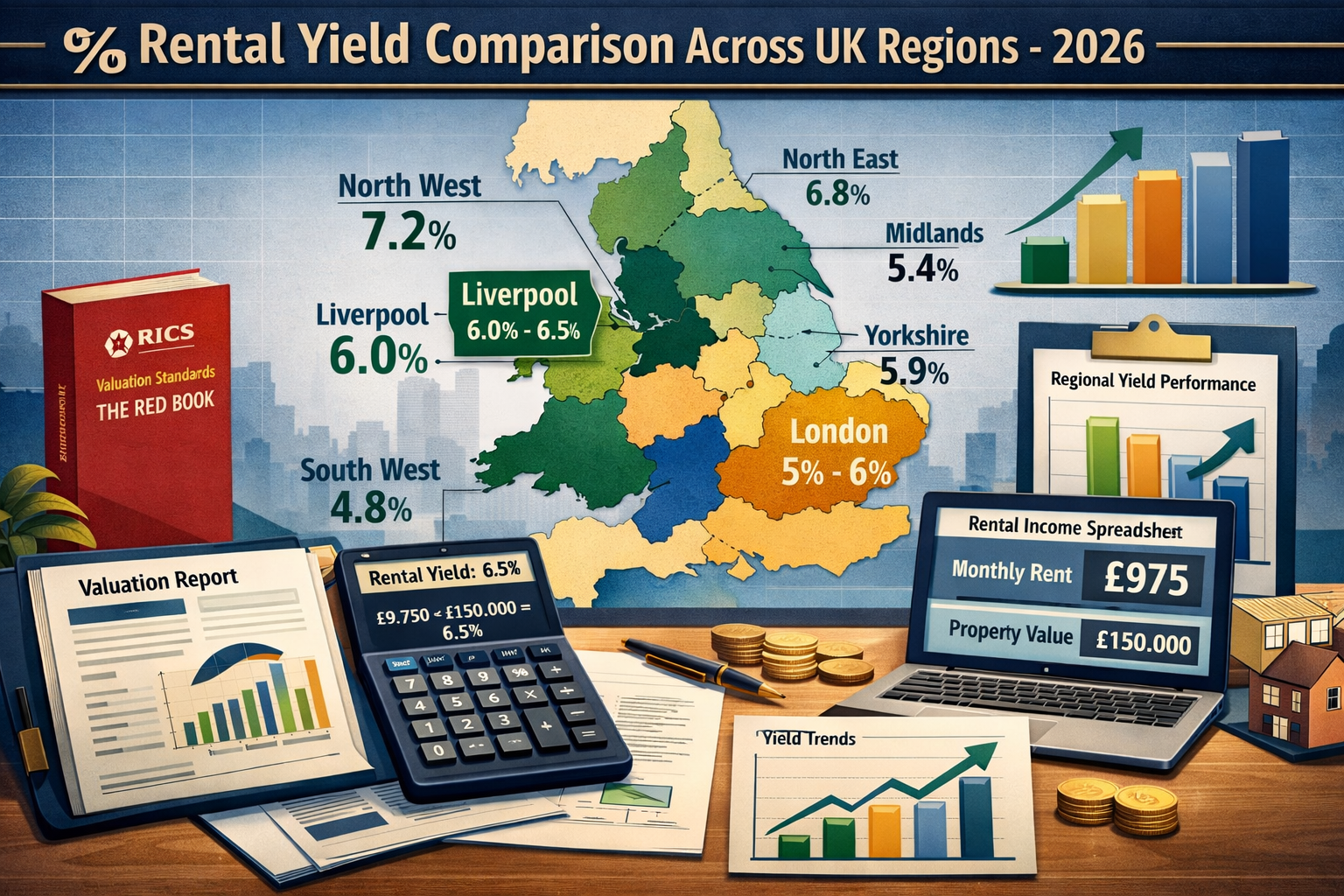
- Regional yield variations are substantial, with the North West achieving 7.2% yields compared to 5-6% nationally, demanding location-specific valuation approaches
- Supply increased 11% year-on-year but remains 23% below pre-pandemic levels, creating ongoing scarcity that supports valuations despite demand softening
- Rental affordability is improving as earnings rise faster than rents, reducing tenant default risk and supporting sustainable long-term valuations
Understanding the 2026 Rental Market Transformation
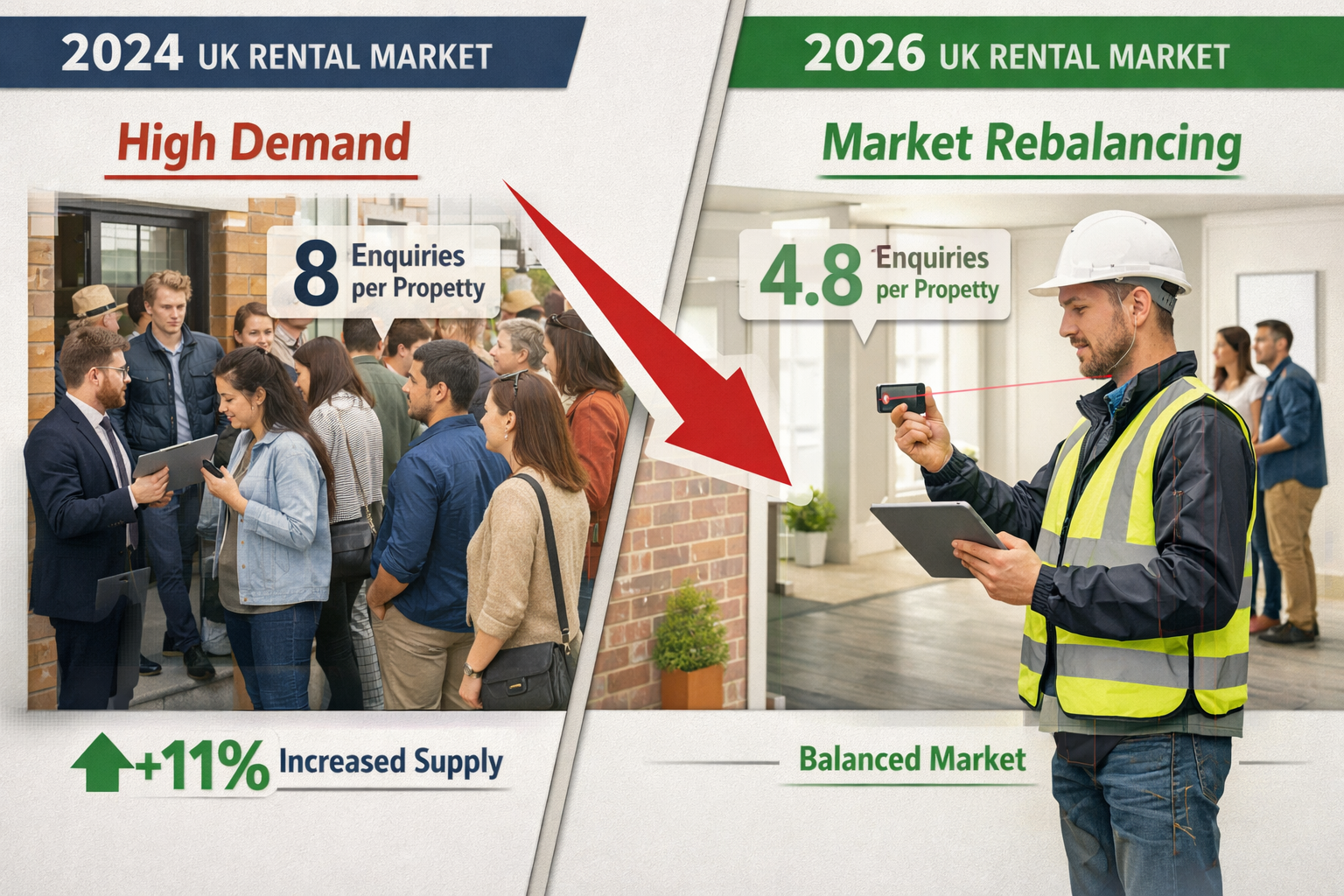
The rental market dynamics of 2026 represent a fundamental shift from the intense pressure witnessed in previous years. According to the latest market data, rental growth has moderated to approximately 1.9-2% annually for new lets as of March 2026, a notable decrease from the 2.8% growth rate recorded earlier [3]. This deceleration signals a transition from rapid acceleration to controlled, sustainable growth—a critical factor for surveyors conducting property valuations.
The Demand-Supply Rebalancing
Tenant competition has undergone a dramatic transformation. Enquiries per property have fallen to 4.8, marking the lowest level in six years [3]. This represents a substantial easing from the frenzied viewing schedules and bidding wars that characterized 2024-2025. For valuation professionals, this shift has profound implications:
- Reduced void period risk: Properties no longer let within days, but competition remains sufficient to minimize extended vacancies
- Stabilized rental premiums: The ability to command above-market rents has diminished as tenant choice improves
- Enhanced tenant quality assessment: Landlords can be more selective, potentially reducing default risk
Simultaneously, rental supply increased by 11% year-on-year as of March 2026 [3]. While this represents significant improvement, supply remains 23% below pre-pandemic levels, ensuring ongoing scarcity that continues to support property valuations. This delicate balance between improving supply and persistent undersupply creates a nuanced valuation environment.
Demand Pressures and Migration Patterns
The tenant demand landscape has fundamentally shifted. Demand has weakened with a 14% year-on-year decline as of March 2026 [3]. Several factors contribute to this trend:
- 📉 Reduced student numbers affecting purpose-built student accommodation valuations
- 🌍 Lower net migration reducing pressure on urban rental markets
- 🏠 Stronger first-time buyer competition as mortgage rates stabilize, drawing potential tenants toward ownership
For surveyors, these demographic shifts necessitate careful consideration of property type and location when conducting valuations. Properties heavily dependent on student or migrant populations may require more conservative growth assumptions compared to those serving established professional markets.
Affordability Improvements and Sustainability
Perhaps the most significant development for long-term valuations is the improvement in rental affordability. The proportion of earnings consumed by rent has declined from over 35% in 2023 to more sustainable levels by March 2026 [3]. This trend results from:
- Wage growth outpacing rental increases for the first time in several years
- Moderated rental growth reducing the burden on tenant budgets
- Improved tenant retention as affordability pressures ease
When conducting RICS property valuations, surveyors must now factor in reduced tenant default risk and improved payment sustainability. This fundamentally strengthens the income security assumptions underpinning rental property values.
Surveyor Tactics for Valuing Rental Properties in Tightening Lettings Markets
Professional surveyors must adapt their methodologies to accurately reflect the 2026 market conditions. The following tactics represent best practices for valuing rental properties in tightening lettings markets while maintaining compliance with RICS standards.
Income Capitalization Adjustments
The income capitalization approach remains fundamental to rental property valuation, but 2026 conditions require refined application. Rents are expected to increase by 2-3% through 2026 [3], providing a stable foundation for income projections. However, surveyors must consider:
Yield Compression Factors:
- National average yields of 5-6% provide baseline expectations [1]
- Regional variations are substantial, with the North West achieving approximately 7.2% yields [2]
- Premium locations like Liverpool city centre deliver 6.0-6.5% returns [1]
- Specialist sectors such as student housing can achieve 8-10% yields [1]
When applying capitalization rates, surveyors should weight recent comparable transactions heavily, as historical data from 2023-2024 may reflect unsustainably high growth expectations. The moderation to 1.9-2% annual growth represents a more realistic long-term trajectory for most markets.
Regional Performance Analysis
The 2026 market has amplified regional disparities in rental performance. Regional cities are outperforming London with stronger yields and lower entry prices [1]. This requires surveyors to reassess traditional location premium weightings. For properties in areas covered by London property surveyors, the historical premium may need adjustment.
Regional Valuation Considerations:
| Region | Average Yield | Growth Outlook | Key Factors |
|---|---|---|---|
| North West | 7.2% | Strong | Affordability, employment growth |
| London | 5-6% | Moderate | Supply constraints, high entry costs |
| Liverpool | 6.0-6.5% | Strong | City centre regeneration |
| Student Markets | 8-10% | Stable | Purpose-built accommodation demand |
Surveyors conducting assessments in locations such as Westminster, Kensington, or Fulham should apply location-specific yield adjustments rather than blanket metropolitan premiums.
Void Period and Tenant Turnover Modeling
The easing of tenant competition directly impacts void period assumptions. With enquiries per property at 4.8—significantly lower than peak levels—surveyors should:
- Extend expected void periods from the 1-3 days common in 2024 to more realistic 2-4 week assumptions
- Factor in seasonal variations that may have been masked during high-demand periods
- Consider property-specific appeal more carefully, as differentiation matters more in balanced markets
However, the market remains fundamentally undersupplied, preventing extended vacancy periods. This balance supports valuations while requiring more nuanced modeling than extreme seller's or buyer's markets.
Risk Assessment and Tenant Quality
Improved affordability fundamentally alters risk profiles. With rental costs consuming a lower proportion of tenant earnings, surveyors can:
- ✅ Reduce default risk premiums in capitalization rate calculations
- ✅ Extend expected tenancy durations, improving income stability assumptions
- ✅ Lower maintenance contingencies as better-quality tenants typically maintain properties more carefully
When conducting building surveys for rental properties, these risk adjustments should inform both valuation figures and investor guidance.
Comparable Evidence Selection
The rapid market evolution from 2023 to 2026 makes comparable selection particularly challenging. Best practices include:
- Prioritizing transactions from the last 3-6 months over older comparables
- Adjusting historical comparables for the moderation in growth rates
- Weighting regional performance more heavily than national trends
- Distinguishing between new lets and renewals, as growth rates differ significantly
For properties in areas like Wandsworth, Lewisham, or Croydon, local market knowledge becomes essential for accurate comparable selection.
Advanced Valuation Methodologies for 2026 Market Conditions

Beyond traditional approaches, sophisticated valuation tactics help surveyors navigate the complexities of valuing rental properties in tightening lettings markets amid 2026 tenant demand pressures.
Discounted Cash Flow Refinements
Discounted cash flow (DCF) analysis provides robust valuation frameworks for rental properties, particularly when market conditions are transitioning. For 2026 conditions, DCF models should incorporate:
Growth Rate Staging:
- Years 1-2: Apply the current 1.9-2% growth rate [3]
- Years 3-5: Model gradual normalization toward long-term averages of 2-3% [3]
- Years 6+: Use conservative long-term growth assumptions aligned with inflation plus 0.5-1%
Discount Rate Adjustments:
Given improved tenant affordability and reduced default risk, discount rates can be modestly reduced compared to 2023-2024 assumptions. However, surveyors should maintain prudent risk premiums reflecting:
- Ongoing supply constraints (23% below pre-pandemic levels) [3]
- Potential regulatory changes affecting landlord costs
- Economic uncertainty affecting tenant employment stability
Sensitivity Analysis for Demand Fluctuations
With tenant demand declining 14% year-on-year [3], sensitivity analysis becomes essential. Surveyors should model multiple scenarios:
- Base case: Continued moderate growth at 2-3% with stable demand
- Downside case: Further demand weakening to -5% with rental growth of 0-1%
- Upside case: Demand stabilization with supply constraints supporting 3-4% growth
This scenario modeling provides investors with realistic value ranges rather than point estimates, enhancing decision-making quality.
Regulatory Compliance and Future-Proofing
The 2026 regulatory environment continues evolving, with implications for rental property values. Surveyors must assess:
- Energy Performance Certificate (EPC) requirements and potential upgrade costs
- Upcoming regulatory changes affecting landlord obligations
- Local authority licensing schemes impacting operating costs
When conducting specific defect surveys, identifying regulatory compliance issues becomes critical for accurate valuation. Properties requiring significant upgrades to meet evolving standards may warrant substantial value adjustments.
Portfolio-Level Valuation Considerations
For investors holding multiple properties, portfolio-level analysis reveals diversification benefits and concentration risks:
- Geographic diversification: Properties across high-yield regions (North West) and stable markets (London) balance risk-return profiles
- Tenant demographic mix: Combining student, professional, and family-oriented properties reduces exposure to specific demand shifts
- Property age and condition: Mixing newer, lower-maintenance properties with older, higher-yield assets optimizes cash flow
Professional surveyors providing portfolio valuations should quantify these diversification benefits through correlation analysis and stress testing.
Technology-Enhanced Valuation Accuracy
Modern surveying increasingly leverages technology to enhance valuation precision:
- 📱 Digital measurement tools improve accuracy of floor areas and room dimensions
- 💻 Automated valuation models (AVMs) provide rapid comparable analysis, though professional judgment remains essential
- 📊 Real-time rental data platforms offer current market intelligence for comparable selection
- 🤖 AI-assisted defect identification during property inspections improves condition assessment
While technology enhances efficiency, RICS-qualified surveyors provide the professional judgment necessary to interpret data within market context—particularly during transitional periods like 2026.
Practical Implementation: Case Studies and Applications
Case Study 1: North West Regional Property
A three-bedroom terraced house in Manchester requires valuation for refinancing purposes. The property generates £1,200 monthly rent (£14,400 annually).
Valuation Approach:
- Gross yield calculation: £14,400 / £200,000 = 7.2% (aligns with regional average) [2]
- Growth projection: 2.5% annually based on regional strength
- Void allowance: 3 weeks annually (improved from 1 week in 2024)
- Capitalization rate: 7.0% reflecting strong regional performance
Valuation conclusion: £205,000-£210,000, supported by comparable evidence and regional yield expectations.
Case Study 2: London Flat with Demand Concerns
A one-bedroom flat in East London previously attracted 10+ enquiries per viewing in 2024. Current enquiries have fallen to 4-5, reflecting the market-wide trend to 4.8 average [3].
Valuation Adjustments:
- Extended marketing period: 4-6 weeks versus 1-2 weeks previously
- Rental growth: Conservative 1.5% versus 3-4% in 2024
- Yield compression: 5.5% versus 5.0% during peak demand
Impact: 5-8% valuation reduction compared to peak 2024-2025 estimates, reflecting normalized demand conditions while maintaining value support from ongoing supply constraints.
Properties in areas served by East Ham property surveyors or Newham property surveyors may experience similar adjustments.
Case Study 3: Student Accommodation Investment
A purpose-built student accommodation block in a university city requires valuation amid declining student numbers [3].
Risk Factors:
- Reduced international student enrollment
- Competition from traditional rental stock as general demand softens
- Potential for increased void periods between academic years
Mitigation Factors:
- Strong historical yields of 8-10% [1]
- Long-term demographic trends supporting higher education
- Purpose-built advantages (ensuite facilities, management services)
Valuation approach: Maintain premium yields (8-9%) but apply conservative occupancy assumptions (92-95% versus 98-100% historically) and stress-test sensitivity to further enrollment declines.
Strategic Considerations for Investors and Lenders
Investment Decision Framework
The 2026 market conditions create distinct opportunities and risks for rental property investors. Surveyors providing investment advice should guide clients toward:
Favorable Investment Characteristics:
- 🎯 Regional cities with strong employment growth and sub-6% yields
- 🎯 Properties requiring modest upgrades that can be completed cost-effectively to command premium rents
- 🎯 Locations with constrained supply where the 23% deficit versus pre-pandemic levels is most acute [3]
- 🎯 Properties appealing to professional tenants less affected by migration or student number fluctuations
Risk Factors Requiring Caution:
- ⚠️ Properties heavily dependent on student or migrant demand without diversification potential
- ⚠️ Locations where supply is increasing rapidly, potentially outpacing demand recovery
- ⚠️ Properties requiring substantial regulatory compliance investment without corresponding rent increase potential
- ⚠️ Markets where affordability remains stretched despite national improvements
Lender Valuation Requirements
Financial institutions lending against rental properties in 2026 require valuations that reflect both current market conditions and forward-looking risk assessment. Surveyors should provide:
- Stress-tested valuations modeling further demand declines or supply increases
- Clear articulation of regional performance drivers supporting location-specific assumptions
- Regulatory compliance assessments identifying potential future capital requirements
- Tenant demand sustainability analysis evaluating local employment and demographic trends
When lenders require renegotiation after poor survey results, comprehensive valuation documentation supports informed decision-making.
Portfolio Optimization Strategies
For existing landlords, 2026 conditions may warrant portfolio rebalancing:
- Divesting underperforming London assets where yields remain compressed at 5-6% [1]
- Reinvesting in high-yield regional markets achieving 7%+ returns [2]
- Upgrading property quality to appeal to increasingly selective tenants
- Consolidating holdings in areas with strongest supply constraints
Professional valuation advice helps landlords identify optimization opportunities while maintaining diversification and risk management.
Regulatory Compliance and Professional Standards
RICS Red Book Adherence
All rental property valuations must comply with RICS Valuation – Global Standards (the "Red Book"). In the 2026 context, particular attention should be paid to:
- Market value definition: Reflecting current market conditions, not historical peak valuations
- Assumptions and special assumptions: Clearly stating growth rate projections and their basis
- Comparable evidence: Ensuring sufficient recent transactions support conclusions
- Reporting requirements: Providing clients with transparent methodology explanations
Professional chartered surveyors maintain these standards regardless of market conditions, ensuring valuation integrity.
Conflicts of Interest and Independence
The transitioning market creates potential conflicts when surveyors value properties for clients with vested interests in particular outcomes. Best practices include:
- Clear engagement terms specifying the valuation basis and intended use
- Independence maintenance regardless of client preferences for higher or lower valuations
- Transparent limitation disclosure when insufficient comparable evidence exists
- Professional skepticism toward client-provided rental income figures without verification
Continuing Professional Development
The rapid market evolution from 2023 to 2026 underscores the importance of ongoing professional development. Surveyors should:
- Regularly review market data from authoritative sources
- Attend industry seminars on rental market trends
- Maintain awareness of regulatory developments affecting landlords
- Update valuation models to reflect current market dynamics
Firms offering services across locations from Wimbledon to Romford must ensure their teams maintain current knowledge of local market conditions.
Future Outlook and Emerging Trends
Supply-Demand Evolution Through 2026-2027
While supply increased 11% year-on-year as of March 2026 [3], the trajectory through late 2026 and into 2027 will significantly impact valuations. Key indicators to monitor:
- New landlord entrants: Whether improving yields attract new investment
- Existing landlord retention: Whether regulatory burdens continue driving exits
- Build-to-rent sector growth: Institutional investment potentially increasing supply
- Conversion activity: Office-to-residential conversions adding rental stock
Surveyors should incorporate these supply trends into medium-term valuation projections, adjusting growth assumptions as market intelligence evolves.
Affordability Sustainability
The improvement in rental affordability—with rent consuming a lower proportion of earnings than the 35%+ peak in 2023 [3]—represents a critical sustainability factor. Continued wage growth outpacing rent increases would support:
- Extended tenancy durations as tenants can afford to remain in properties longer
- Reduced default risk strengthening income security assumptions
- Potential for modest rent increases without affordability crisis recurrence
However, economic uncertainty could reverse these trends, requiring ongoing monitoring and valuation adjustment.
Regulatory Landscape Evolution
The rental sector regulatory environment continues developing, with potential implications for valuations:
- Energy efficiency requirements may mandate costly upgrades
- Tenant protection legislation could limit rent increase flexibility
- Licensing scheme expansion may increase operating costs
- Tax treatment changes affecting investor returns
Surveyors must stay informed of regulatory developments and incorporate compliance costs into valuations. Properties in areas covered by Harrow property surveyors or Redbridge property surveyors may face different local authority requirements.
Technology and Data Transparency
Increasing data availability and technological advancement will continue transforming rental property valuation:
- Real-time rental data platforms improving comparable accuracy
- Predictive analytics enhancing demand forecasting
- Digital property inspection tools streamlining condition assessment
- Blockchain-based transaction records providing transparent comparable evidence
While technology enhances efficiency, professional judgment remains essential—particularly during market transitions when historical patterns may not predict future performance.
Conclusion
Valuing rental properties in tightening lettings markets amid 2026 tenant demand pressures requires surveyors to balance historical performance with emerging market dynamics. The transition from the intense competition of 2023-2025 to the more balanced conditions of 2026 demands refined methodologies that accurately reflect moderated growth, easing demand, and improving affordability.
Key principles for accurate valuation in 2026 include:
- ✅ Applying conservative growth assumptions aligned with the 1.9-2% current rate and 2-3% forward projections
- ✅ Recognizing substantial regional variations, with yields ranging from 5-6% nationally to 7.2% in the North West
- ✅ Adjusting void period and tenant turnover assumptions to reflect the easing from 8+ enquiries per property to 4.8
- ✅ Factoring in improved affordability and reduced tenant default risk in income security assessments
- ✅ Maintaining awareness of ongoing supply constraints (23% below pre-pandemic levels) that continue supporting valuations
Professional surveyors must maintain RICS compliance while adapting to market realities, providing clients with valuations that reflect both current conditions and forward-looking risk assessment. The combination of improving supply, moderating demand, and enhanced affordability creates a more sustainable rental market—one that requires sophisticated analysis but offers stable long-term investment potential.
Actionable Next Steps
For property investors, landlords, and lenders navigating the 2026 rental market:
- Commission professional RICS valuations that incorporate current market dynamics rather than relying on historical peak values
- Request sensitivity analysis modeling various demand and supply scenarios to understand value ranges
- Assess regulatory compliance requirements and factor upgrade costs into investment decisions
- Consider regional diversification to capture higher yields in markets like the North West while maintaining London exposure
- Monitor market indicators including enquiries per property, supply levels, and affordability metrics to anticipate valuation trends
- Engage qualified surveyors with current market knowledge and local expertise for accurate property assessment
Whether you're investing in properties covered by Ilford property surveyors, Tottenham property surveyors, or any other location, professional valuation advice tailored to 2026 market conditions ensures informed decision-making and optimal investment outcomes.
The rental property market of 2026 rewards careful analysis, regional expertise, and forward-looking assessment. By applying the surveyor tactics outlined in this guide, property professionals can navigate tightening lettings markets with confidence, delivering accurate valuations that serve client interests while maintaining professional standards.
References
[1] Uk Property Investment Trends 2026 – https://www.dbrinvest.com/post/uk-property-investment-trends-2026
[2] Uk Rental Market Outlook 2026 National Trends North West Growth Analysis – https://www.farrellheyworth.co.uk/blog/uk-rental-market-outlook-2026-national-trends-north-west-growth-analysis/
[3] Uk Rental Market Report March 2026 – https://assets.ctfassets.net/2zc2pc2uwamh/4ytGOrzcBHJCz2biMu14Ea/aead7412968a18fcf1123c37e8ece446/UK_Rental_Market_Report_March_2026.pdf