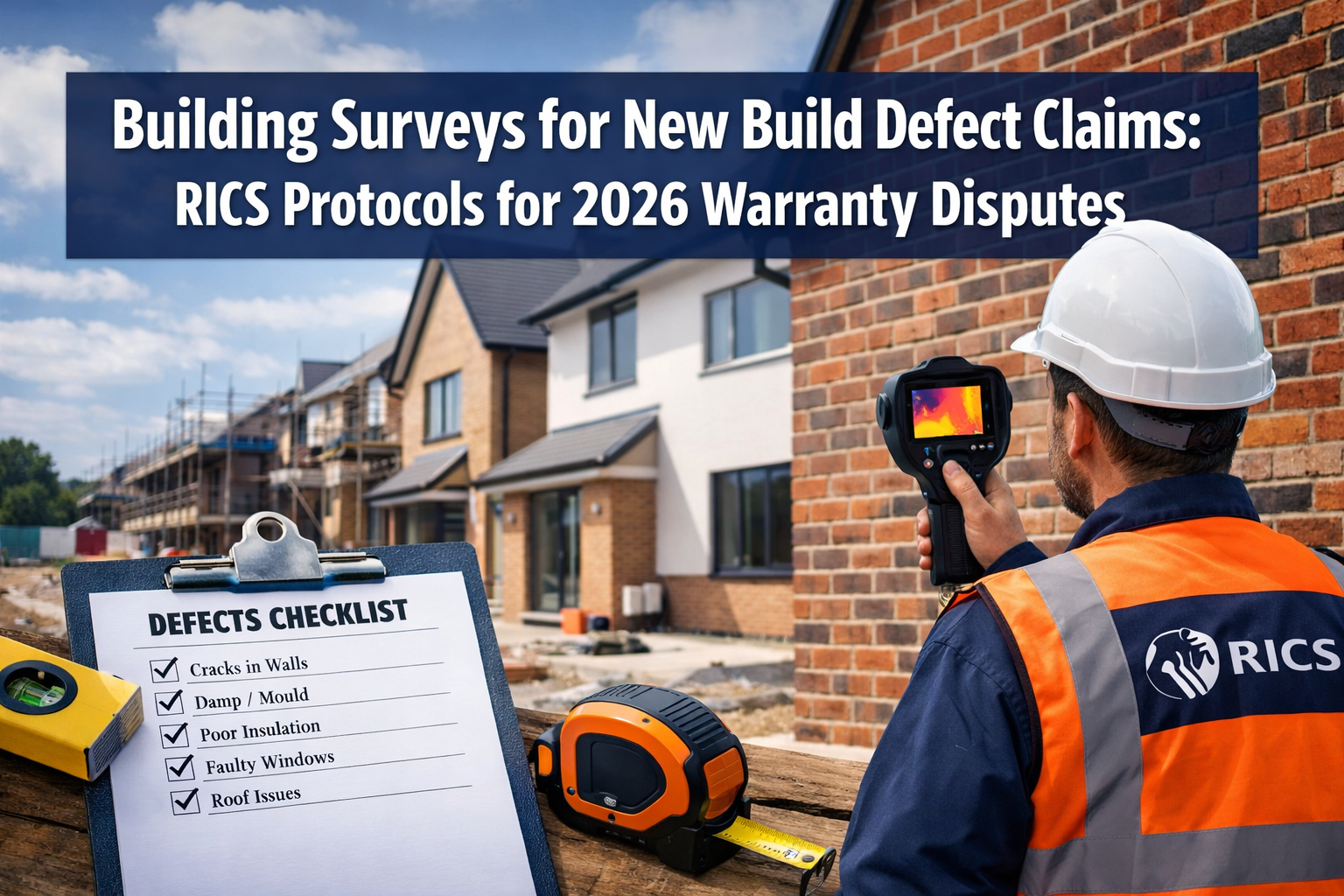
As the UK property market shows encouraging signs of recovery in 2026, new build sales are experiencing renewed momentum. However, this upturn brings heightened scrutiny to construction quality and defect liability. Building Surveys for New Build Defect Claims: RICS Protocols for 2026 Warranty Disputes in Recovering Markets have become essential tools for protecting buyers and establishing accountability when construction standards fall short. With recent legal developments extending liability exposure and RICS strengthening inspection protocols, surveyors now play a critical role in identifying defects early and supporting warranty claims in an evolving regulatory landscape.
The convergence of market recovery, enhanced RICS standards, and significant case law changes means that understanding proper survey protocols is no longer optional—it's essential for anyone purchasing or evaluating new build properties in 2026.
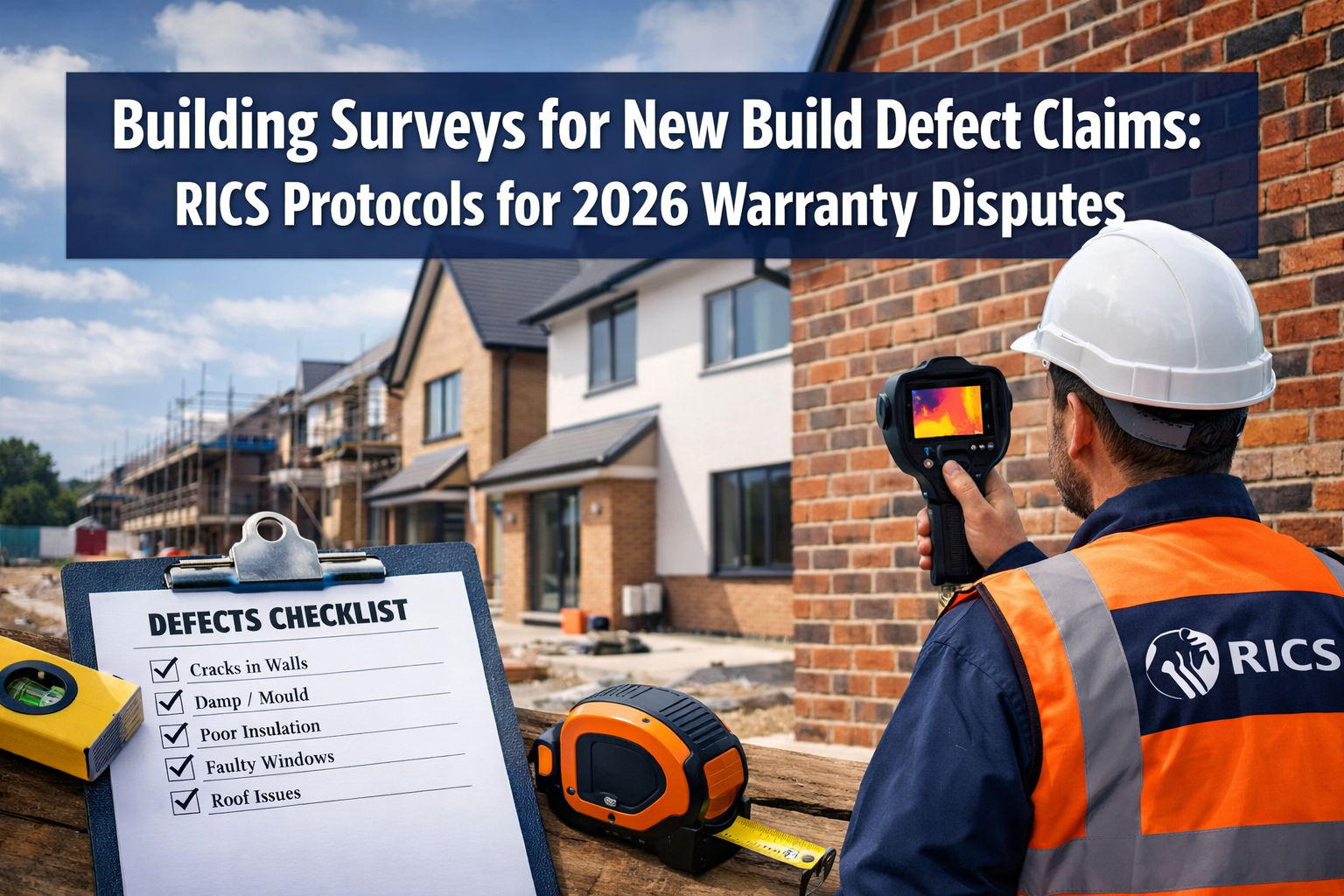
Key Takeaways
- RICS Level 3 surveys have been significantly strengthened for the construction recovery period, with more rigorous defect identification protocols specifically designed for new build properties [4]
- Collateral warranties can now revive liability exposure years after completion unless express limitation provisions are included, fundamentally changing warranty dispute timelines [1]
- Courts now require explicit, unambiguous wording to shift liability for design defects, rejecting general sweep clauses and protecting consumer interests [1]
- Document retention and evidential discipline have become core components of risk management for warranty disputes, particularly for buildings under building safety regulations [1]
- Early intervention through proper surveys can identify defects before warranty periods expire, protecting buyers and establishing clear evidence for claims
Understanding Building Surveys for New Build Defect Claims in 2026 🏗️
Building surveys for new build properties have evolved considerably in response to both market conditions and regulatory changes. Unlike traditional homebuyer surveys, specific defect surveys for new builds focus on construction quality, compliance with building regulations, and identification of defects that may not be immediately apparent to untrained eyes.
The Role of RICS Protocols in New Build Inspections
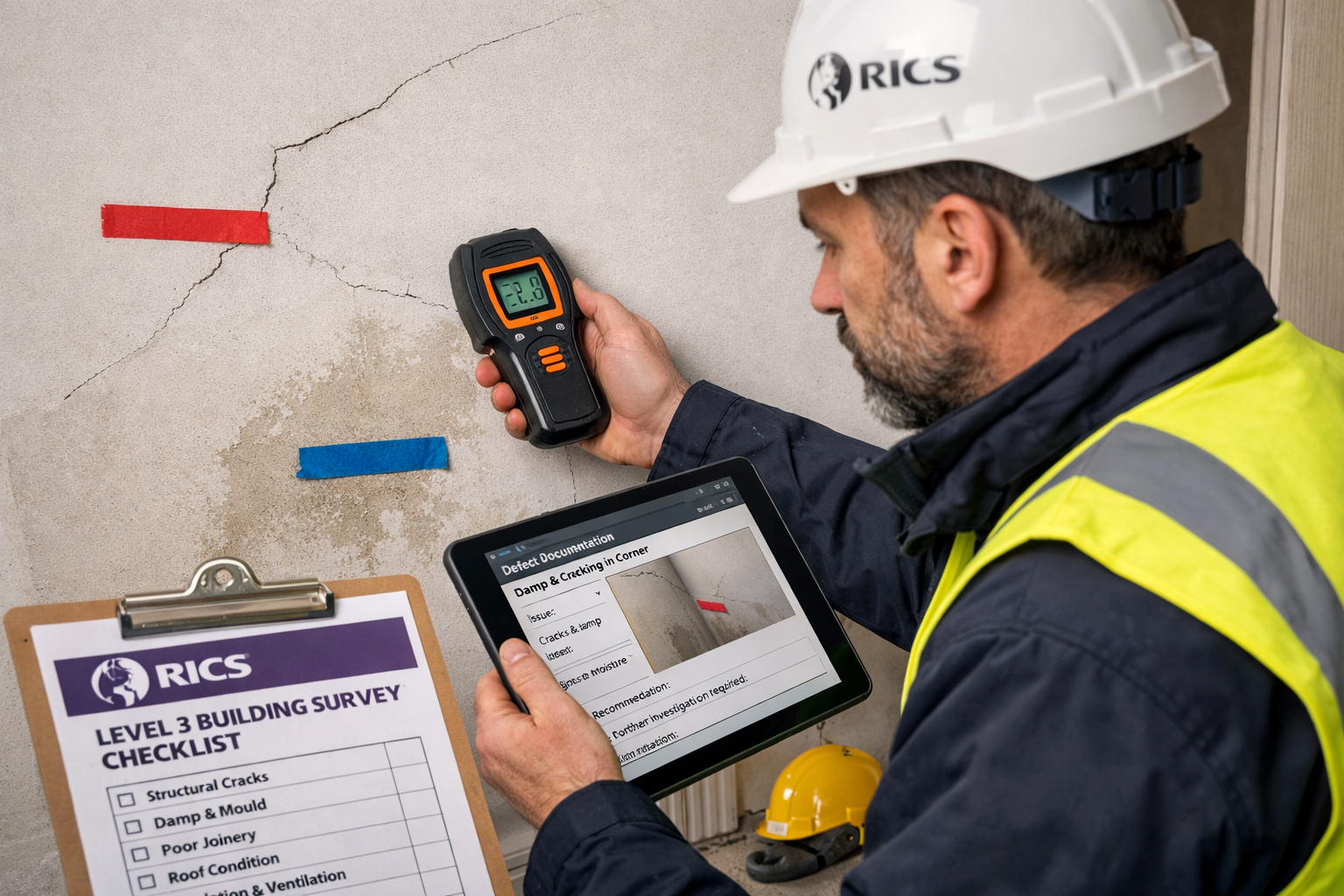
The Royal Institution of Chartered Surveyors (RICS) has substantially enhanced Level 3 Building Survey standards specifically to address demands of the construction recovery period [4]. These reinforced protocols ensure more rigorous inspections and comprehensive defect identification across several key areas:
Core Inspection Areas for New Build Defects:
- Structural integrity – foundation settlement, wall cracking, roof structure
- Damp and water ingress – poor waterproofing, inadequate drainage, condensation issues
- Thermal performance – insulation deficiencies, thermal bridging, energy efficiency failures
- Building services – heating, ventilation, electrical, and plumbing installations
- Finishing quality – joinery, plastering, tiling, and decorative work standards
- External elements – brickwork, render, windows, doors, and weatherproofing
RICS has also updated the Home Survey Standard based on consultation with approximately 1,400 consumers, renaming the three service levels as "basic," "intermediate," and "advanced" to clarify appropriate use cases [2]. For new build defect claims, the advanced (Level 3) survey provides the most comprehensive assessment.
Why New Builds Require Specialized Survey Approaches
Many buyers mistakenly believe that new build properties don't require surveys because they come with warranties. This assumption can prove costly. New build defects are surprisingly common and include:
- Poor workmanship due to rushed construction schedules
- Use of substandard materials to reduce costs
- Inadequate supervision of subcontractors
- Design flaws not apparent until occupation
- Non-compliance with building regulations
A properly conducted building survey can identify these issues before purchase completion or within warranty periods, providing crucial evidence for defect claims.
The Distinction Between Service Checking and Testing
The updated RICS standard clarifies the distinction between "checking" services versus "testing" them [2]. For new builds, this means:
- Checking involves operating a gas hob to verify connection or running taps to confirm water supply
- Testing requires specialized equipment and formal procedures beyond standard survey scope
Understanding this distinction helps buyers set realistic expectations about what a building survey will reveal and when additional specialist testing may be necessary.
RICS Protocols for 2026 Warranty Disputes: Legal Developments and Liability Exposure ⚖️
The legal landscape surrounding Building Surveys for New Build Defect Claims: RICS Protocols for 2026 Warranty Disputes in Recovering Markets has undergone significant transformation. Recent case law has fundamentally altered how liability is allocated and how long exposure can extend.
Collateral Warranties and Extended Liability Periods
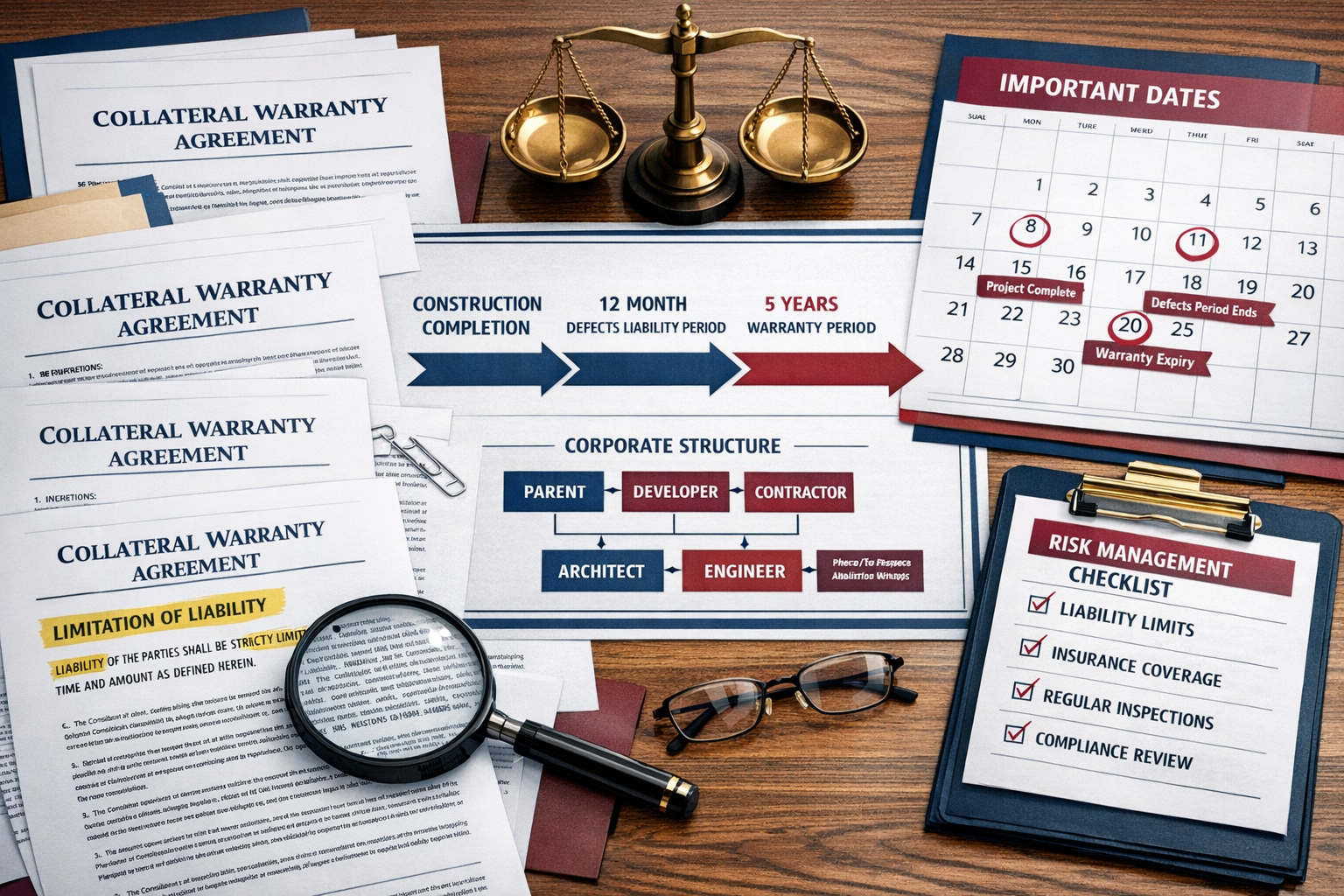
A significant 2025 legal development establishes that collateral warranties executed years after completion can revive liability that would otherwise be dormant [1]. Unless express limitation provisions are included, liability exposure may commence afresh from the warranty execution date, not the original contract date.
This development has profound implications:
| Traditional Understanding | Current Legal Position (2026) |
|---|---|
| Liability runs from completion date | Liability can restart from warranty execution date |
| Standard limitation periods apply | New limitation periods may commence with each warranty |
| Corporate structure provides protection | Courts look to substance over form |
| General clauses shift liability | Explicit, unambiguous wording now required |
Practical Impact for Surveyors and Buyers:
For surveyors conducting defect inspections, this means that documenting the precise timing of defect discovery and warranty execution becomes critical. Expert building evaluation must now include careful consideration of warranty documentation and timing.
Clear Wording Requirements for Liability Allocation
Courts have rejected general sweep clauses and broad language to impose liability for design defects [1]. The judiciary now requires explicit, unambiguous wording to shift responsibility, particularly where consumer protection legislation applies.
This judicial approach directly impacts warranty disputes by:
- Protecting buyers from unclear contractual terms that attempt to limit developer liability
- Requiring precise documentation of defect responsibility
- Strengthening the position of consumers in warranty negotiations
- Making building survey evidence more critical in establishing defect causation
Critical Risk Factors: Timing and Wording
Surveyors are now cautioned that warranty exposure depends on both when warranties are granted and their precise contractual language [1]. Standard forms and familiar clauses may not achieve intended limitation of exposure unless carefully reviewed and amended.
Key Considerations for 2026 Warranty Disputes:
✅ Document everything – comprehensive photographic and written records
✅ Timeline precision – exact dates of defect discovery, reporting, and warranty execution
✅ Warranty language review – scrutinize limitation clauses and liability provisions
✅ Expert evidence preparation – ensure survey reports meet evidential standards
✅ Record retention – maintain documentation for extended periods beyond traditional limitation dates
The Importance of Record Retention for Risk Management
Document retention and evidential discipline are now core components of risk management [1]. For buildings caught by building safety regulations, incomplete or fragmented records decades after construction create practical challenges in pursuing recovery or resisting claims.
"Record retention has become essential for risk management. For buildings caught by building safety regulations, incomplete or fragmented records decades after construction create practical challenges in pursuing recovery or resisting claims." – RICS Built Environment Journal
This emphasizes the need for systematic documentation during initial surveys and throughout warranty periods. First-time buyers particularly benefit from understanding these documentation requirements early in the purchase process.
Implementing Building Surveys for New Build Defect Claims in Recovering Markets 📊
As market recovery boosts new build sales, implementing proper survey protocols becomes increasingly important. The recovering market context creates both opportunities and challenges for buyers, developers, and surveyors.
Market Recovery Context and Quality Concerns
The construction sector's recovery in 2026 brings increased development activity but also potential quality pressures:
- Accelerated construction timelines to meet demand
- Labor shortages affecting workmanship quality
- Material supply chain pressures potentially compromising specifications
- Increased subcontractor reliance with variable quality control
These factors make comprehensive building surveys more important than ever. Understanding what to do after a bad building survey report helps buyers navigate defect discovery effectively.
Systematic Defect Identification Protocols
RICS protocols for 2026 emphasize systematic approaches to defect identification:
Phase 1: Pre-Inspection Preparation
- Review planning documents and building control approvals
- Examine warranty documentation and limitation clauses
- Identify property-specific risk factors (site conditions, construction type)
- Prepare specialized equipment (thermal imaging, moisture meters, drones)
Phase 2: Comprehensive Site Inspection
- External envelope assessment (roof, walls, windows, doors)
- Internal structural elements (walls, floors, ceilings)
- Building services installations (heating, electrical, plumbing)
- Finishing quality and compliance with specifications
- Damp and moisture surveys where concerns exist
Phase 3: Documentation and Reporting
- Detailed photographic evidence with location references
- Severity classification of identified defects
- Compliance assessment against building regulations
- Repair cost estimates and urgency ratings
- Clear recommendations for remediation or further investigation
Warranty Types and Survey Timing Strategies
Different warranty types require different survey timing approaches:
NHBC Warranty (10-year coverage):
- Years 1-2: Builder responsible for all defects
- Years 3-10: Major structural defects only
- Optimal survey timing: Before end of year 2 to capture all defects under builder responsibility
LABC Warranty:
- Similar structure to NHBC with builder and structural periods
- Survey recommendation: Comprehensive inspection at 18-24 months
Architect's Certificate/Bespoke Warranties:
- Variable terms requiring careful review
- Survey timing: Based on specific warranty limitation periods
Strategic timing of building surveys can maximize warranty claim opportunities and protect buyer interests.
Common New Build Defects and Survey Detection Methods
Understanding typical defect patterns helps surveyors and buyers focus inspection efforts:
| Defect Category | Common Examples | Detection Method |
|---|---|---|
| Structural | Wall cracking, settlement, roof spread | Visual inspection, crack monitoring, structural calculations |
| Damp/Water | Penetrating damp, condensation, poor drainage | Moisture meters, thermal imaging, visual assessment |
| Thermal | Cold bridging, insulation gaps, air leakage | Thermal imaging, blower door testing |
| Services | Poor heating, electrical faults, plumbing leaks | Operational testing, specialist inspection |
| Finishing | Poor joinery, cracked tiles, paint defects | Visual inspection, quality standards comparison |
Specialized services like damp surveys may be required when moisture issues are suspected.
Building Survey Evidence for Warranty Claims
The strength of warranty claims depends heavily on survey evidence quality:
Essential Evidence Components:
- Photographic documentation – high-resolution images with scale references
- Detailed descriptions – precise location, extent, and severity information
- Technical analysis – causation assessment and compliance evaluation
- Expert opinion – qualified surveyor conclusions on defect significance
- Repair specifications – clear remediation requirements and cost estimates
Courts are increasingly looking to substance over form and rejecting technical shields against liability [1]. This means well-documented survey evidence becomes the foundation of successful warranty claims.
Dispute Resolution Pathways
When defects are identified, several resolution pathways exist:
Step 1: Direct Developer Negotiation
- Present survey evidence to developer
- Request remediation under warranty terms
- Document all communications and responses
Step 2: Warranty Provider Involvement
- Formal claim submission to warranty provider (NHBC, LABC, etc.)
- Independent inspection by warranty provider
- Adjudication of claim validity
Step 3: Alternative Dispute Resolution
- Mediation or arbitration before litigation
- Expert determination for technical disputes
- Cost-effective resolution options
Step 4: Legal Proceedings
- Formal court action when other routes fail
- Expert witness testimony from surveyor
- Enforcement of court judgments
Having comprehensive survey documentation from the outset significantly strengthens positions at every stage of this process.
Cost Considerations and Investment Protection
While comprehensive building surveys represent an upfront cost, they provide substantial value:
- Negotiation leverage – defect evidence supports price reductions
- Warranty claim success – proper documentation increases claim approval rates
- Future resale protection – documented remediation maintains property value
- Peace of mind – confidence in property condition and quality
The cost of a Level 3 survey typically ranges from £500-£1,500 depending on property size and complexity—a modest investment compared to potential defect repair costs that can reach tens of thousands of pounds.
Practical Guidance for Buyers and Property Professionals 🔍
Successfully navigating Building Surveys for New Build Defect Claims: RICS Protocols for 2026 Warranty Disputes in Recovering Markets requires practical knowledge and strategic action.
For Buyers: Essential Steps Before Purchase
Before Exchange of Contracts:
- Commission a Level 3 building survey from a RICS-qualified surveyor
- Review all warranty documentation with legal advisor
- Identify any limitation clause concerns or ambiguous wording
- Negotiate remediation or price reduction for identified defects
- Ensure warranty assignment provisions are clear and enforceable
During Warranty Period:
- Conduct systematic inspections at strategic intervals (6 months, 18 months, before warranty transitions)
- Document any emerging defects immediately with photographs and descriptions
- Report defects to developer and warranty provider within specified timeframes
- Maintain comprehensive records of all communications and actions
- Consider monitoring surveys for progressive defects like cracking
For Surveyors: Professional Standards and Risk Management
Surveyors conducting new build defect inspections must adhere to enhanced protocols:
Technical Competence Requirements:
- Current knowledge of RICS Level 3 survey standards for 2026
- Understanding of recent case law affecting warranty disputes
- Familiarity with building regulations and construction standards
- Proficiency with modern inspection technology (thermal imaging, drones, moisture detection)
Professional Indemnity Considerations:
- Adequate insurance coverage for extended liability periods
- Clear engagement letters defining scope and limitations
- Systematic quality assurance procedures
- Continuing professional development in construction defects
Report Writing Best Practices:
- Clear, unambiguous language describing defects
- Severity classifications and urgency ratings
- Photographic evidence with location references
- Explicit recommendations for action or further investigation
- Compliance with evidential standards for potential litigation
Regional Considerations Across London and Southeast
Different areas present unique challenges for new build surveys:
- Central London developments – complex construction, shared facilities, leasehold considerations
- Suburban expansion areas – rapid development, variable quality control
- Brownfield sites – contamination risks, foundation challenges
- Flood risk zones – drainage and waterproofing critical
Surveyors operating across regions from Westminster to Richmond must adapt protocols to local conditions and development patterns.
Technology Integration in Modern Building Surveys
2026 survey protocols increasingly incorporate advanced technology:
Thermal Imaging:
- Identifies insulation deficiencies and thermal bridging
- Detects moisture ingress not visible to naked eye
- Documents energy efficiency performance
Drone Surveys:
- Comprehensive roof and chimney inspection without access equipment
- High-resolution imagery of upper-level defects
- Cost-effective for large or complex properties
Moisture Detection Equipment:
- Precise measurement of damp levels in walls and floors
- Differentiation between condensation and penetrating damp
- Evidence for warranty claims related to water ingress
Digital Documentation Systems:
- Systematic defect recording with GPS location tagging
- Cloud-based storage for long-term record retention
- Easy sharing with clients, solicitors, and warranty providers
Future Outlook: Evolving Standards and Market Dynamics
The trajectory for Building Surveys for New Build Defect Claims: RICS Protocols for 2026 Warranty Disputes in Recovering Markets suggests continued evolution:
Anticipated Developments:
- Further refinement of RICS standards based on market recovery experience
- Additional case law clarifying warranty liability boundaries
- Enhanced building safety requirements affecting new builds
- Greater consumer awareness driving demand for comprehensive surveys
- Technology integration becoming standard practice rather than optional
Preparing for Change:
- Stay current with RICS guidance updates and consultation papers
- Monitor legal developments affecting construction liability
- Invest in professional development and technology capabilities
- Build relationships with legal professionals specializing in construction disputes
- Develop systematic approaches adaptable to evolving standards
Conclusion: Protecting Investments Through Rigorous Survey Protocols
Building Surveys for New Build Defect Claims: RICS Protocols for 2026 Warranty Disputes in Recovering Markets represent an essential safeguard in today's property landscape. As market recovery accelerates new build sales, the combination of enhanced RICS standards, significant legal developments extending liability exposure, and increased quality scrutiny makes comprehensive building surveys more important than ever.
The evidence is clear: collateral warranties can revive dormant liability years after completion, courts now require explicit wording to shift responsibility, and proper documentation has become essential for successful warranty claims. These developments fundamentally change the risk landscape for buyers, developers, and surveyors alike.
Key Actions for Stakeholders
For Property Buyers:
- Never assume new build warranties eliminate the need for independent surveys
- Commission Level 3 surveys from RICS-qualified professionals before purchase
- Review warranty documentation carefully with legal advisors
- Document defects systematically throughout warranty periods
- Act promptly when defects are discovered to preserve claim rights
For Property Professionals:
- Update knowledge continuously on RICS protocols and legal developments
- Implement rigorous documentation and record retention systems
- Invest in technology that enhances defect detection capabilities
- Maintain adequate professional indemnity insurance for extended liability periods
- Develop expertise in warranty dispute resolution processes
For Developers and Contractors:
- Recognize that quality control is more critical than ever in recovering markets
- Review warranty documentation to ensure limitation clauses are explicit and enforceable
- Implement systematic defect prevention and early remediation programs
- Maintain comprehensive construction records for extended periods
- Engage constructively with legitimate defect claims to preserve reputation
The recovering market of 2026 presents both opportunities and challenges. Those who embrace rigorous survey protocols, maintain comprehensive documentation, and understand the evolving legal landscape will be best positioned to protect their interests—whether buying, selling, or evaluating new build properties.
By following RICS protocols, understanding warranty implications, and acting strategically when defects are identified, stakeholders can navigate new build transactions with confidence and security in an increasingly complex regulatory environment.
References
[1] Building Safety Collateral Warranties Cases Risk Management – https://ww3.rics.org/uk/en/journals/built-environment-journal/building-safety-collateral-warranties-cases-risk-management.html
[2] Understanding The Rics Home Survey Standard Proposal – https://www.rics.org/news-insights/understanding-the-rics-home-survey-standard-proposal
[4] Building Survey Protocols For Uk Construction Recovery Rics Checklists From Q4 2025 Monitor Into 2026 – https://nottinghillsurveyors.com/blog/building-survey-protocols-for-uk-construction-recovery-rics-checklists-from-q4-2025-monitor-into-2026