


The construction industry is experiencing a remarkable transformation in 2026, with modular and offsite construction methods gaining unprecedented momentum. As factory-built homes become increasingly popular solutions to housing shortages, surveyors face a critical challenge: assessing these innovative dwellings for transport defects and site integration issues under updated RICS home survey standards. The Level 3 Surveys for Modular Housing Booms: RICS Standards in 2026's Offsite Construction Uptick represents a pivotal intersection of traditional surveying expertise and modern construction methodology, requiring professionals to adapt their assessment techniques for this rapidly evolving sector.

Key Takeaways
✅ Level 3 surveys provide the most comprehensive assessment for modular homes, identifying transport damage, connection defects, and site integration issues that standard surveys might miss
🏗️ RICS updated Home Survey Standards (expected finalization by March 2026) now include specific guidance for "additional risk" dwellings, including factory-built and modular construction[5]
🔍 New technology integration—including drones, AI analysis, and thermal imaging—enhances surveyor capabilities to detect hidden defects in modular housing units[5]
📊 The offsite construction boom in 2026 demands specialized surveying knowledge to assess unique risks associated with transportation, assembly, and weatherproofing of factory-built components
💡 Retrofit assessments and advanced inspection services are now incorporated into RICS standards, reflecting the industry's evolution toward sustainable and innovative building methods[5]
Understanding Level 3 Surveys in the Context of Modular Construction
What Makes Level 3 Surveys Essential for Modular Homes
The RICS Level 3 Home Survey, formerly known as a Building Survey, represents the most detailed and comprehensive property assessment available to homebuyers and property owners[3]. While traditionally recommended for older, larger, or significantly altered properties, this survey type has become increasingly vital for modular and offsite construction in 2026.
Modular housing presents unique challenges that require the thorough examination provided by Level 3 surveys:
- Transport-related damage: Factory-built modules experience stress during transportation that can compromise structural integrity
- Connection point vulnerabilities: Where modules join together often represents the weakest points for water ingress and thermal bridging
- Site integration issues: The interface between factory-built components and site-prepared foundations requires careful assessment
- Weather exposure: Modules may sit exposed to elements during transport and installation, potentially causing moisture problems
The comprehensive nature of Level 3 building surveys makes them particularly suited to identifying these specific concerns that might escape detection in less detailed assessments.
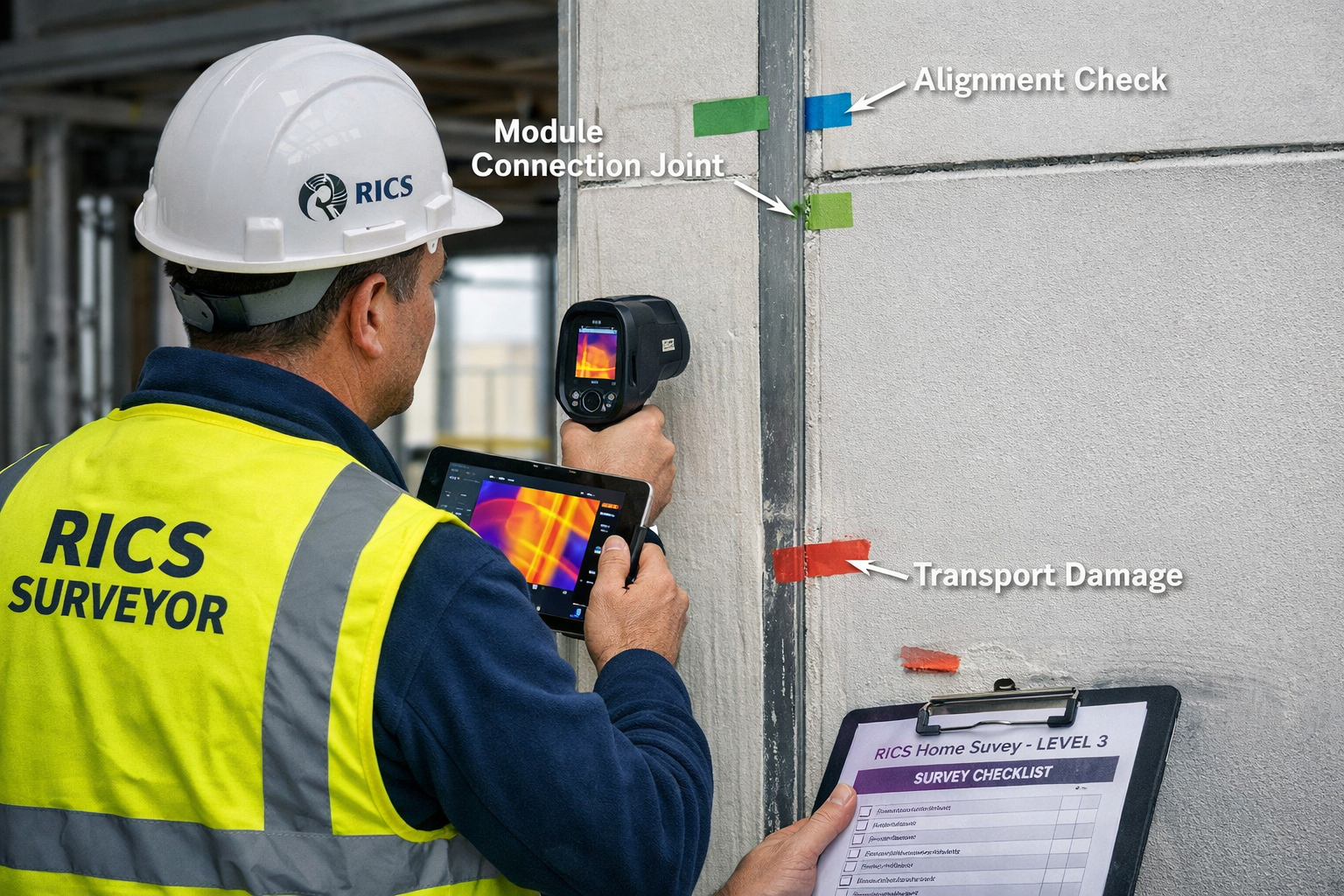
Key Components of Level 3 Surveys for Modular Properties
A proper Level 3 survey for modular housing in 2026 includes several critical elements:
| Survey Component | Focus for Modular Housing | Why It Matters |
|---|---|---|
| Structural Assessment | Module connections, load-bearing joints, foundation integration | Transport stress can weaken structural connections |
| Damp & Moisture | Seals between modules, weather exposure damage, condensation risks | Factory-to-site transition creates vulnerability windows |
| Roof Inspection | Module roof connections, weatherproofing at joints | Roof assembly points are high-risk areas for leaks |
| External Envelope | Cladding alignment, thermal bridging, air tightness | Module joins can compromise building envelope performance |
| Services Integration | Electrical, plumbing, and HVAC connections between modules | Cross-module services require careful inspection |
| Foundation Interface | Module-to-foundation connections, ground movement impact | Differential settlement affects modular buildings differently |
The updated RICS standards recognize these specialized requirements, incorporating guidance for surveyors assessing "additional risk" dwellings that include modular and offsite construction methods[5].
RICS Standards Evolution: The 2026 Home Survey Standard Updates
What's Changed in RICS Guidelines for 2026
The Royal Institution of Chartered Surveyors has undertaken significant updates to its Home Survey Standards, with final revisions expected by the end of March 2026[5]. These changes directly impact how surveyors approach Level 3 Surveys for Modular Housing Booms: RICS Standards in 2026's Offsite Construction Uptick.
Major updates include:
🔧 Clearer terminology: The new standard uses terms like 'basic,' 'intermediate,' and 'advanced' to help consumers better understand survey levels and their appropriate applications[4]
🏭 Additional risk dwelling guidance: Specific protocols for assessing non-traditional construction, including modular, timber-frame, and other innovative building methods[5]
📱 Technology integration: Formal recognition of drones, AI analysis tools, camera poles, and thermal imaging as standard surveying equipment[5]
♻️ Retrofit assessments: New provisions for evaluating properties for energy efficiency improvements and sustainability upgrades[5]
🎯 Enhanced clarity: More precise definitions of what each survey level covers, reducing confusion and improving consumer choice[4]
These updates reflect the construction industry's rapid evolution and acknowledge that traditional surveying approaches must adapt to assess modern building methods effectively. For professionals conducting building surveys, these changes represent both opportunities and responsibilities.
Technology Integration in Modern Level 3 Surveys
The 2026 RICS standards formally embrace technological advances that have transformed surveying practice. For modular housing assessments, these tools prove particularly valuable:
Drone Inspections 🚁
- Comprehensive roof assessment without scaffolding
- Identification of transport damage to upper modules
- Documentation of site access and delivery logistics
- Thermal imaging from aerial perspectives
AI-Powered Analysis 🤖
- Pattern recognition for common modular housing defects
- Comparative analysis against similar factory-built properties
- Predictive maintenance scheduling based on component age
- Automated report generation with enhanced accuracy
Thermal Imaging 🌡️
- Detection of thermal bridging at module connections
- Identification of insulation gaps or damage
- Moisture detection within wall cavities
- Air leakage visualization at joints
Camera Poles & Remote Inspection 📸
- Access to difficult areas without destructive investigation
- Detailed examination of module undersides
- Connection point documentation
- Foundation interface inspection
These technological capabilities enable surveyors to provide more comprehensive assessments while identifying issues that would be impossible to detect through visual inspection alone. The monitoring surveys capabilities have expanded significantly through these innovations.
The Offsite Construction Boom: Why Level 3 Surveys Matter More Than Ever
Understanding the 2026 Modular Housing Surge
The construction industry is experiencing a significant uptick in offsite and modular construction adoption throughout 2026. Several factors drive this trend:
Economic Pressures 💰
- Labor shortages making traditional construction increasingly expensive
- Factory production offering cost predictability
- Reduced on-site construction time lowering financing costs
- Economies of scale in module manufacturing
Sustainability Demands 🌱
- Reduced construction waste through factory precision
- Better quality control improving energy efficiency
- Lower carbon footprint from optimized logistics
- Enhanced recyclability of modular components
Housing Crisis Response 🏘️
- Faster delivery addressing acute housing shortages
- Scalable production meeting increased demand
- Consistent quality across multiple units
- Reduced weather delays accelerating project completion
Technological Advancement 🔬
- Improved manufacturing precision
- Better weatherproofing and sealing technologies
- Enhanced transportation methods reducing damage
- Advanced connection systems improving durability
This convergence of factors has created unprecedented demand for modular housing, making the Level 3 Surveys for Modular Housing Booms: RICS Standards in 2026's Offsite Construction Uptick essential knowledge for surveyors and property buyers alike.
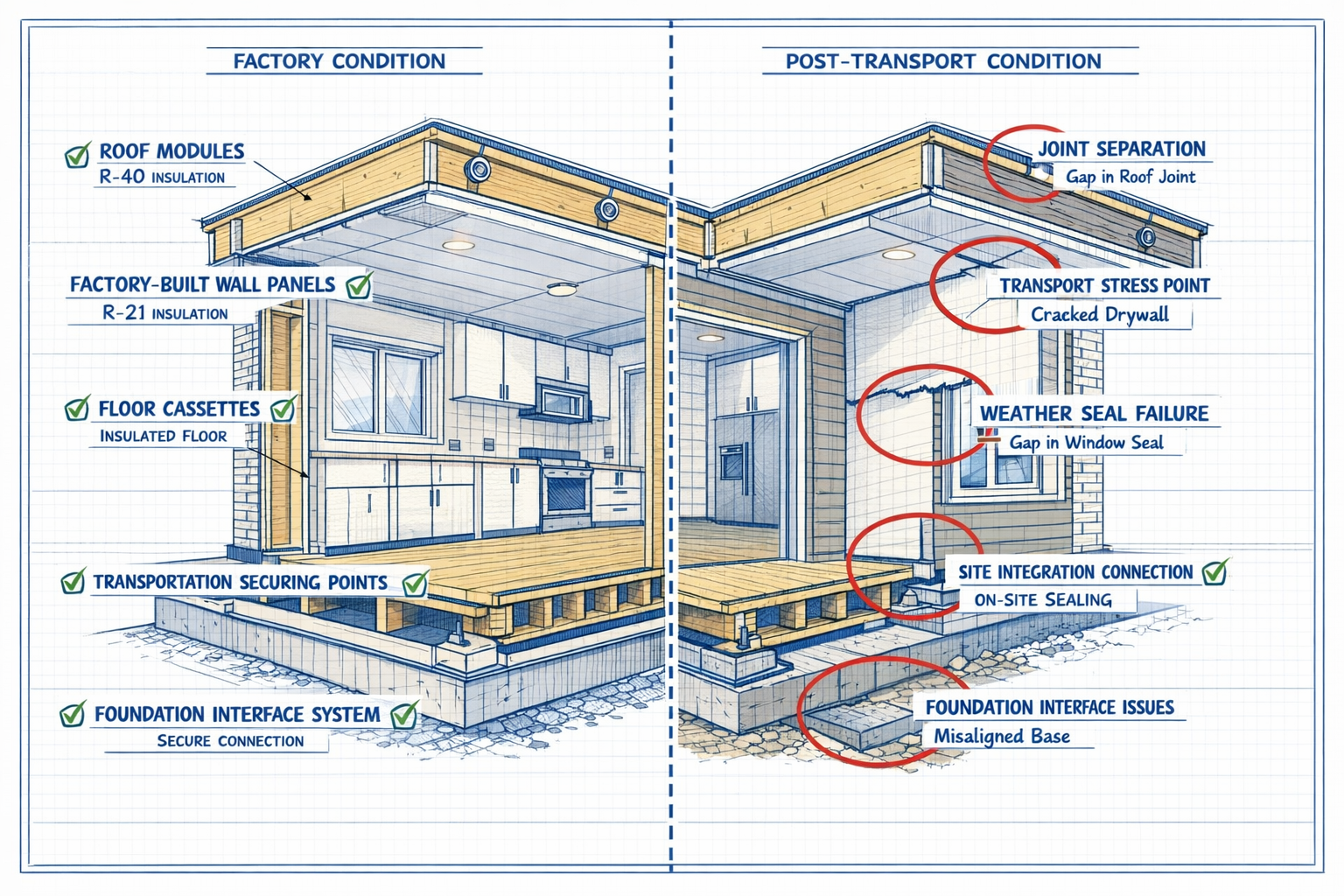
Common Defects in Modular Housing Requiring Level 3 Assessment
While modular construction offers numerous advantages, it also presents specific vulnerabilities that comprehensive surveys must identify:
Transport-Related Issues 🚛
- Structural stress fractures from road vibration
- Loosened connections and fasteners
- Damaged exterior cladding or finishes
- Compromised weatherproofing seals
- Window and door misalignment
Assembly and Installation Defects 🔨
- Improper module alignment during crane placement
- Inadequate sealing at module interfaces
- Incomplete or faulty connection bolting
- Foundation leveling issues affecting multiple modules
- Services connection failures between units
Weather Exposure Problems ☔
- Moisture ingress during transport or storage
- Condensation within sealed cavities
- Mold growth from exposure before weatherproofing
- Degraded insulation from water damage
- Corrosion of metal components
Quality Control Gaps ⚠️
- Factory production errors not caught before delivery
- Specification deviations from approved plans
- Substandard materials substitution
- Incomplete finishing work
- Missing or incorrect documentation
A thorough RICS building survey conducted by experienced professionals can identify these issues before they become costly problems. Understanding the key differences between survey levels helps buyers choose appropriate assessment depth.
Practical Guidance: Conducting Level 3 Surveys for Modular Properties
Pre-Survey Preparation and Documentation Review
Before conducting a Level 3 survey on modular housing, surveyors should gather comprehensive background information:
Essential Documentation 📋
- Factory production specifications and quality certificates
- Transportation and delivery reports
- Installation and assembly records
- Manufacturer's warranty documentation
- Building control approval certificates
- Structural calculations for module connections
- Weather exposure logs during construction
- Previous inspection reports
Site History Research 🔍
- Foundation preparation documentation
- Ground condition reports
- Drainage and services installation records
- Timeline of module delivery and installation
- Weather conditions during construction period
This preparation enables surveyors to focus inspection efforts on areas of highest risk and compare actual conditions against intended specifications.
Inspection Methodology for Modular Construction
A systematic approach ensures comprehensive assessment of modular properties:
External Inspection Focus Areas:
- Module Interfaces: Examine all vertical and horizontal joints between modules for gaps, misalignment, or inadequate sealing
- Cladding Systems: Check for damage, proper installation, and weather resistance at module boundaries
- Roof Connections: Assess weatherproofing, flashing details, and structural integrity where roof modules join
- Foundation Interface: Evaluate module-to-foundation connections for proper load transfer and moisture barriers
- Services Entry Points: Inspect where utilities enter modules and cross between units
Internal Inspection Priorities:
- Connection Walls: Examine interior walls at module boundaries for cracks, movement, or finish defects
- Floor Transitions: Check for level differences, squeaking, or separation at module joins
- Ceiling Lines: Look for evidence of roof leaks or movement at module connections
- Services Integration: Test plumbing, electrical, and HVAC functionality across module boundaries
- Finish Quality: Assess whether factory finishes meet specifications and identify transport damage
Technology-Enhanced Assessment:
- Thermal imaging of all module connection points
- Moisture meter readings at vulnerable areas
- Drone photography of roof and upper levels
- Air tightness testing at module interfaces
- Structural movement monitoring if concerns identified
The comprehensive nature of RICS surveys ensures that these critical elements receive appropriate attention.
Reporting Requirements and Client Communication
Level 3 survey reports for modular housing should provide clear, actionable information:
Report Structure for Modular Properties:
Executive Summary
- Overall condition rating
- Critical defects requiring immediate attention
- Transport or assembly-related issues identified
- Comparison to typical modular housing standards
Detailed Findings by System
- Structural elements and module connections
- Building envelope and weatherproofing
- Services and utilities integration
- Internal finishes and functionality
- Foundation and ground conditions
Modular-Specific Sections
- Transport damage assessment
- Assembly quality evaluation
- Module interface condition
- Manufacturer specification compliance
- Warranty validity considerations
Recommendations and Costings
- Immediate remedial work required
- Preventive maintenance schedule
- Long-term monitoring recommendations
- Estimated repair costs with priority ranking
Supporting Documentation
- Photographic evidence with annotations
- Thermal imaging results
- Drone footage and aerial photography
- Comparison against manufacturer specifications
Clear communication helps clients understand the unique aspects of modular construction and make informed decisions. For those considering whether to renegotiate after survey findings, comprehensive documentation proves essential.
Cost Considerations and Value Proposition
Investment in Level 3 Surveys for Modular Homes
While Level 3 surveys represent a significant investment, they provide crucial protection when purchasing modular housing:
Typical Cost Factors:
- Property size and complexity
- Number of modules requiring assessment
- Technology requirements (drones, thermal imaging)
- Accessibility challenges
- Additional specialist investigations needed
- Geographic location and surveyor availability
Value Delivered:
- Early identification of transport damage (potentially £10,000-£50,000 in repairs)
- Detection of assembly defects before warranty expiration
- Negotiation leverage based on documented issues
- Peace of mind regarding structural integrity
- Long-term maintenance planning guidance
- Insurance claim support if defects discovered
The comprehensive approach of Level 3 surveys often uncovers issues that less detailed assessments miss, potentially saving buyers substantial costs. Understanding different survey levels helps buyers allocate appropriate budgets.
When Level 3 Surveys Are Essential vs. Optional
Level 3 Surveys Are Essential For:
✅ Newly installed modular homes (first 2 years)
✅ Properties with visible transport or assembly damage
✅ Modular homes with complex multi-module designs
✅ Properties where manufacturer documentation is incomplete
✅ Modular buildings in exposed or challenging locations
✅ Purchases requiring mortgage approval with strict lender requirements
✅ Properties with known quality control issues from specific manufacturers
Level 2 Surveys May Suffice For:
⚪ Recently manufactured modular homes from reputable manufacturers with comprehensive warranties
⚪ Single-module or simple two-module designs
⚪ Properties with complete documentation and recent factory inspections
⚪ Modular homes less than 6 months from installation with no visible issues
However, given the unique risks associated with modular construction, most property professionals recommend Level 3 surveys for these properties regardless of age or apparent condition. The homebuyer survey versus full structural survey decision becomes particularly important for modular properties.
Future Trends: Surveying in the Modular Construction Era
Emerging Technologies and Methodologies
The surveying profession continues evolving alongside construction innovation:
Artificial Intelligence Integration 🤖
- Automated defect recognition from photographic analysis
- Predictive modeling for maintenance requirements
- Comparative database analysis across similar modular properties
- Risk assessment algorithms specific to modular construction
Digital Twin Technology 💻
- 3D modeling of surveyed properties
- Virtual reality inspection capabilities
- Ongoing monitoring through IoT sensors
- Historical condition tracking over property lifetime
Blockchain Documentation 🔗
- Immutable records of factory production quality
- Transportation and installation verification
- Warranty and compliance certificate authentication
- Transparent supply chain documentation
Advanced Materials Science 🔬
- Non-destructive testing of composite materials
- Enhanced moisture detection in modern building materials
- Thermal performance verification
- Structural integrity assessment of innovative connections
These developments will further enhance the Level 3 Surveys for Modular Housing Booms: RICS Standards in 2026's Offsite Construction Uptick, providing even more comprehensive assessments.
Professional Development for Surveyors
As modular construction becomes mainstream, surveyors must develop specialized knowledge:
Essential Competencies:
- Understanding factory production processes and quality control
- Knowledge of transportation logistics and associated risks
- Expertise in module connection systems and assembly techniques
- Familiarity with specific modular manufacturers and their standards
- Proficiency with advanced inspection technologies
- Awareness of modular-specific building regulations
Continuing Professional Development:
- RICS-approved courses on modular construction assessment
- Manufacturer-specific training programs
- Technology certification for drones and thermal imaging
- Industry conferences focused on offsite construction
- Collaborative learning with construction professionals
The construction regulations governing modular housing continue evolving, requiring ongoing professional education.
Conclusion
The intersection of Level 3 Surveys for Modular Housing Booms: RICS Standards in 2026's Offsite Construction Uptick represents a critical evolution in property assessment. As factory-built homes become increasingly prevalent solutions to housing challenges, the surveying profession must adapt its methodologies to address the unique characteristics and vulnerabilities of modular construction.
The updated RICS Home Survey Standards, expected to be finalized by March 2026, provide essential guidance for assessing these innovative dwellings[5]. By incorporating specific protocols for "additional risk" properties and embracing technological advances like drones, thermal imaging, and AI analysis, these standards equip surveyors to deliver comprehensive assessments that protect buyers and support the responsible growth of modular construction.
Key Recommendations for Stakeholders
For Property Buyers:
- Always commission a Level 3 survey for modular homes, regardless of apparent condition
- Request surveyors with specific modular construction experience
- Ensure comprehensive documentation review before purchase
- Understand manufacturer warranties and their limitations
- Plan for ongoing monitoring of module connection points
For Surveyors:
- Invest in technology and training specific to modular construction assessment
- Develop relationships with modular manufacturers to understand their systems
- Stay current with RICS standard updates and implementation guidance
- Build expertise in transport damage identification and assembly quality evaluation
- Collaborate with other professionals to share knowledge and best practices
For Industry Professionals:
- Support transparent documentation throughout the modular construction process
- Implement quality control measures that facilitate surveyor assessment
- Provide comprehensive handover information to property owners
- Engage with RICS standard development to ensure practical applicability
- Promote consumer education about modular construction benefits and considerations
The modular housing boom of 2026 offers tremendous opportunities to address housing shortages sustainably and efficiently. However, realizing these benefits requires rigorous assessment practices that identify and address the unique challenges of factory-built construction. By embracing updated RICS standards and leveraging advanced surveying technologies, professionals can ensure that modular homes deliver on their promise of quality, affordability, and durability.
Take Action Today: Whether you're considering purchasing a modular home, conducting surveys on these innovative properties, or involved in their construction, understanding the critical role of comprehensive Level 3 surveys ensures successful outcomes. Engage with qualified property surveyors who understand both traditional surveying principles and the specific requirements of modern modular construction. The future of housing depends on professional expertise that bridges innovation with accountability.
References
[1] Building Survey Standards Evolution How Rics Quality Strengthening Initiatives Impact Surveyor Practice In 2026 – https://nottinghillsurveyors.com/blog/building-survey-standards-evolution-how-rics-quality-strengthening-initiatives-impact-surveyor-practice-in-2026
[2] Home Surveys – https://www.rics.org/profession-standards/rics-standards-and-guidance/sector-standards/building-surveying-standards/home-surveys
[3] Level 3 Survey – https://surveymatch.co.uk/level-3-survey/
[4] Understanding The Rics Home Survey Standard Proposal – https://www.rics.org/news-insights/understanding-the-rics-home-survey-standard-proposal
[5] Home Survey Standards – https://www.rics.org/profession-standards/rics-standards-and-guidance/sector-standards/building-surveying-standards/home-surveys/home-survey-standards
[6] Home Survey Standard 2nd Edition A Progress Update – https://www.rics.org/news-insights/home-survey-standard-2nd-edition-a-progress-update