

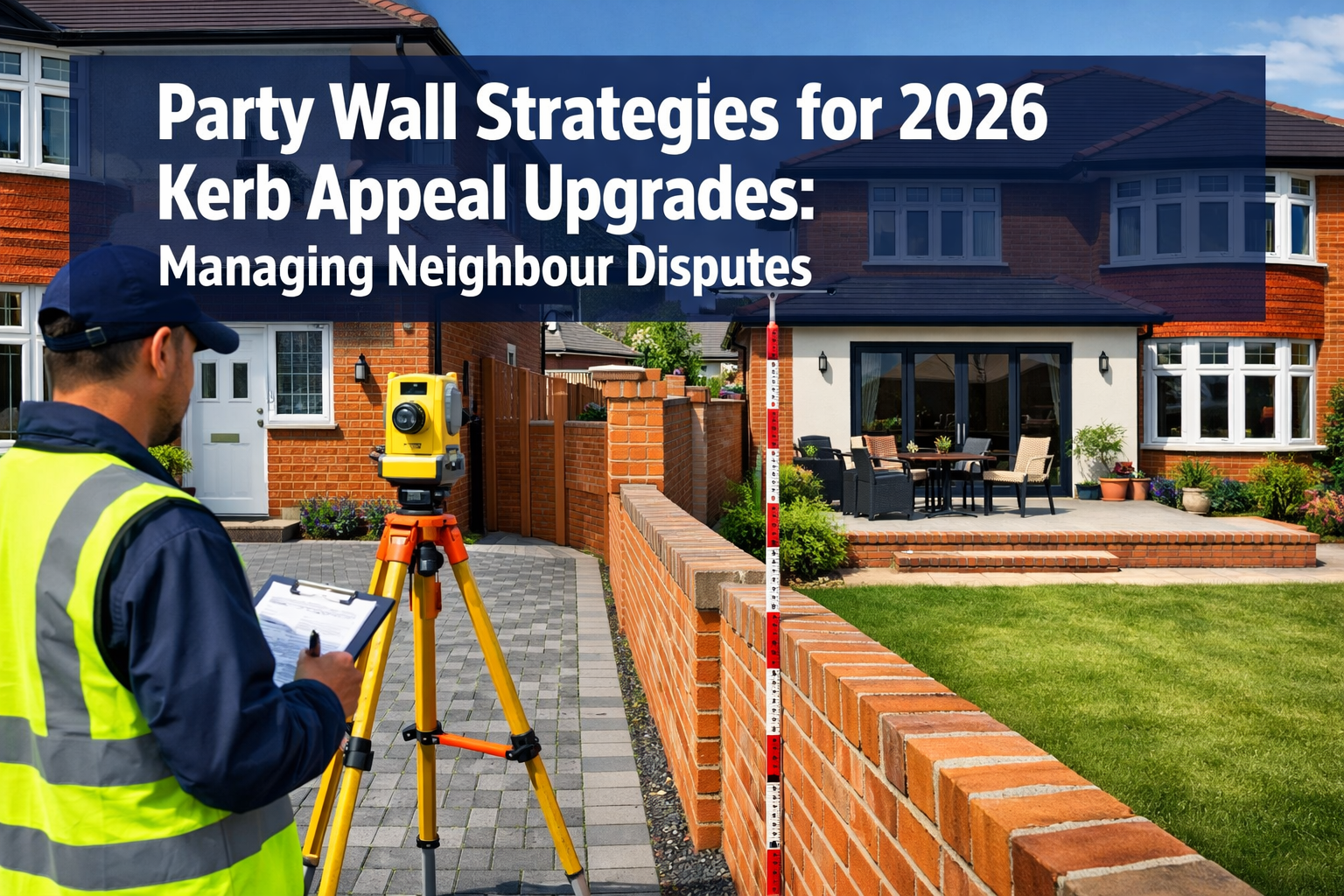
Imagine losing over a third of your property's value because of a scruffy neighbour. Recent survey data reveals that 34% of potential buyers reduce their offers when neighbouring properties appear neglected. In 2026's recovering buy-to-let market, understanding party wall strategies for kerb appeal upgrades has become essential for property investors and homeowners alike. Whether planning a new driveway, garden extension, or boundary improvements, navigating the Party Wall Act 1996 correctly can mean the difference between harmonious neighbourly relations and costly legal disputes.
This comprehensive guide explores Party Wall Strategies for 2026 Kerb Appeal Upgrades: Managing Neighbour Disputes Over Driveways and Garden Extensions, providing property owners with the knowledge needed to enhance their properties while maintaining positive relationships with adjoining owners.
Key Takeaways
- Party wall compliance is mandatory when kerb appeal improvements affect shared boundaries, walls, or structures between properties, with specific notice requirements under the Party Wall Act 1996
- Scruffy neighbours impact property values significantly, with 34% of buyers reducing offers when adjacent properties appear neglected, making boundary improvements strategically important
- Proper party wall notices prevent disputes by establishing clear agreements before work begins on driveways, garden extensions, or boundary walls
- Professional party wall surveyors facilitate fair resolutions when disagreements arise, protecting both building owners and adjoining owners' interests
- 2026's buy-to-let market recovery makes kerb appeal upgrades particularly valuable, but requires careful navigation of neighbour relations and legal requirements
Understanding Party Wall Act Requirements for Kerb Appeal Projects
The Party Wall Act 1996 governs construction work affecting shared boundaries between properties in England and Wales. As kerb appeal projects gain momentum in 2026, understanding when party wall compliance applies has become crucial for homeowners and buy-to-let investors.
When Do Driveway Projects Require Party Wall Notices?
Driveway improvements typically trigger party wall requirements in several scenarios:
Excavation near boundaries: When digging foundations for new driveways or installing drainage systems within three metres of a neighbouring structure, party wall notices become necessary. The depth of excavation determines the specific requirements.
Shared access arrangements: Properties with shared driveways or access routes require careful consideration. Any work affecting the structural integrity or use of shared surfaces needs formal agreement.
Boundary wall modifications: Installing new gateposts, pillars, or boundary features that connect to or affect existing party walls requires proper notification under the Act.
"Mandatory party wall compliance applies when work affects shared walls or structures between adjoining properties, including loft conversions"[1]
Garden Extensions and Boundary Wall Considerations
Garden extensions represent one of the most common sources of boundary disputes in 2026. Understanding the legal framework prevents costly conflicts:
🏗️ Building on or astride the boundary line requires a party wall agreement, even for garden structures like raised patios or retaining walls.
🌳 Excavation for garden rooms or extensions within three or six metres of neighbouring structures (depending on depth) triggers notice requirements.
🧱 Raising existing boundary walls or constructing new party fence walls needs mutual agreement and proper documentation.
The Impact of Neighbour Relations on Property Values in 2026
The connection between neighbourly disputes and property values has become increasingly documented in 2026's property market. Understanding these dynamics helps property owners make informed decisions about kerb appeal investments.
The 34% Offer Reduction Factor
Survey data consistently shows that scruffy neighbouring properties significantly impact buyer perception and offer prices. When potential buyers view a property with poorly maintained adjacent homes, they typically reduce offers by approximately 34%. This substantial reduction reflects concerns about:
- Future resale challenges if neighbourhood appearance continues declining
- Quality of life considerations regarding neighbourhood standards
- Potential dispute risks with neighbours who don't maintain properties
- Hidden structural issues that neglected exteriors might indicate
For buy-to-let investors, this factor becomes particularly critical. Tenant attraction and rental yields directly correlate with neighbourhood appearance and perceived property standards.
Strategic Kerb Appeal Improvements for Buy-to-Let Markets
The 2026 buy-to-let market recovery presents opportunities for strategic property improvements. However, these must be approached carefully:
| Improvement Type | Party Wall Required? | Neighbour Impact | Value Addition |
|---|---|---|---|
| Block paving driveway | Sometimes (if excavation) | High visibility | 5-10% value increase |
| Garden extension/patio | Often (boundary work) | Moderate visibility | 8-15% value increase |
| Boundary wall enhancement | Usually required | Direct shared impact | 3-7% value increase |
| Front garden landscaping | Rarely required | High visibility | 4-8% value increase |
Proactive Approaches to Neighbour Relations
Smart property owners in 2026 recognize that preventing disputes proves far more cost-effective than resolving them. Effective strategies include:
✅ Early communication: Discussing planned improvements with neighbours before formal notices creates goodwill.
✅ Shared benefits: Proposing improvements that enhance both properties (like boundary wall upgrades) encourages cooperation.
✅ Professional documentation: Using party wall surveyors from the outset demonstrates seriousness and professionalism.
✅ Transparent timelines: Providing clear schedules for work minimizes inconvenience and frustration.
Implementing Party Wall Strategies for 2026 Kerb Appeal Upgrades: Managing Neighbour Disputes Over Driveways and Garden Extensions
Successfully navigating party wall requirements while enhancing kerb appeal requires systematic planning and execution. This section provides practical guidance for property owners undertaking improvements in 2026.

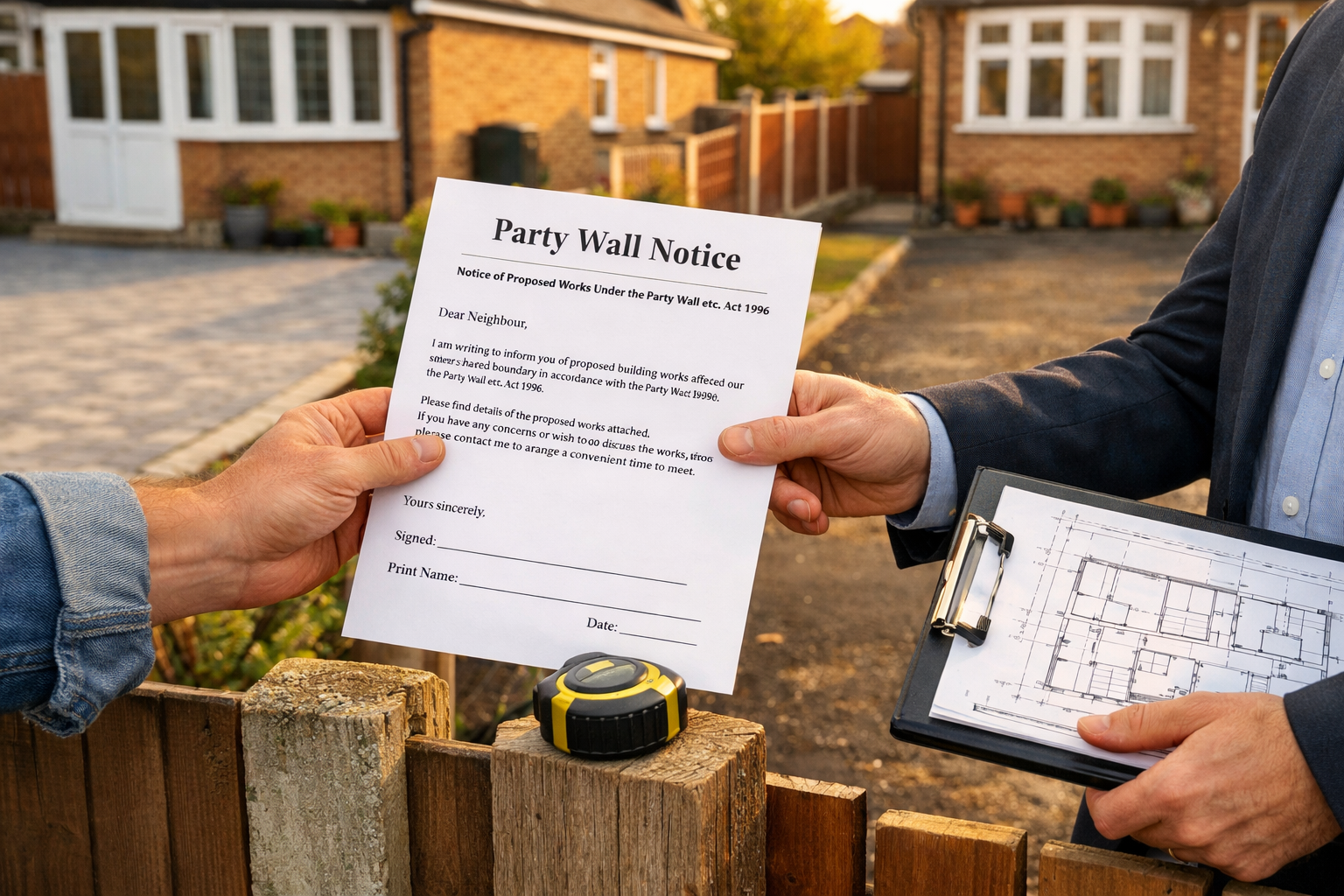
Step-by-Step Party Wall Notice Process
The formal process for party wall compliance follows a structured timeline that property owners must understand:
1. Initial Assessment (2-3 months before work)
Begin by determining whether your planned kerb appeal project triggers party wall requirements. Consider consulting with party wall surveyor responsibilities specialists who can assess your specific situation.
2. Serve Party Wall Notice (Minimum 2 months before work)
For boundary walls and new construction, serve notice at least two months before starting. For excavation work, one month's notice suffices. The notice must include:
- Detailed description of proposed work
- Start date for construction
- Technical drawings or plans
- Contact information for your surveyor (if appointed)
3. Neighbour Response Period (14 days)
Adjoining owners have 14 days to consent or dissent. Silence after 14 days constitutes dissent, triggering the dispute resolution process.
4. Appointing Surveyors (if needed)
When neighbours dissent or don't respond, the London party wall agreement process requires surveyor appointment. Options include:
- Agreed surveyor: Both parties use one impartial surveyor (most cost-effective)
- Two surveyors: Each party appoints their own surveyor (more expensive but ensures representation)
- Three surveyors: Two party-appointed surveyors plus a third surveyor (rare for residential work)
Managing Common Driveway Disputes
Driveway projects frequently generate neighbour concerns. Addressing these proactively prevents escalation:
Drainage and water runoff: New driveways must include proper drainage to prevent water flowing onto neighbouring properties. Modern permeable paving solutions address this concern while meeting building regulations.
Access during construction: Temporary access restrictions can frustrate neighbours. Provide advance notice of any access limitations and offer alternative arrangements where possible.
Boundary encroachment: Ensure accurate boundary surveys before beginning work. Even minor encroachments can trigger property disputes that delay projects and damage relationships.
Noise and disruption: Schedule noisy work during reasonable hours and inform neighbours of expected duration. Most local authorities restrict construction noise to weekdays between 8 AM and 6 PM.
Garden Extension Best Practices
Garden extensions offer excellent kerb appeal improvements but require careful boundary consideration:
🏡 Retaining walls and level changes: When creating raised patios or garden rooms, ensure retaining walls don't affect neighbouring land drainage or stability.
🌿 Planting and root systems: While not typically covered by party wall legislation, tree and shrub placement near boundaries deserves consideration. Large trees can cause subsidence issues affecting both properties.
🔨 Construction access: Garden extensions often require construction access through side passages or driveways. Negotiate access arrangements early and document agreements in writing.
Cost Considerations and Budgeting
Understanding party wall agreement costs helps property owners budget appropriately for kerb appeal projects:
Party wall surveyor fees typically range from £700-£1,500 for straightforward residential work, though complex projects or disputes can increase costs significantly.
Award preparation costs cover the formal party wall award document that records the agreement between parties. These typically add £300-£600 to total costs.
Dispute resolution expenses can escalate quickly if neighbours contest work. Budget an additional £2,000-£5,000 for contentious situations requiring extensive surveyor involvement.
Preventative investment perspective: While party wall compliance adds costs, it protects against far more expensive legal disputes, work stoppages, and potential property damage claims.
Leveraging Professional Support
Professional guidance proves invaluable for complex kerb appeal projects involving party walls:
Chartered surveyors provide comprehensive support including boundary surveys, party wall notices, and dispute resolution. Their expertise prevents costly mistakes and ensures legal compliance.
Building contractors experienced with party wall work understand notification requirements and can coordinate with surveyors to maintain project timelines.
Legal advisors become necessary when disputes escalate beyond surveyor resolution or when legal requirements for boundary walls create complexity.
Documentation and Record-Keeping
Maintaining thorough documentation protects all parties and facilitates smooth project completion:
📄 Pre-work condition surveys: Photograph and document neighbouring properties before starting work. This establishes baseline conditions and prevents false damage claims.
📋 All correspondence: Keep copies of party wall notices, responses, emails, and meeting notes. These create an audit trail if disputes arise.
📐 Technical drawings and specifications: Detailed plans help neighbours understand proposed work and reduce misunderstandings.
📸 Progress documentation: Regular photographic records of work progress demonstrate compliance with party wall awards and building regulations.
Resolving Disputes When They Arise
Despite best efforts, disputes sometimes occur. Effective resolution strategies include:
Mediation services: Before formal legal action, consider professional mediation. Many building surveyor services offer mediation as part of their party wall work.
Surveyor-led resolution: Party wall surveyors have statutory powers to resolve disagreements through the party wall award process. This formal mechanism provides legally binding resolution without court involvement.
Compromise and negotiation: Often, disputes stem from misunderstandings or concerns about specific work aspects. Flexibility on timing, methods, or additional protections can resolve many conflicts.
Legal action as last resort: Court proceedings should be avoided when possible due to costs and relationship damage. However, serious breaches of party wall awards or refusal to engage with the statutory process may necessitate legal intervention.
Regional Considerations Across London
Party wall requirements apply uniformly across England and Wales, but local market conditions and property types create regional variations in how kerb appeal projects proceed. Property owners in different London areas should consider local factors:
Areas like Merton, Fulham, and Kensington feature high property values where kerb appeal investments yield substantial returns. However, these areas also have sophisticated property owners who expect rigorous party wall compliance.
Outer London locations such as Bromley, Croydon, and Enfield often have more varied property types and larger gardens, making garden extension projects particularly popular for kerb appeal enhancement.
Future-Proofing Your Kerb Appeal Investment
As 2026 progresses, smart property owners think beyond immediate improvements to long-term value protection:
Climate resilience: Modern driveway and garden designs incorporate sustainable drainage systems (SuDS) and climate-adapted landscaping that maintains appeal through changing weather patterns.
Maintenance planning: Budget for ongoing maintenance of boundary walls, driveways, and garden features. Well-maintained improvements continue adding value; neglected ones become liabilities.
Relationship investment: Positive neighbour relations represent intangible assets. Properties with harmonious neighbour relationships sell faster and command premium prices.
Documentation retention: Keep all party wall awards, agreements, and completion certificates. These documents prove compliance and reassure future buyers about proper procedures.
Conclusion
Party Wall Strategies for 2026 Kerb Appeal Upgrades: Managing Neighbour Disputes Over Driveways and Garden Extensions requires balancing legal compliance, neighbourly relations, and strategic property enhancement. The 34% offer reduction associated with scruffy neighbours underscores why kerb appeal improvements matter, particularly in 2026's recovering buy-to-let market.
Success depends on understanding when party wall notices are required, following proper procedures, and maintaining open communication with adjoining owners. Professional support from qualified party wall surveyors prevents costly disputes and ensures projects proceed smoothly.
Actionable Next Steps
-
Assess your project: Determine whether your planned kerb appeal improvements trigger party wall requirements by consulting with a qualified surveyor.
-
Engage neighbours early: Discuss your plans informally before serving formal notices to build goodwill and identify concerns.
-
Budget comprehensively: Include party wall compliance costs, professional fees, and contingency funds for unexpected issues.
-
Document everything: Photograph existing conditions, keep all correspondence, and maintain detailed project records.
-
Hire qualified professionals: Work with experienced party wall surveyors and contractors familiar with building walls on property lines and boundary work.
-
Plan realistic timelines: Factor in the minimum two-month notice period and potential negotiation time when scheduling work.
By implementing these party wall strategies, property owners can enhance kerb appeal, increase property values, and maintain positive neighbour relationships—creating win-win outcomes in 2026's competitive property market.
References
[1] Party Wall Surveying Surge In 2026 Loft Conversions Navigating High Demand Compliance During Housing Uptick – https://nottinghillsurveyors.com/blog/party-wall-surveying-surge-in-2026-loft-conversions-navigating-high-demand-compliance-during-housing-uptick









