
{"cover":"Professional landscape format (1536×1024) hero image featuring bold text overlay 'Building Survey Essentials for the 2026 Northern Housing Boom: Capturing Value in High-Growth Markets' in extra large 72pt white sans-serif font with dark shadow and semi-transparent navy overlay box, positioned in upper third. Background shows panoramic view of Northern England housing development with modern brick terraced homes, Victorian properties, and new construction sites under clear sky. Foreground includes professional surveyor with tablet and laser measuring device examining property exterior. Color scheme: deep navy blue, white, warm brick red accents. High contrast, magazine cover quality, editorial style with depth of field effect emphasizing text and surveyor figure.","content":["Detailed landscape format (1536×1024) image showing split-screen comparison of Northern England property markets in 2026. Left side displays colorful heat map of UK with North East and North West regions highlighted in deep red showing +6.8% and +4.1% price growth, South regions in pale yellow showing +1.0-1.9% growth. Right side shows professional RICS surveyor conducting detailed building inspection of Victorian terrace property with thermal imaging camera, moisture meter, and digital tablet displaying survey checklist. Include percentage growth figures as bold text overlays, upward trending arrows, and professional survey equipment close-ups. Clean, informative aesthetic with data visualization elements.","Detailed landscape format (1536×1024) image depicting comprehensive building survey inspection process in Northern housing market. Central focus on cross-section cutaway view of typical Northern terraced property showing multiple inspection points: roof structure with highlighted areas for slate condition, chimney stack, loft insulation; wall sections showing cavity wall construction, damp-proof course, pointing condition; foundation and drainage systems. Overlay transparent checklist boxes with green checkmarks and amber warning icons. Include professional surveyor silhouettes at various inspection points with measurement tools. Color-coded severity indicators (green, amber, red). Technical blueprint aesthetic with modern infographic styling and clear annotation labels.","Detailed landscape format (1536×1024) image showing property valuation negotiation scenario in Northern housing market context. Split composition: left side displays modern home office with laptop screen showing building survey report with highlighted defect sections, cost estimates in spreadsheet format, and property photos with annotation markers. Right side shows estate agent and buyers in professional discussion with documents on table, including survey report, property particulars, and calculator showing potential price reduction figures. Include visual elements: percentage discount badges (-3% to -8%), cost estimate callout boxes (£5,000-£15,000), and upward trending Northern market price graph in background. Professional, clean aesthetic with financial data visualization."]"}

The Northern housing market is experiencing unprecedented momentum in 2026. While Southern England's property prices crawl forward at modest rates, Northern regions are surging ahead with exceptional growth figures that demand specialized surveying approaches. Understanding Building Survey Essentials for the 2026 Northern Housing Boom: Capturing Value in High-Growth Markets has become critical for property professionals, buyers, and investors seeking to capitalize on this regional shift.
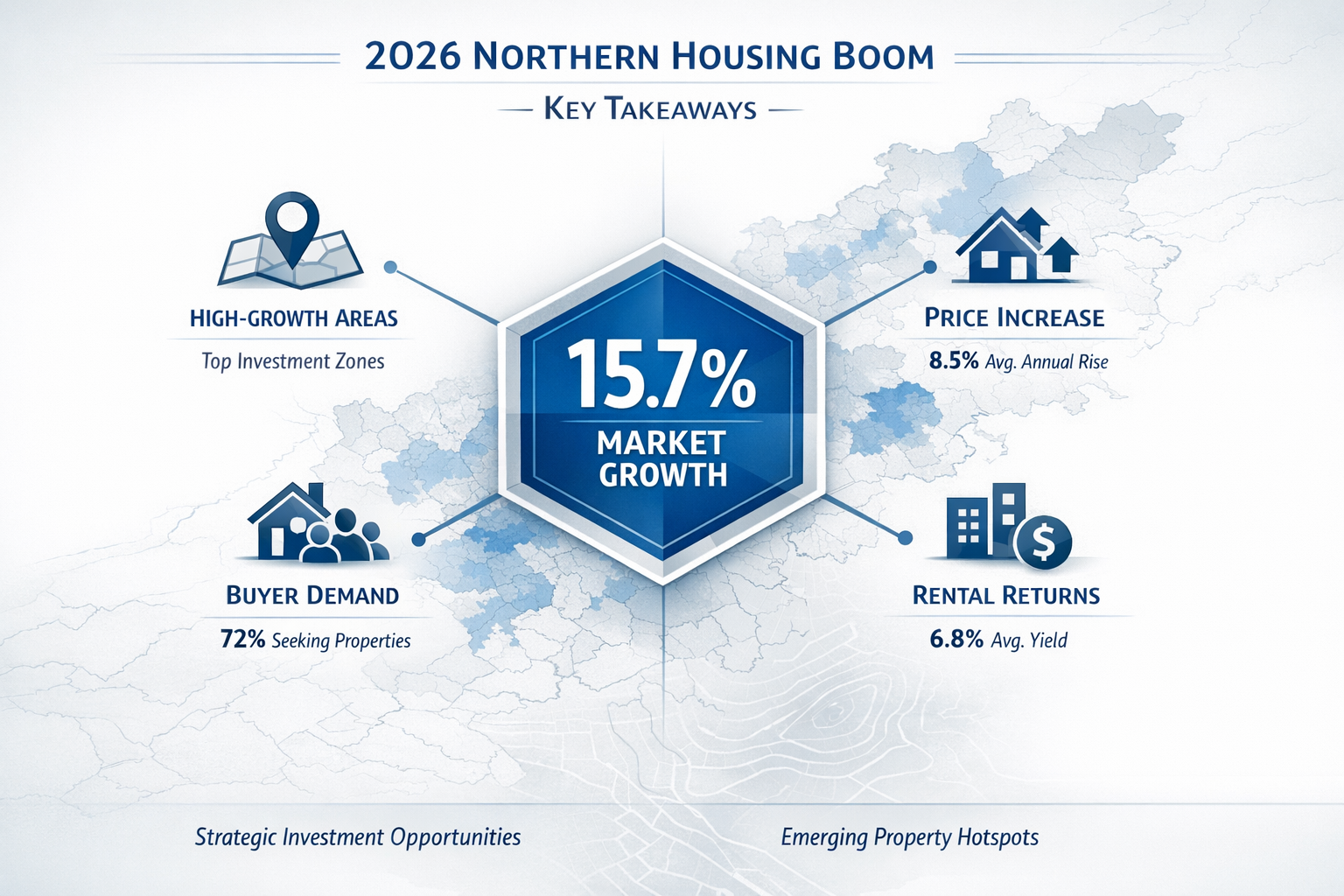
The North East recorded an impressive +6.8% annual price increase, while the North West saw +4.1% growth—significantly outpacing Southern regions where the South East managed only +1.0% and the South West +1.9%[1]. This dramatic regional divergence creates unique opportunities and challenges for building surveyors operating in these fast-moving markets.
Key Takeaways
🏠 Northern markets are outperforming: The North East and North West are experiencing 4-7 times higher price growth than Southern regions, creating urgent demand for thorough building surveys.
📊 First-time buyers are driving demand: Extended mortgage terms and improved affordability are fueling buyer activity, particularly among first-time purchasers who require comprehensive survey guidance.
🔍 Turnkey properties command premiums: Fully renovated homes are performing exceptionally well as buyers remain sensitive to renovation costs, making survey condition assessments more valuable than ever.
⚡ Fast-moving markets require rapid response: With buyer demand surging 57% post-Christmas and stock levels at eight-year highs, surveyors must deliver timely, actionable reports to support quick purchasing decisions[3].
💰 Value capture opportunities exist: Strategic survey insights can identify negotiation leverage and investment potential in properties that might otherwise be overlooked in competitive markets.
Understanding the 2026 Northern Housing Market Dynamics
Regional Price Growth Patterns
The geographical shift in UK housing market performance represents one of the most significant trends shaping property investment in 2026. Northern England and parts of Scotland have emerged as the clear winners in price appreciation, fundamentally changing where value can be captured.
Regional Performance Comparison:
| Region | Annual Price Growth | Market Characteristics |
|---|---|---|
| North East | +6.8% | Strongest growth, affordability advantage |
| North West | +4.1% | Urban regeneration, strong rental yields |
| Midlands | +3.2% | Manufacturing recovery, infrastructure investment |
| South East | +1.0% | Market stabilization, affordability constraints |
| South West | +1.9% | Moderate growth, lifestyle demand |
This performance gap creates distinct opportunities for building surveyors who understand regional construction characteristics and can identify properties with genuine value uplift potential.
Buyer Demographics Driving Demand
First-time buyers are playing a significant role in underpinning market activity throughout Northern regions[2]. Extended mortgage terms of 30-35 years have improved affordability calculations, allowing younger buyers to enter markets previously beyond their reach.
This demographic shift has important implications for building survey requirements:
- Education-focused reporting: First-time buyers often lack property maintenance experience and require clear, accessible survey reports
- Cost prioritization: Detailed repair cost estimates help buyers understand financial commitments beyond the purchase price
- Future-proofing assessments: Younger buyers benefit from understanding long-term maintenance requirements and potential upgrade opportunities
The surge in buyer activity—with demand increasing 57% in the two weeks following Christmas compared to the previous fortnight—demonstrates the urgency with which properties are being pursued[3]. This creates pressure for rapid survey turnaround without compromising thoroughness.
Market Moderation Expectations
While Northern regions led price growth through 2025, experts predict this strong performance is "likely to moderate in 2026" as market conditions stabilize[2]. This anticipated moderation doesn't signal a downturn but rather a transition to more sustainable growth rates.
For building surveyors, this moderation phase presents strategic opportunities:
✅ Identifying overvalued properties before market corrections
✅ Highlighting properties with genuine structural quality that justify premium pricing
✅ Supporting negotiation strategies based on condition assessments rather than pure market momentum
✅ Advising on renovation investments that will maintain value as growth rates normalize
Understanding these market dynamics enables surveyors to provide context-aware advice that goes beyond standard defect identification. For guidance on maximizing survey value, explore our insights on saving money with building surveys.
Building Survey Essentials for the 2026 Northern Housing Boom: Key Focus Areas
Property Types Dominating Northern Markets
Northern housing stock differs significantly from Southern counterparts, requiring specialized survey knowledge. Victorian and Edwardian terraced properties remain dominant in urban centers like Manchester, Liverpool, Newcastle, and Leeds, while post-war semi-detached homes characterize suburban areas.
Common Northern Property Characteristics:
🏘️ Victorian/Edwardian terraces (1850-1910)
- Solid wall construction (no cavity)
- Original slate roofs requiring maintenance
- Single-glazed sash windows
- Cellar spaces prone to dampness
- Shared party walls requiring inspection
🏡 Inter-war semi-detached (1920-1940)
- Early cavity wall construction
- Timber suspended ground floors
- Original chimneys and fireplaces
- Metal-framed windows
- Asbestos-containing materials potential
🏠 Post-war housing (1950-1980)
- System-built construction varieties
- Concrete components
- Flat roof extensions
- UPVC replacement windows
- Cavity wall insulation retrofits
Each property type presents distinct survey challenges that require specialized knowledge. Understanding regional construction methods and common defect patterns enables more accurate condition assessments and cost projections.
Critical Inspection Points for Northern Properties
Given the prevalence of older housing stock and Northern climate conditions, certain inspection areas demand particular attention during building surveys in these high-growth markets.
Moisture and Dampness Issues:
Northern England's higher rainfall and humidity levels make damp-related defects particularly common. Surveyors must thoroughly investigate:
- Rising damp in solid-wall properties lacking effective damp-proof courses
- Penetrating damp through deteriorated pointing, roof coverings, and window frames
- Condensation issues in poorly ventilated properties with inadequate heating
- Cellar dampness in Victorian terraces with unimproved basement spaces
Thermal imaging technology and moisture meters provide objective evidence to support condition assessments and repair recommendations.
Structural Movement and Subsidence:
Clay soil conditions in parts of the North West and Yorkshire create subsidence risks, while mining history in former coalfield areas introduces additional structural considerations:
- Foundation adequacy in older properties built before modern building regulations
- Historic movement evidence through crack pattern analysis
- Mining-related settlement in former industrial areas
- Tree-related subsidence near properties with mature vegetation
For properties showing movement indicators, understanding what to do after a bad building survey report becomes essential for buyers.
Roof Condition and Weatherproofing:
Original slate roofs on Victorian properties often approach the end of their serviceable life, representing significant potential expenditure:
- Slate condition assessment including nail sickness and delamination
- Chimney stack stability and pointing condition
- Valley and flashing integrity at roof junctions
- Roof structure examination where accessible via loft spaces
- Rainwater goods condition and drainage effectiveness
Providing accurate remaining life assessments and replacement cost estimates helps buyers make informed decisions in competitive markets.
Turnkey Property Assessment Strategies
Fully renovated homes continue to perform strongly throughout Northern markets, as buyers remain "sensitive to renovation costs" and prefer properties requiring minimal work[2]. This creates specific survey requirements for assessing recently renovated properties.
Quality Verification Checklist:
When surveying renovated properties claiming "turnkey" status, surveyors should verify:
- Building regulation compliance for structural alterations, extensions, and conversions
- Electrical installation certification (NICEIC or equivalent)
- Gas safety certification for heating systems and appliances
- Workmanship quality of visible finishes and installations
- Hidden defect potential where cosmetic improvements may conceal underlying issues
The premium commanded by turnkey properties justifies thorough investigation to ensure renovation quality matches asking prices. Buyers benefit from understanding whether recent work represents genuine value or superficial improvement masking fundamental problems.
Capturing Value Through Strategic Survey Insights
Negotiation Leverage from Survey Findings
In fast-moving markets, building survey reports become powerful negotiation tools when used strategically. The key lies in translating technical findings into financial impact assessments that support evidence-based price discussions.
Effective Negotiation Approaches:
💷 Quantified repair costs: Detailed cost estimates for identified defects provide objective negotiation anchors
💷 Priority categorization: Distinguishing urgent repairs from long-term maintenance helps buyers focus negotiations
💷 Market context: Understanding regional price growth helps determine reasonable adjustment expectations
💷 Alternative solutions: Presenting multiple remediation options gives buyers flexibility in negotiation strategies
For comprehensive guidance on this process, review our article on renegotiating after poor survey results.
Typical Negotiation Outcomes:
| Defect Severity | Typical Price Reduction | Alternative Solutions |
|---|---|---|
| Minor cosmetic issues | 0-2% | Buyer acceptance as-is |
| Moderate repairs needed | 2-5% | Seller remediation before completion |
| Significant structural issues | 5-10% | Price reduction or seller repairs |
| Major defects | 10%+ or withdrawal | Specialist investigation required |
The competitive nature of Northern markets in 2026 means sellers may be less willing to negotiate than in slower markets. However, well-documented survey findings still provide legitimate grounds for price discussions, particularly when defects weren't disclosed or visible during viewings.
Investment Potential Identification
Beyond defect identification, skilled surveyors can recognize value uplift opportunities that justify purchase prices in appreciating markets. This forward-looking approach helps buyers understand not just current condition but future potential.
Value Enhancement Opportunities:
🔧 Conversion potential: Identifying loft conversion, basement development, or extension possibilities
🔧 Energy efficiency improvements: Assessing insulation, heating, and glazing upgrade opportunities
🔧 Layout optimization: Recognizing reconfiguration potential to modernize dated floor plans
🔧 Outdoor space development: Evaluating garden, parking, or outbuilding enhancement options
In markets experiencing 4-7% annual growth, properties with additional development potential offer compounding value appreciation. A £200,000 property with £30,000 loft conversion potential might be worth £260,000 upon completion—a total value increase exceeding £40,000 when combined with market appreciation.
Risk Mitigation in Fast-Moving Markets
The urgency characterizing Northern housing markets in 2026 creates pressure to expedite purchasing decisions. Early January saw the highest early-January stock levels in eight years, with an average of 32 homes per estate agent[3]. This abundance of choice paradoxically increases decision pressure as buyers fear missing opportunities.
Survey-Based Risk Management:
Comprehensive building surveys provide essential risk mitigation in several ways:
✔️ Avoiding problem properties: Identifying fundamental issues before legal commitment
✔️ Budget certainty: Understanding total ownership costs including immediate and future repairs
✔️ Insurance implications: Flagging conditions that might affect insurance availability or premiums
✔️ Resale considerations: Recognizing defects that could complicate future sales
The relatively modest cost of a thorough building survey—typically £500-£1,500 depending on property size and complexity—represents excellent value when protecting purchases of £200,000-£400,000 in Northern markets.
For buyers considering whether surveys are necessary even for newer properties, our guide on building surveys for new builds provides valuable perspective.
Specialized Survey Considerations for Northern Regions

Climate-Related Assessment Factors
Northern England's climate presents specific challenges that require tailored survey approaches. Higher rainfall, increased humidity, and colder winter temperatures create conditions favoring certain defect types.
Weather-Related Inspection Priorities:
❄️ Thermal performance: Assessing insulation adequacy for heating efficiency
❄️ Condensation risk: Identifying ventilation deficiencies and cold bridging
❄️ Weatherproofing: Evaluating external envelope integrity against driving rain
❄️ Drainage capacity: Checking systems can handle higher rainfall volumes
❄️ Frost damage: Identifying vulnerable materials and construction details
Energy efficiency takes on particular importance in Northern climates where heating costs represent a larger proportion of occupancy expenses. Survey reports should address thermal performance and highlight cost-effective improvement opportunities.
Regional Construction Variations
Construction practices varied significantly across Northern regions, influenced by local material availability, industrial heritage, and regional building traditions. Effective surveyors understand these variations and adjust inspection approaches accordingly.
Regional Building Characteristics:
Lancashire and Yorkshire:
- Extensive use of local stone in older properties
- Mill conversion opportunities in former textile areas
- Back-to-back terraces in urban centers
- Pennine stone slate roofing in rural areas
North East:
- Tyneside flats (unique regional property type)
- Extensive use of brick in industrial-era housing
- Mining subsidence considerations in former coalfield areas
- Coastal properties facing salt weathering
Cumbria and rural areas:
- Traditional stone construction with lime mortars
- Agricultural building conversions
- Rendered finishes protecting stone walls
- Septic tank drainage systems
Understanding these regional variations enables more accurate condition assessments and appropriate repair specifications. For instance, recommending cement-based repointing for traditional lime-mortared stonework would be inappropriate and potentially damaging.
Modern Survey Technology Applications
Advanced survey technology enhances inspection capabilities and report quality, particularly valuable in competitive markets where comprehensive assessments must be completed rapidly.
Technology-Enhanced Survey Methods:
📱 Thermal imaging cameras: Identifying insulation deficiencies, moisture ingress, and heating system issues
📱 Moisture meters: Providing objective dampness measurements to support condition assessments
📱 Drone photography: Safely inspecting roof coverings and chimney stacks without scaffolding access
📱 Digital reporting platforms: Delivering annotated photographic evidence and interactive reports
📱 3D scanning: Creating accurate dimensional records for renovation planning
These technologies complement traditional survey methods rather than replacing them. Experienced professional judgment remains essential for interpreting findings and providing appropriate advice.
Preparing for Survey Success in Northern Markets
Pre-Survey Research and Documentation
Buyers can maximize survey value by conducting preliminary research and gathering relevant documentation before the inspection takes place.
Useful Pre-Survey Information:
📋 Property age and construction type: Historical records and listing details
📋 Previous survey reports: If available from current owners
📋 Planning and building regulation records: Local authority searches
📋 Flood risk data: Environment Agency information
📋 Mining reports: Coal Authority searches for relevant areas
📋 Energy Performance Certificate: Current EPC rating and recommendations
Our guide on what to do before an RICS home survey provides comprehensive preparation advice.
Selecting Appropriate Survey Levels
Understanding the different survey types available helps buyers choose the most appropriate level for their circumstances and property type.
RICS Survey Level Comparison:
Level 1 (Condition Report):
- Basic condition assessment
- Suitable for newer, conventional properties
- Traffic light rating system
- No advice on repairs or costs
Level 2 (HomeBuyer Report):
- More detailed inspection
- Suitable for conventional properties in reasonable condition
- Includes market valuation
- Brief repair advice
Level 3 (Building Survey):
- Comprehensive inspection and analysis
- Essential for older, altered, or unusual properties
- Detailed defect descriptions and repair advice
- No standard format—tailored to property
Given the prevalence of older housing stock throughout Northern markets, Level 3 Building Surveys typically represent the most appropriate choice for properties built before 1980 or showing signs of significant alteration or deterioration.
For detailed comparison guidance, explore our article on choosing between homebuyer surveys and structural surveys.
Acting on Survey Findings
Receiving a building survey report represents the beginning rather than the end of the decision-making process. Buyers must evaluate findings in the context of their circumstances, budget, and risk tolerance.
Post-Survey Action Framework:
For minor defects:
- Proceed with purchase as planned
- Budget for routine maintenance and minor repairs
- Consider DIY capability for simple improvements
For moderate issues:
- Obtain specialist quotations for significant repairs
- Negotiate price reduction or seller remediation
- Adjust renovation budget and timeline expectations
For major defects:
- Commission specialist investigations (structural engineer, damp specialist)
- Reassess purchase viability based on total costs
- Consider withdrawal if issues fundamentally affect value or safety
The competitive nature of Northern markets in 2026 may limit negotiation flexibility, but survey findings still provide essential information for informed decision-making. Understanding total ownership costs—including immediate repairs and future maintenance—enables realistic budget planning.
Future-Proofing Property Investments in Northern Markets
Sustainability and Energy Efficiency Considerations
As building regulations evolve and energy costs remain significant, properties with poor thermal performance face potential value depreciation. Survey assessments should address energy efficiency and improvement potential.
Energy Performance Priorities:
⚡ Insulation standards: Loft, cavity wall, and floor insulation adequacy
⚡ Heating systems: Boiler efficiency and control sophistication
⚡ Glazing performance: Double or triple glazing, frame condition
⚡ Renewable energy potential: Solar panel, heat pump suitability
⚡ Air tightness: Draught-proofing and ventilation balance
Properties achieving EPC ratings of C or above typically command premium prices and attract broader buyer interest. Conversely, properties rated F or G face potential rental restrictions and may require mandatory improvements before future sales.
Maintenance Planning and Lifecycle Costing
Effective building surveys provide not just current condition assessments but also forward-looking maintenance guidance. This lifecycle perspective helps buyers understand long-term ownership costs.
Typical Maintenance Timeline:
| Component | Expected Lifespan | Replacement Cost Range |
|---|---|---|
| Slate roof | 80-100 years | £8,000-£15,000 |
| Tile roof | 50-60 years | £6,000-£10,000 |
| Gas boiler | 12-15 years | £2,000-£3,500 |
| UPVC windows | 20-25 years | £5,000-£8,000 |
| External decoration | 5-7 years | £2,000-£4,000 |
| Rewiring | 25-30 years | £4,000-£6,000 |
Understanding these lifecycle costs enables realistic budgeting for property ownership beyond the purchase price. In appreciating markets, properties requiring significant near-term capital expenditure may still represent good value if purchase prices reflect these requirements.
Market Positioning for Future Resale
While 2026's Northern housing boom creates excellent buying opportunities, eventual resale considerations should inform purchase decisions. Survey insights help evaluate properties' long-term market appeal.
Resale Value Factors:
🏆 Location fundamentals: Transport links, schools, amenities
🏆 Property configuration: Bedroom count, bathroom provision, parking
🏆 Condition and presentation: Maintenance standards and modernization
🏆 Outdoor space: Garden size and usability
🏆 Development potential: Extension, conversion, or improvement possibilities
Properties scoring well across these factors typically maintain value through market cycles. Conversely, properties with fundamental limitations (poor location, awkward layout, limited parking) may underperform even in strong markets.
Survey reports highlighting significant defects affecting these core attributes deserve particular attention, as remediation costs may not be fully recoverable through enhanced resale values.
Conclusion

Building Survey Essentials for the 2026 Northern Housing Boom: Capturing Value in High-Growth Markets requires understanding the unique intersection of regional market dynamics, property characteristics, and survey methodology. Northern England's exceptional price growth—with the North East achieving +6.8% and North West +4.1% annual increases—creates both opportunities and risks for property buyers and investors[1].
Comprehensive building surveys provide essential protection in these fast-moving markets, where buyer demand has surged 57% and competitive pressure encourages rapid decisions[3]. The prevalence of Victorian and Edwardian housing stock throughout Northern urban centers demands specialized survey knowledge addressing solid wall construction, original roof coverings, and climate-related defect patterns.
Strategic survey insights extend beyond defect identification to encompass negotiation leverage, investment potential recognition, and risk mitigation. As markets transition toward more moderate growth rates in 2026, properties with genuine structural quality and development potential will increasingly differentiate themselves from those riding purely on market momentum[2].
Actionable Next Steps
For buyers navigating Northern housing markets in 2026:
✅ Commission appropriate survey levels: Level 3 Building Surveys for pre-1980 properties or those showing alteration or deterioration
✅ Engage local expertise: Select building surveyors with specific Northern market knowledge and regional construction understanding
✅ Prepare thoroughly: Gather relevant documentation and conduct preliminary research to maximize survey value
✅ Act decisively on findings: Evaluate survey results promptly, obtain specialist quotations where needed, and make informed decisions aligned with your circumstances
✅ Consider lifecycle costs: Look beyond purchase price to understand total ownership expenses including immediate repairs and future maintenance
✅ Maintain perspective: Balance survey findings against market opportunities, recognizing that no property is perfect but some defects matter more than others
The Northern housing boom of 2026 represents a significant regional market shift with genuine value capture potential for informed buyers. Comprehensive building surveys provide the essential foundation for confident decision-making in these dynamic, high-growth markets.
Whether you're a first-time buyer entering the market with extended mortgage terms, an investor seeking rental yield opportunities, or a relocating professional capitalizing on Northern affordability advantages, professional survey advice protects your interests and supports successful property acquisition.
For expert guidance tailored to your specific circumstances, explore our comprehensive building survey services and regional coverage throughout London and surrounding areas.
References
[1] House Price Forecast – https://hoa.org.uk/advice/guides-for-homeowners/i-am-buying/house-price-forecast/
[2] Seven Trends That Will Shape The Regional Housing Market In 2026 – https://www.struttandparker.com/blog/seven-trends-that-will-shape-the-regional-housing-market-in-2026
[3] Uk Housing Market 2026 Renewed Momentum Strengthening Demand And Signs Of Lasting Stability – https://bhwconveyancing.com/advice/uk-housing-market-2026-renewed-momentum-strengthening-demand-and-signs-of-lasting-stability/