

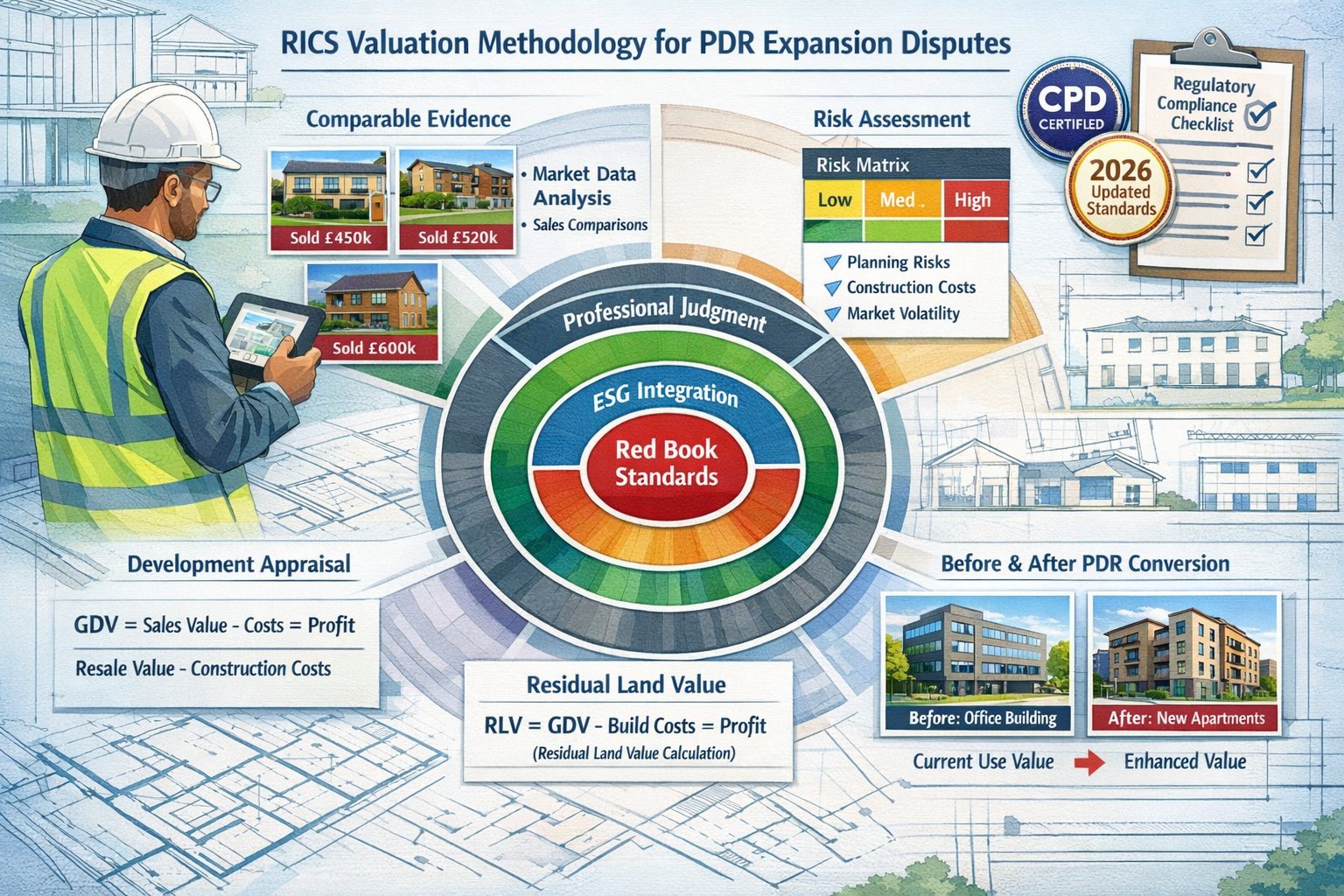
{"cover":"Professional landscape format (1536x1024) hero image with bold text overlay 'Expert Witness Valuations in 2026 PDR Disputes: RICS Protocols' in extra large 72pt white sans-serif font with dark semi-transparent overlay box, positioned in upper third. Background shows modern UK planning tribunal courtroom with expert witness stand, RICS professional reviewing documents, architectural plans of office-to-residential conversion visible on screens, gavels and legal documents on desk. Color scheme: deep navy blue, gold accents, white text. High contrast, editorial magazine cover quality, professional legal-property aesthetic with subtle Union Jack elements.","content":["Detailed landscape format (1536x1024) illustration showing split-screen comparison of office building transformation to residential apartments under permitted development rights. Left side: commercial office building with business signage and corporate windows. Right side: same building converted to residential with balconies, curtains, and domestic features. Center overlay shows RICS Red Book standards document with highlighted valuation protocols, surveyor with clipboard conducting assessment, planning permission stamps, and PDR regulatory framework icons. Professional architectural rendering style with annotation arrows, measurement indicators, and valuation assessment charts in corners.","Comprehensive landscape format (1536x1024) infographic depicting expert witness testimony process in planning tribunal for PDR disputes. Central figure: RICS-qualified surveyor in professional attire presenting evidence at witness stand with microphone. Surrounding elements: flowchart showing appeal process stages from initial valuation dispute through tribunal hearing to final decision, evidence documentation folders labeled 'comparables,' 'market analysis,' 'ESG factors,' legal precedent books, tribunal panel members reviewing documents, digital screens displaying property valuations and comparable sales data. Color-coded timeline showing 2026 regulatory updates, professional courtroom aesthetic with modern technology integration.","Detailed landscape format (1536x1024) technical diagram illustrating RICS valuation methodology framework for PDR expansion disputes. Center: layered circular diagram showing core valuation principles (Red Book standards, ESG integration, AI-assisted analysis, professional judgment). Radiating sections display: comparable evidence analysis with property photos and price points, risk assessment matrices, development value calculations with formulas, residual land value computations, before-and-after PDR conversion scenarios. Background includes surveyor using tablet with valuation software, architectural drawings of permitted development projects, regulatory compliance checklist, CPD certification badges, and 2026 updated standards documentation. Clean professional infographic style with data visualization elements."]}
The landscape of property development in the UK has shifted dramatically as permitted development rights (PDR) continue to expand, particularly for office-to-residential conversions. With these changes comes an inevitable surge in valuation disputes that require expert testimony before planning tribunals. As 2026 unfolds, RICS-qualified surveyors find themselves at the forefront of complex legal proceedings, navigating new appeal processes and presenting evidence that can determine the outcome of multi-million-pound disputes. 📊
Understanding Expert Witness Valuations in 2026 Permitted Development Rights Disputes: RICS Protocols for PDR Expansions has become essential for property professionals, developers, and landowners alike. The intersection of evolving PDR regulations, updated RICS Red Book standards, and tribunal procedures creates a challenging environment where professional expertise and regulatory compliance must align perfectly.
Key Takeaways
- PDR expansion for office-to-residential conversions has triggered a significant increase in valuation disputes requiring expert witness testimony at planning tribunals
- RICS Red Book 2025 updates now incorporate AI-assisted valuations, mandatory ESG considerations, and enhanced risk assessment protocols that expert witnesses must follow
- Expert witnesses must demonstrate compliance with updated CPD requirements effective January 2026 and apply the new ESG sustainability standard launching April 30, 2026
- Evidence strategies for tribunal testimony require comprehensive comparable analysis, development value calculations, and clear documentation of professional judgment
- Successful expert witness testimony depends on understanding both valuation methodology and legal procedures governing planning appeals
Understanding Permitted Development Rights Expansion in 2026
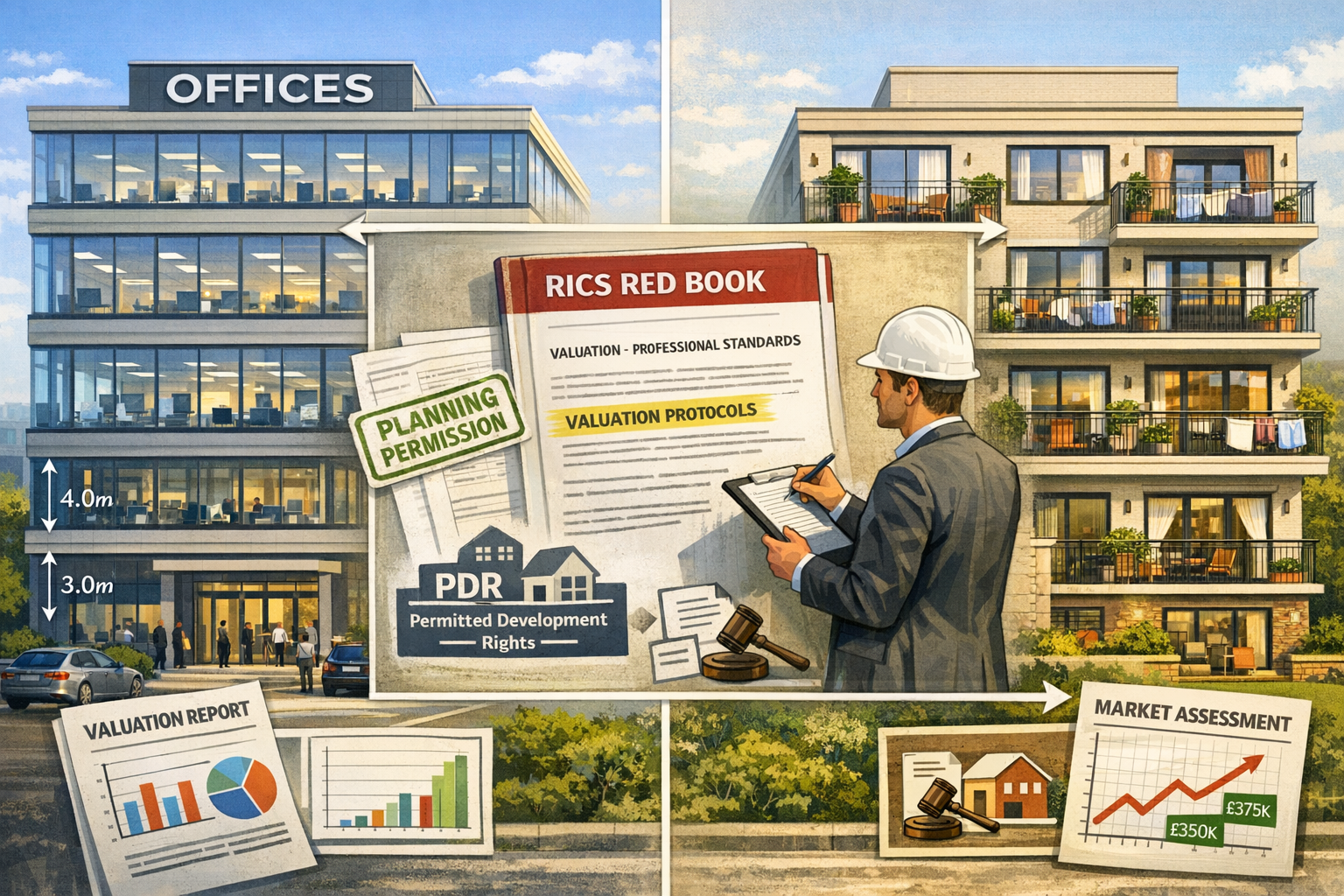
Permitted development rights represent a significant shift in how property owners can modify and convert their buildings without requiring full planning permission. In 2026, these rights have expanded considerably, particularly affecting commercial-to-residential conversions that bypass traditional planning scrutiny.
What Are Permitted Development Rights?
Permitted development rights allow property owners to make certain changes to their buildings without applying for planning permission. These rights have evolved to support government housing targets and urban regeneration initiatives. The current framework permits:
- Office-to-residential conversions under Class MA
- Upward extensions on existing buildings
- Agricultural building conversions
- Light industrial to residential changes
- Commercial to mixed-use transformations
Why PDR Disputes Are Increasing
The expansion of permitted development has created friction points between developers, local authorities, and neighboring property owners. Disputes typically arise over:
- Valuation disagreements regarding compensation for affected parties
- Impact assessments on neighboring property values
- Development viability calculations for PDR schemes
- Prior approval conditions and their effect on project values
- Loss of amenity claims requiring compensation quantification
The Land Agreements for Development Purposes guidance, reissued on February 9, 2026, provides updated frameworks for development scenarios but requires expert interpretation in PDR contexts[1]. This creates opportunities for valuation disputes that demand professional expert witness involvement.
The Role of Expert Witnesses in PDR Valuation Disputes
Expert witnesses serve a critical function in planning tribunals, providing independent professional opinions on property valuations affected by permitted development. Their testimony can make or break cases involving substantial financial stakes.
Core Responsibilities of Expert Witnesses
RICS-qualified surveyors acting as expert witnesses must fulfill several key obligations:
Independence and Objectivity 🎯
Expert witnesses owe their primary duty to the tribunal, not to the party instructing them. This fundamental principle requires complete professional independence, even when fees are paid by one party to the dispute.
Professional Competence
The revised CPD framework effective January 2026 requires experts to demonstrate ongoing professional development[4]. Witnesses must show current knowledge of:
- Updated RICS Red Book valuation standards
- PDR regulatory frameworks
- Tribunal procedures and evidence rules
- Market conditions and comparable analysis
- ESG integration in valuations
Evidence Quality Standards
Expert witness reports must meet rigorous quality benchmarks, including:
| Requirement | Description |
|---|---|
| Factual Accuracy | All statements must be verifiable and supported by evidence |
| Methodology Transparency | Clear explanation of valuation approaches and assumptions |
| Comparable Evidence | Robust market data supporting conclusions |
| Professional Standards | Compliance with RICS Red Book and practice statements |
| Clarity | Reports accessible to non-technical tribunal members |
Expert Witness Valuations in 2026 Permitted Development Rights Disputes: Key Protocols
When providing expert testimony in PDR disputes, witnesses must follow specific RICS protocols that have evolved significantly in 2026. These protocols ensure consistency, reliability, and professional credibility.
Red Book Compliance
The RICS Red Book 2025 edition introduces important changes affecting expert witness work[2]. Key updates include:
- AI and Technology Integration: Valuations may now incorporate AI-assisted analysis, provided human oversight and professional judgment remain central to conclusions
- Enhanced Risk Assessment: More rigorous documentation of risk factors affecting PDR development values
- Valuation Modeling Standards: Clearer requirements for development appraisal models and sensitivity analysis
Mandatory ESG Considerations
From April 30, 2026, all commercial property valuations must incorporate ESG factors[3]. For expert witnesses in PDR disputes, this means:
- Recording relevant environmental, social, and governance data
- Assessing ESG impacts on property values
- Documenting how sustainability factors affect development viability
- Considering energy performance in conversion scenarios
- Evaluating social housing contributions and community impacts
Case Study: Office-to-Residential Conversion Dispute
Background: A developer sought to convert a 1980s office building in Central London to 45 residential units under PDR Class MA. A neighboring commercial property owner claimed the conversion would reduce their property value by £2.3 million due to increased residential density and loss of business amenity.
Expert Witness Challenge: The tribunal required independent valuation of:
- The neighboring property's value before and after conversion
- Whether PDR conversion impacts differed from full planning permission scenarios
- Appropriate comparable evidence for this specific PDR context
Outcome: The expert witness provided comprehensive comparable analysis showing similar PDR conversions in the area had minimal impact on neighboring commercial values (averaging 2-3% reduction versus the claimed 15%). The tribunal accepted the expert's methodology and reduced the compensation claim to £380,000.
Key Lessons:
- PDR-specific comparables carry more weight than general conversion evidence
- Clear methodology documentation proves essential
- Understanding the legal test for compensation claims matters as much as valuation technique
Evidence Strategies for Expert Witness Valuations in 2026 Permitted Development Rights Disputes
Successful expert witness testimony requires more than technical valuation skills. Witnesses must develop comprehensive evidence strategies that withstand cross-examination and tribunal scrutiny.
Building a Robust Evidence Base
Comparable Evidence Analysis 📈
The foundation of any expert valuation lies in comparable evidence. For PDR disputes, this requires:
- PDR-Specific Comparables: Transactions involving similar permitted development conversions carry greater evidential weight than general market sales
- Temporal Relevance: Recent transactions (within 6-12 months) provide the most reliable evidence
- Geographic Proximity: Comparables within the same locality or planning authority area
- Adjustment Transparency: Clear documentation of adjustments made to comparable evidence
- Market Context: Understanding whether comparables reflect PDR premiums or discounts
Development Appraisal Methodology
For PDR expansion disputes involving development value, expert witnesses must prepare detailed appraisals showing:
- Residual Land Value Calculations: What the site is worth for PDR development versus alternative uses
- Construction Cost Estimates: Realistic conversion costs specific to PDR constraints
- Revenue Projections: Achievable sales values or rental income from PDR units
- Developer's Profit: Appropriate profit margins for PDR risk profiles
- Sensitivity Analysis: How changes in assumptions affect conclusions
Before and After Valuations
Many PDR disputes require "before and after" analysis to quantify impacts. This demands:
- Baseline valuation assuming no PDR conversion
- Post-conversion valuation incorporating all PDR impacts
- Clear isolation of PDR-specific effects from general market movements
- Documentation of assumptions for both scenarios
Presenting Evidence at Planning Tribunals
The quality of evidence presentation often matters as much as the evidence itself. Expert witnesses must master tribunal communication.
Written Expert Reports
Reports submitted to planning tribunals should follow this structure:
- Executive Summary: Key conclusions in plain language
- Instructions and Context: What the expert was asked to do
- Property Description: Detailed site and building information
- Methodology: Valuation approach and reasoning
- Market Analysis: Relevant market conditions and trends
- Comparable Evidence: Detailed comparable analysis with adjustments
- Valuation Conclusions: Clear statement of opinion with supporting calculations
- Professional Declaration: Confirmation of independence and RICS compliance
Oral Testimony Skills
When appearing before tribunals, expert witnesses should:
- Speak clearly in accessible language, avoiding unnecessary jargon
- Acknowledge limitations of evidence or methodology where appropriate
- Remain calm under cross-examination pressure
- Refer to documentation to support answers with specific evidence
- Maintain independence by fairly addressing contrary evidence
- Explain reasoning behind professional judgments
"The most effective expert witnesses combine technical excellence with communication clarity. Tribunals need to understand not just what your conclusion is, but why you reached it and why it's reliable." – Senior Planning Inspector
Common Pitfalls to Avoid
Expert witnesses in PDR disputes should be aware of frequent mistakes:
❌ Advocacy Bias: Presenting evidence that favors the instructing party rather than providing independent opinion
❌ Insufficient Comparables: Relying on too few transactions or using inappropriate comparables
❌ Methodology Inconsistency: Applying different approaches to different aspects of the same valuation
❌ Assumption Failures: Not clearly stating critical assumptions or using unrealistic assumptions
❌ Documentation Gaps: Failing to maintain adequate records of research and analysis
❌ Standards Non-Compliance: Not following current RICS Red Book requirements or practice statements
Navigating RICS Protocols for PDR Expansion Valuations
The Expert Witness Valuations in 2026 Permitted Development Rights Disputes: RICS Protocols for PDR Expansions framework requires adherence to multiple RICS standards and practice guidance documents.
Red Book Global Standards Application
The RICS Valuation – Global Standards (Red Book) provides the mandatory framework for all RICS members undertaking valuations[8]. For expert witness work in PDR disputes, key requirements include:
VPS 1 – Terms of Engagement
- Written confirmation of instructions
- Clear scope of work definition
- Identification of valuation purpose
- Statement of assumptions and special assumptions
- Confirmation of independence and absence of conflicts
VPS 2 – Inspections, Investigations and Records
- Appropriate inspection extent for the valuation purpose
- Investigation of relevant planning and legal matters
- Adequate record-keeping of inspection findings
- Documentation of information sources
VPS 3 – Valuation Reports
- Clear identification of the property and interest valued
- Statement of valuation approach and reasoning
- Disclosure of any departures from standards
- Date of valuation and date of report
- Compliance with legal and regulatory requirements
VPS 4 – Bases of Value, Assumptions and Special Assumptions
- Clear statement of basis of value (typically Market Value for PDR disputes)
- Explicit statement of all assumptions
- Justification for any special assumptions required
UK National Supplement Requirements
The UK National Supplement to the Red Book contains specific provisions relevant to expert witness work:
- Development Valuations: Detailed guidance on residual method and development appraisal approaches
- Statutory Valuations: Protocols for valuations required by legislation or regulation
- Valuation Uncertainty: How to address and communicate uncertainty in conclusions
- Market Value Definition: UK-specific interpretation of market value
Professional Liability and Insurance Considerations
Expert witnesses must ensure appropriate professional indemnity insurance covers tribunal work. Key considerations include:
- Coverage Limits: Adequate to potential claim values in PDR disputes
- Scope of Cover: Explicitly includes expert witness services
- Retroactive Coverage: Protection for work completed in previous policy periods
- Run-off Provisions: Coverage continuation if practice ceases
For those seeking professional surveyor services for expert witness work, verification of appropriate insurance is essential.
Quality Assurance and Peer Review
Best practice for expert witness valuations includes:
- Internal Review: Senior colleague review before report submission
- Methodology Documentation: Clear audit trail of valuation process
- Comparable Verification: Cross-checking transaction details and adjustments
- Calculation Checking: Independent verification of all calculations
- Standards Compliance: Checklist confirmation of Red Book requirements
The building survey quality standards in 2026 emphasize enhanced quality control measures that apply equally to expert witness valuations[5].
Practical Application: Evidence Strategies for Surveyors
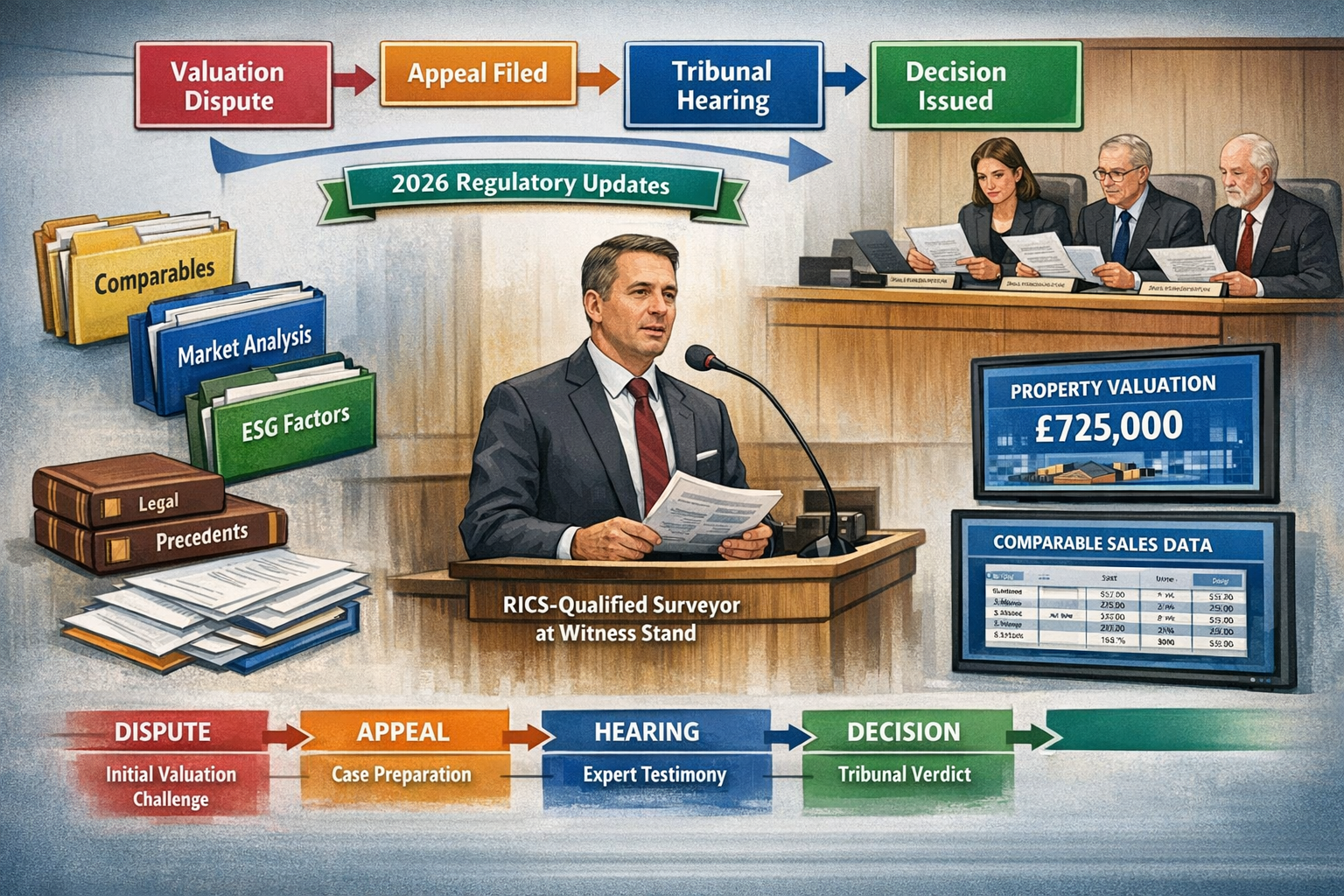
Surveyors preparing to provide expert witness testimony in PDR disputes should follow a systematic approach to evidence gathering and analysis.
Pre-Instruction Phase
Before accepting an expert witness instruction:
Conflict Checking
- Review all parties involved for potential conflicts of interest
- Check previous work history with properties or parties
- Confirm independence can be maintained
- Disclose any relationships that might affect objectivity
Competence Assessment
- Evaluate whether you have sufficient expertise in PDR valuations
- Consider whether specialist knowledge is required (e.g., specific property types)
- Review CPD records to confirm current knowledge
- Identify any knowledge gaps requiring research or training
Resource Availability
- Confirm adequate time to complete thorough analysis
- Ensure access to necessary data sources and comparable evidence
- Verify support staff availability for research and report preparation
- Check tribunal date availability if oral testimony required
Investigation and Analysis Phase
Site Investigation
Comprehensive property inspection should document:
- Physical characteristics affecting PDR conversion viability
- Current use and condition
- Planning history and PDR compliance
- Neighboring properties and potential impacts
- Access, services, and infrastructure
- Photographs and measurements
Legal and Planning Research
Critical research areas include:
- Planning authority PDR policies and prior approval decisions
- Local Development Plan policies affecting the area
- Recent appeal decisions on similar PDR cases
- Restrictive covenants or legal constraints
- Building regulations implications for PDR conversions
Market Research and Comparable Analysis
Develop comprehensive comparable evidence through:
- Transaction Database Searches: Land Registry, CoStar, EGi, and other databases
- Local Agent Consultation: Discussion with active local agents about PDR transactions
- Planning Application Review: Analysis of similar PDR schemes in the area
- Rental Evidence: For investment valuations, current rental evidence for PDR conversions
- Yield Analysis: Investment yields applicable to PDR residential conversions
Valuation Methodology Selection
Choose appropriate valuation methods based on the dispute context:
Comparison Method
- Most appropriate for residential PDR conversions
- Requires robust comparable evidence
- Adjustments for size, condition, location, PDR constraints
Residual Method
- Suitable for development value disputes
- Calculates land value based on completed development value minus costs
- Requires detailed cost and revenue assumptions
- Sensitivity analysis essential
Investment Method
- For rental income-producing PDR conversions
- Capitalizes net income at appropriate yield
- Requires rental evidence and yield analysis
Profits Method
- Occasionally relevant for specialist PDR conversions
- Based on trading potential of the property
- Requires detailed business analysis
For complex valuations requiring multiple approaches, consider seeking guidance from expert building evaluation specialists.
Report Preparation Best Practices
Structure and Clarity
- Use clear headings and logical flow
- Include executive summary for non-technical readers
- Number paragraphs for easy cross-reference
- Use tables and charts to present data clearly
- Define technical terms when first used
Evidence Presentation
- Include photographs of subject property and comparables
- Present comparable evidence in tabular format
- Show all calculations with clear assumptions
- Provide location maps and site plans
- Attach supporting documents as appendices
Professional Standards Compliance
- Include compliance statement confirming Red Book adherence
- State any departures from standards with justification
- Confirm independence and absence of conflicts
- Reference relevant RICS practice statements
- Include professional qualifications and experience summary
Cross-Examination Preparation
Effective preparation for cross-examination includes:
- Report Familiarity: Complete mastery of your own report contents
- Weakness Identification: Understanding limitations of your evidence
- Alternative Viewpoints: Considering contrary arguments and responses
- Document Organization: Easy access to supporting documents during testimony
- Practice Sessions: Mock cross-examination with colleagues
- Composure Techniques: Strategies for remaining calm under pressure
Understanding property dispute resolution procedures helps expert witnesses navigate tribunal processes effectively.
Integration of Technology and ESG in Expert Witness Valuations
The 2026 updates to RICS standards have significantly impacted how expert witnesses conduct and present valuations in PDR disputes.
AI and Technology Integration
The Red Book 2025 edition now permits AI-assisted valuations with appropriate safeguards[2]. For expert witnesses, this creates both opportunities and obligations:
Acceptable AI Applications
- Comparable property identification and screening
- Market trend analysis and forecasting
- Automated valuation model (AVM) cross-checking
- Data analysis and pattern recognition
- Document review and information extraction
Required Human Oversight
- Professional judgment on AI outputs
- Verification of AI-identified comparables
- Critical assessment of AI assumptions
- Explanation of AI role in methodology
- Ultimate responsibility for conclusions
Disclosure Requirements
Expert witnesses must clearly disclose:
- What AI tools were used in the valuation process
- How AI outputs were verified and validated
- Limitations of AI analysis
- How professional judgment supplemented AI analysis
Mandatory ESG Integration
The new ESG and sustainability standard effective April 30, 2026, requires expert witnesses to address environmental, social, and governance factors in PDR valuations[3].
Environmental Factors
- Energy Performance Certificate (EPC) ratings and improvement potential
- Climate change resilience and flood risk
- Sustainable construction materials in PDR conversions
- Carbon emissions and net-zero pathway compatibility
- Biodiversity and green space impacts
Social Factors
- Affordable housing provision in PDR schemes
- Community impact of office-to-residential conversions
- Accessibility and inclusive design features
- Local employment effects
- Health and wellbeing considerations
Governance Factors
- Planning authority engagement and compliance
- Stakeholder consultation processes
- Transparency in development proposals
- Ethical development practices
- Long-term stewardship arrangements
ESG Impact on Valuations
Expert witnesses must assess how ESG factors affect property values:
| ESG Factor | Potential Value Impact | Evidence Requirements |
|---|---|---|
| Poor EPC Rating | Negative (5-15%) | Comparable analysis of EPC-adjusted sales |
| Flood Risk | Negative (10-25%) | Insurance costs, buyer demand evidence |
| Sustainable Features | Positive (3-8%) | Green premium analysis from market data |
| Affordable Housing | Mixed | Policy compliance, market absorption |
| Community Benefits | Positive (2-5%) | Planning gain precedents, local evidence |
Recent Tribunal Decisions and Precedents
Understanding recent planning tribunal decisions helps expert witnesses develop effective evidence strategies.
Key 2026 PDR Appeal Decisions
Case Example 1: Commercial Impact Assessment
A tribunal ruled that an expert witness's valuation of commercial property impact from neighboring PDR conversion was inadmissible because it failed to:
- Distinguish PDR-specific impacts from general market changes
- Provide sufficient PDR-comparable evidence
- Account for the permitted nature of the development
Lesson: Expert witnesses must clearly isolate PDR impacts and use PDR-specific comparables.
Case Example 2: Development Viability Challenge
An expert successfully demonstrated that a local authority's prior approval conditions rendered a PDR scheme financially unviable by:
- Presenting detailed residual valuation showing negative land value
- Providing sensitivity analysis across multiple scenarios
- Demonstrating market evidence of required profit margins
- Showing comparable PDR schemes with less onerous conditions
Lesson: Comprehensive development appraisals with robust sensitivity analysis carry significant evidential weight.
Case Example 3: ESG Considerations
A 2026 tribunal gave substantial weight to expert evidence showing how poor EPC ratings in a proposed PDR conversion would:
- Reduce achievable sales values by 12% based on comparable analysis
- Increase buyer mortgage costs due to lender ESG requirements
- Create future regulatory compliance risks affecting marketability
Lesson: ESG factors are now material valuation considerations that tribunals expect expert witnesses to address.
Emerging Trends in Tribunal Decisions
Several patterns are emerging in 2026 PDR dispute decisions:
- Increased Scrutiny of Methodology: Tribunals are demanding more rigorous explanation of valuation approaches
- ESG Evidence Expectations: Environmental and social factors receive greater consideration
- Technology Transparency: Where AI tools are used, tribunals expect full disclosure and validation
- Comparable Quality Standards: Higher thresholds for comparable evidence relevance and adjustment justification
- Professional Standards Compliance: Explicit confirmation of Red Book adherence is now expected
Continuing Professional Development for Expert Witnesses
The revised CPD framework effective January 2026 imposes new requirements on RICS members providing expert witness services[4].
CPD Requirements for Expert Witnesses
Minimum CPD Hours
- 20 hours annual CPD for all RICS members
- At least 10 hours must be formal CPD
- Remaining hours can be informal learning
Relevant CPD Topics for PDR Expert Witnesses
- Updates to RICS Red Book and valuation standards
- PDR regulatory changes and case law
- Expert witness skills and tribunal procedures
- ESG integration in property valuations
- Technology and AI in valuation practice
- Professional ethics and independence
- Market analysis and comparable evidence techniques
CPD Recording and Evidence
The new CPD app launched in 2026 requires:
- Recording of all CPD activities with dates and hours
- Reflection statements on learning outcomes
- Evidence of how CPD improves professional practice
- Annual declaration of CPD compliance
Recommended Training and Resources
RICS Training Courses
- Expert Witness Skills for Surveyors
- Advanced Valuation Techniques
- ESG in Property Valuation
- Red Book Updates and Application
- Planning and Development Valuation
Professional Development Activities
- Attendance at planning tribunals as observer
- Peer review sessions with experienced expert witnesses
- Reading tribunal decisions and case law
- Participation in RICS working groups
- Publishing articles on valuation methodology
Knowledge Resources
- RICS iSurv platform for standards and guidance[6]
- Planning Inspectorate decision database
- Property valuation journals and publications
- Local planning authority PDR guidance
- Market data providers and transaction databases
Those seeking to enhance their expertise should also review building survey quality standards and related professional development resources[5].
Practical Checklist for Expert Witness Valuations in PDR Disputes
✅ Pre-Instruction
- Confirm independence and absence of conflicts
- Verify competence for specific PDR valuation type
- Ensure adequate professional indemnity insurance
- Check availability for tribunal dates
- Agree terms of engagement in writing
✅ Investigation Phase
- Conduct comprehensive site inspection
- Research planning history and PDR compliance
- Gather comparable transaction evidence
- Analyze market conditions and trends
- Review legal constraints and covenants
- Assess ESG factors and impacts
✅ Valuation Analysis
- Select appropriate valuation methodology
- Apply Red Book standards throughout
- Document all assumptions clearly
- Prepare detailed calculations with sensitivity analysis
- Cross-check conclusions against market evidence
- Consider alternative viewpoints
✅ Report Preparation
- Structure report logically with clear headings
- Include executive summary for accessibility
- Present comparable evidence in tables
- Show all calculations transparently
- Confirm Red Book compliance
- Declare independence and qualifications
- Disclose any AI or technology use
✅ Pre-Tribunal
- Review report thoroughly
- Prepare for potential cross-examination questions
- Organize supporting documents for easy reference
- Understand tribunal procedures
- Prepare visual aids if helpful
- Practice oral testimony
✅ Post-Tribunal
- Maintain records per RICS requirements
- Record CPD learning from experience
- Review outcome for practice improvement
- Update comparable database with new evidence
Conclusion
Expert Witness Valuations in 2026 Permitted Development Rights Disputes: RICS Protocols for PDR Expansions represent a critical intersection of property valuation, regulatory compliance, and legal procedure. As PDR continues to expand, particularly for office-to-residential conversions, the demand for qualified expert witnesses will only increase.
The key to successful expert witness practice lies in maintaining rigorous professional standards while communicating complex valuation concepts clearly to tribunals. The 2026 updates to RICS protocols—including mandatory ESG integration, AI disclosure requirements, and enhanced CPD obligations—have raised the bar for expert witness work.
Key Success Factors
Professional Excellence 🎯
- Maintain current knowledge through structured CPD
- Apply Red Book standards consistently
- Demonstrate technical competence in PDR valuations
- Stay informed about regulatory changes and tribunal precedents
Independence and Integrity
- Prioritize duty to tribunal over instructing party
- Disclose limitations and uncertainties honestly
- Acknowledge contrary evidence fairly
- Maintain professional objectivity under pressure
Evidence Quality
- Build robust comparable databases specific to PDR
- Document methodology transparently
- Apply sensitivity analysis to development appraisals
- Integrate ESG factors appropriately
Communication Clarity
- Write reports accessible to non-technical readers
- Present oral testimony clearly and confidently
- Use visual aids to explain complex concepts
- Respond to cross-examination calmly and professionally
Next Steps for Property Professionals
For RICS members seeking to develop expert witness capabilities in PDR disputes:
- Complete Relevant CPD: Prioritize training in expert witness skills, PDR regulations, and updated RICS standards
- Build Market Knowledge: Develop comprehensive understanding of PDR transaction evidence in your area
- Gain Practical Experience: Observe tribunal proceedings and seek mentoring from experienced expert witnesses
- Maintain Standards Compliance: Ensure all valuations meet current Red Book requirements and ESG integration standards
- Develop Support Systems: Establish peer review processes and quality assurance procedures
For property owners, developers, and legal professionals involved in PDR disputes, selecting the right expert witness is crucial. Look for RICS-qualified surveyors with:
- Demonstrable PDR valuation experience
- Current knowledge of 2026 regulatory updates
- Strong track record of tribunal testimony
- Appropriate professional indemnity insurance
- Commitment to independence and professional standards
The expansion of permitted development rights creates both opportunities and challenges. With proper application of RICS protocols, expert witnesses can provide the rigorous, independent analysis that tribunals need to resolve PDR valuation disputes fairly and efficiently.
For professional assistance with RICS property valuations or expert witness services, consult qualified surveyors who demonstrate current knowledge of PDR protocols and 2026 regulatory requirements.
References
[1] Land Agreements Development Purposes 1st Edition – https://www.rics.org/content/dam/ricsglobal/documents/standards/land-agreements-development-purposes-1st-edition.pdf
[2] Changing Playbook What Rics Red Book Revisions Mean For Cre Valuations – https://www.altusgroup.com/insights/changing-playbook-what-rics-red-book-revisions-mean-for-cre-valuations/
[3] Rics Publishes Updated Global Standard Esg Sustainability Commercial Property Valuation – https://www.rics.org/news-insights/rics-publishes-updated-global-standard-esg-sustainability-commercial-property-valuation
[4] Revised Cpd Framework Effective 2026 New App – https://www.rics.org/news-insights/revised-cpd-framework-effective-2026-new-app
[5] Building Survey Quality Standards 2026 Navigating Rics Updates And Enhanced Home Inspection Requirements – https://nottinghillsurveyors.com/blog/building-survey-quality-standards-2026-navigating-rics-updates-and-enhanced-home-inspection-requirements
[6] Rics Standards – https://www.isurv.com/downloads/176/rics_standards
[7] Permitted Development In The Uk – https://www.ricsfirms.com/glossary/permitted-development-in-the-uk/
[8] Valuation Standards – https://www.rics.org/profession-standards/rics-standards-and-guidance/sector-standards/valuation-standards