
The luxury property market in 2026 has entered a new era of complexity. With significant changes to estate tax exemptions and mansion tax structures, high-value property buyers are approaching negotiations with unprecedented sophistication. These buyers now leverage their understanding of tax thresholds as powerful negotiating tools, creating unique challenges for property professionals. Understanding the Valuation Challenges from Luxury Property Tax Thresholds: Surveyor Tactics for High-Value Home Negotiations in 2026 has become essential for surveyors who want to deliver accurate valuations while helping clients navigate the intricate landscape of luxury real estate taxation.
Key Takeaways
- 🏛️ Estate tax exemptions increased to $15 million per person ($30 million for couples) in 2026, permanently indexed for inflation, fundamentally changing wealth transfer strategies
- 📊 Tax threshold awareness has become a critical negotiating lever, with buyers strategically targeting properties priced just below key mansion tax tiers
- 💰 Price bunching strategies require surveyors to provide precision valuations that account for tax implications at specific threshold points
- 🔍 Enhanced due diligence and comparative market analysis are essential tools for defending valuations in high-stakes negotiations
- ⚖️ Surveyor expertise now extends beyond traditional property assessment to include strategic tax-aware advisory services
Understanding the 2026 Luxury Property Tax Landscape
The New Estate Tax Framework
The landscape of luxury property taxation underwent dramatic transformation in 2026. The federal estate tax exemption permanently increased to $15 million per person and $30 million for married couples, indexed for inflation[1][2]. This change, made permanent through the One Big, Beautiful Bill, eliminated the previous sunset provision that would have reduced exemptions by half at the end of 2025[2].
While fewer than 0.1% of estates pay federal estate tax, the wealthiest estates are expected to receive a $5.7 million tax cut from these changes[2]. This shift has created new dynamics in how high-net-worth individuals approach property acquisitions and estate planning.
Mansion Tax Tier Structures
Several jurisdictions have implemented or modified tiered mansion tax structures that create distinct valuation pressure points. The tax responsibility has shifted from buyer to seller in many markets, fundamentally changing negotiation dynamics[3][4][5].
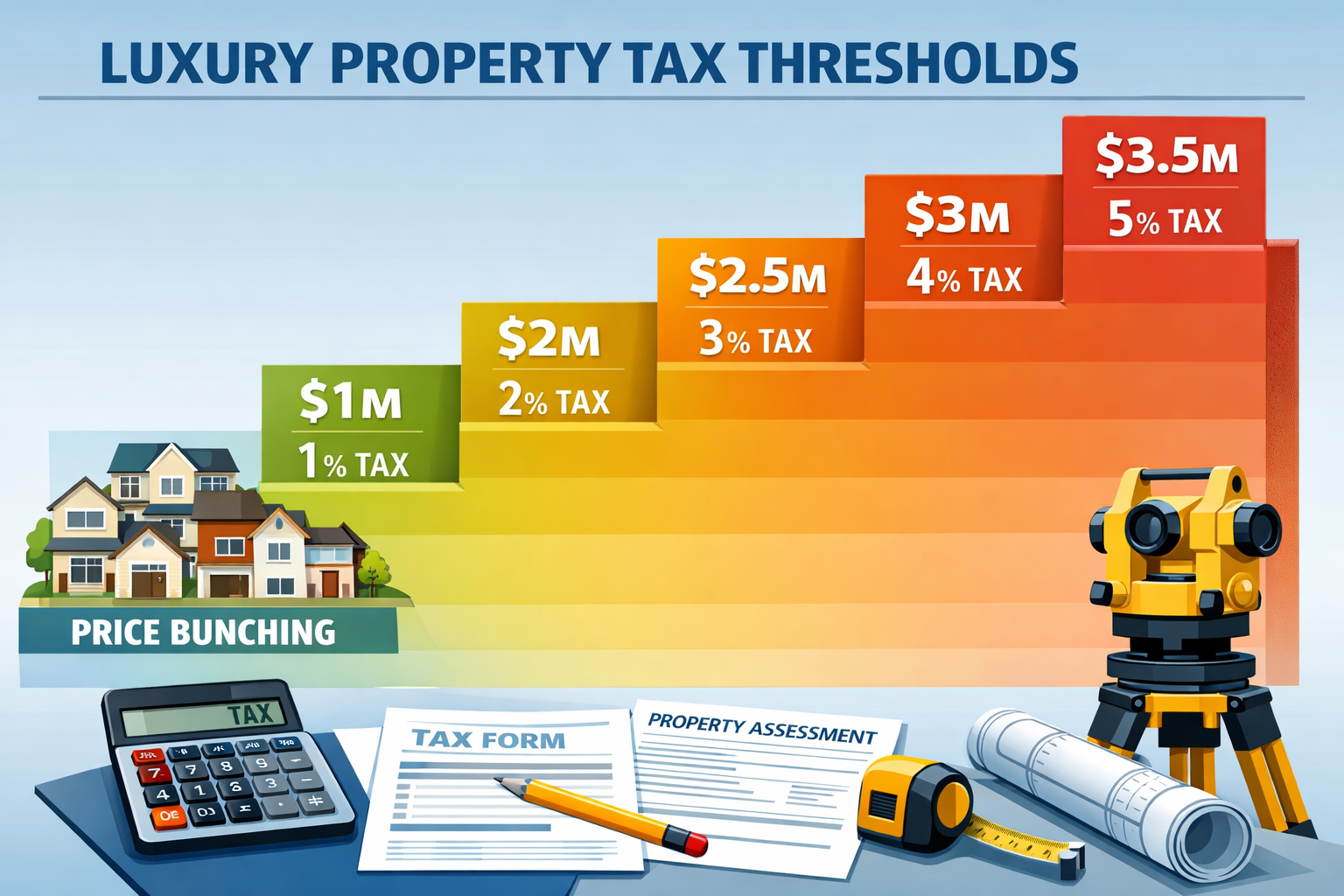
The new tiered structure replaced previous flat-rate systems with graduated percentages based on transaction value:
| Transaction Value | Tax Rate |
|---|---|
| $1M – $2M | Lower tier percentage |
| $2M – $2.5M | Mid-tier percentage |
| $2.5M – $3M | Upper-mid tier |
| $3M – $3.5M | Higher tier |
| Over $3.5M | Maximum tier |
These thresholds create strategic pricing zones where even small valuation differences can result in significant tax implications[3][4].
State-Level Alignment
Connecticut aligned with federal thresholds at $15 million for individuals and $30 million for couples in 2026[2], creating consistency that simplifies planning for multi-state property portfolios. However, this alignment also means surveyors working across jurisdictions must understand how different state regulations interact with federal provisions.
Valuation Challenges from Luxury Property Tax Thresholds: Surveyor Tactics for Price Bunching Analysis
The Price Bunching Phenomenon
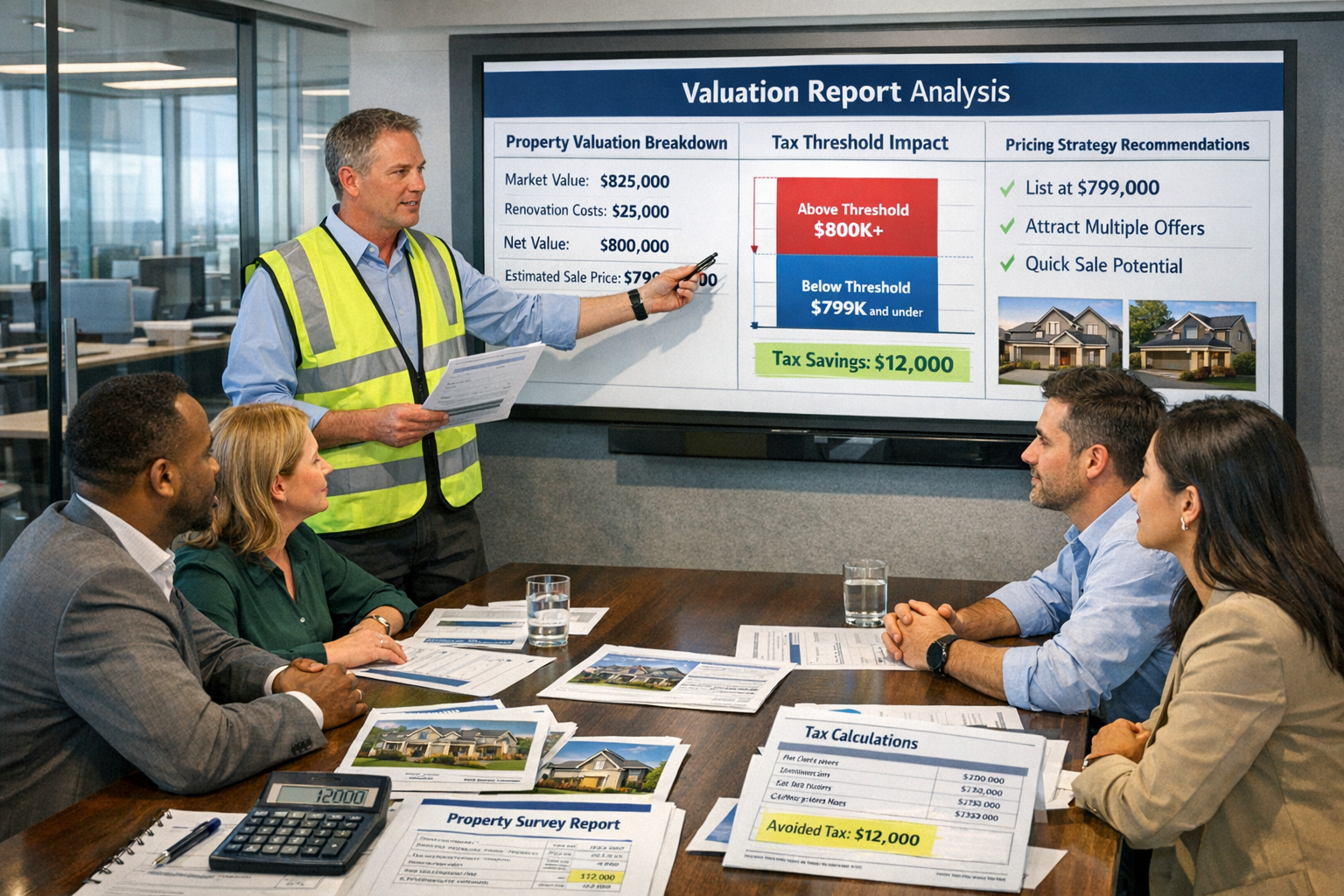
Price bunching occurs when properties cluster just below tax threshold points. Savvy buyers recognize that a property valued at $2.49 million faces substantially different tax implications than one valued at $2.51 million. This awareness creates intense pressure on surveyors to justify every element of their valuations.
For Westminster property surveyors and professionals working in other luxury markets, this phenomenon has become the dominant factor in high-value negotiations. Buyers actively seek properties positioned below thresholds or negotiate aggressively to bring prices down to these strategic points.
Precision Valuation Methodologies
To address these challenges, surveyors must employ enhanced precision techniques:
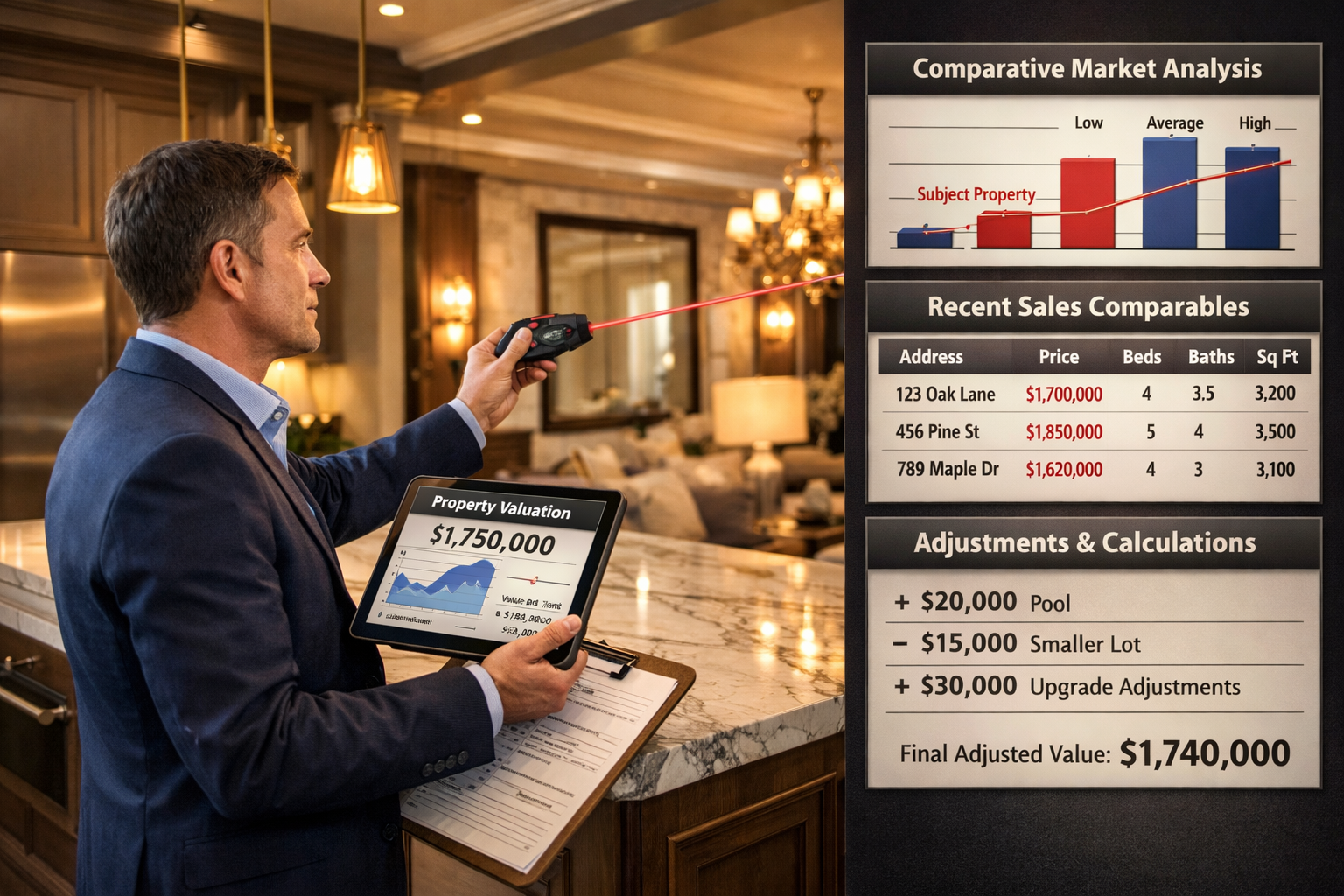
Comparative Market Analysis (CMA) Refinement 📊
- Identify truly comparable properties within narrow price bands
- Adjust for timing differences in rapidly changing markets
- Account for unique luxury features that standard adjustments miss
- Document every adjustment with defensible evidence
Component-Based Valuation
- Break down property value into discrete, justifiable components
- Separately value land, structures, improvements, and special features
- Create transparent valuation models that withstand scrutiny
- Provide detailed documentation for each component assessment
Market Segmentation Analysis
- Recognize that luxury markets operate differently above and below thresholds
- Analyze transaction velocity at different price points
- Identify market inefficiencies created by tax-driven behavior
- Adjust valuations based on threshold-specific market dynamics
Defending Valuations in Negotiations
When buyers challenge valuations to achieve tax-favorable pricing, surveyors need robust defense strategies:
- Documentation Excellence: Maintain comprehensive records of all comparable sales, adjustments, and reasoning
- Multiple Methodology Verification: Use income, cost, and sales comparison approaches to triangulate value
- Independent Data Sources: Reference multiple listing services, public records, and proprietary databases
- Expert Peer Review: Engage chartered surveyors for second opinions on complex valuations
Advanced Surveyor Tactics for High-Value Home Negotiations in 2026
Strategic Advisory Beyond Traditional Valuation
Modern luxury property surveyors must expand their role beyond simple valuation. Clients expect strategic guidance on how property values interact with tax thresholds. This requires understanding:
Tax-Aware Pricing Strategies 💡
- Identifying optimal listing prices that balance seller objectives with buyer tax sensitivity
- Analyzing how different price points affect net proceeds after tax
- Advising on timing strategies that leverage tax year considerations
- Coordinating with tax advisors to optimize overall transaction structure
Negotiation Positioning
- Providing sellers with data on buyer tax motivations
- Helping buyers understand realistic valuation ranges
- Mediating disputes with objective, well-documented analysis
- Creating win-win scenarios that acknowledge tax realities
Leveraging Technology and Data Analytics
Advanced surveyors in 2026 utilize sophisticated tools to enhance their valuation precision:
Automated Valuation Models (AVMs) with luxury market adjustments provide baseline estimates that can be refined through professional judgment. However, these tools must be calibrated for threshold effects that standard algorithms miss.
Predictive Analytics help identify emerging price bunching patterns before they become obvious in market data. Surveyors who track listing modifications, time-on-market variations, and negotiation patterns near thresholds gain valuable insights.
Geographic Information Systems (GIS) enable precise location-based adjustments that justify premium or discount valuations in luxury markets where micro-location matters significantly.
Specialized Survey Types for Luxury Properties
Different survey approaches serve specific purposes in high-value negotiations:
Building Surveys provide comprehensive condition assessments essential for justifying valuations of older luxury properties. The RICS Building Survey standard offers the detailed analysis required for properties with unique features or potential issues.
Specific Defect Surveys address particular concerns that might affect value, such as structural issues, environmental factors, or compliance matters. These specific defect surveys can be crucial when buyers seek valuation reductions based on identified problems.
Lease Extension Valuations become particularly complex in luxury markets where leasehold properties approach tax thresholds. Proper lease extension valuation requires understanding how lease terms affect both current value and tax implications.
Regional Considerations and Market-Specific Tactics
London Luxury Market Dynamics
The London luxury property market presents unique challenges due to its international buyer base and concentration of high-value properties. London property surveyors must navigate:
- International buyer expectations regarding valuation standards and documentation
- Currency fluctuation impacts on comparative valuations
- Heritage property considerations that affect both value and marketability
- Planning restrictions in conservation areas that limit improvement potential
Specific London submarkets show distinct threshold sensitivity. Properties in Islington, Wandsworth, and Hammersmith demonstrate different price bunching patterns based on local buyer demographics and property types.
Suburban Luxury Markets
High-value properties in suburban locations like Chiswick and Barnet face different valuation challenges:
- Land value components represent larger portions of total value
- Improvement potential significantly affects valuation
- School catchment areas create micro-market premiums
- Transportation access influences value more dramatically than in central locations
Emerging Luxury Markets
Areas experiencing gentrification or luxury development, such as parts of Southwark and Clerkenwell, require careful analysis of market trajectory when establishing values near tax thresholds.
Practical Implementation: A Surveyor's Workflow
Pre-Valuation Preparation
Client Consultation 🤝
- Understand client objectives regarding tax positioning
- Clarify whether valuation is for purchase, sale, estate planning, or tax purposes
- Identify any specific threshold concerns
- Establish timeline and urgency factors
Market Research
- Gather comprehensive comparable sales data
- Analyze recent transactions near relevant thresholds
- Identify market trends affecting the specific property type
- Review pending sales that might indicate market direction
Conducting the Valuation
Physical Inspection
- Document all features affecting value with photographic evidence
- Measure accurately using professional equipment
- Identify condition issues requiring adjustment
- Note unique luxury features requiring special valuation consideration
Analysis and Calculation
- Apply multiple valuation methodologies
- Make transparent, documented adjustments
- Consider threshold positioning implications
- Prepare detailed supporting documentation
Reporting and Advisory
Comprehensive Reporting 📋
- Present clear, defensible valuation conclusions
- Explain methodology and assumptions
- Highlight threshold implications
- Provide range estimates when appropriate
Strategic Guidance
- Advise on pricing strategies considering tax implications
- Suggest timing considerations
- Recommend additional due diligence if needed
- Coordinate with legal and tax advisors
Managing Client Expectations and Ethical Considerations
Professional Standards and Independence
Surveyors face pressure to adjust valuations to achieve client tax objectives. However, maintaining professional independence is paramount. The Royal Institution of Chartered Surveyors (RICS) standards require objective, unbiased valuations regardless of client preferences.
Ethical Guidelines ⚖️
- Provide honest valuations based on market evidence
- Resist pressure to manipulate values for tax purposes
- Clearly communicate valuation uncertainty and ranges
- Document any client disagreements with valuations
Transparency in Limitations
Surveyors should clearly communicate:
- The inherent uncertainty in valuing unique luxury properties
- How market conditions affect valuation confidence
- The difference between market value and strategic pricing
- Limitations of comparable sales in thin luxury markets
Collaborative Approach
The most successful outcomes occur when surveyors work collaboratively with:
- Tax advisors who understand estate and transfer tax implications
- Legal counsel handling transaction documentation
- Financial planners coordinating overall wealth strategies
- Real estate agents with luxury market expertise
Future Trends and Preparing for Evolution
Anticipated Market Adaptations
As buyers and sellers become more sophisticated about tax thresholds, several trends are emerging:
Increased Valuation Disputes 📈
- More formal challenges to valuations near thresholds
- Greater use of independent valuation reviews
- Potential for increased litigation over valuation disagreements
Market Segmentation
- Distinct sub-markets developing around tax threshold points
- Properties priced strategically below thresholds commanding premiums
- Reduced transaction volume at threshold crossing points
Innovative Transaction Structures
- Creative deal structures to optimize tax positioning
- Increased use of personal property allocations
- Timing strategies to leverage tax year boundaries
Continuing Education Requirements
Surveyors working in luxury markets must commit to ongoing education in:
- Tax law changes affecting property transactions
- Advanced valuation techniques for unique properties
- Technology tools enhancing valuation precision
- Market psychology and negotiation strategies
Understanding what a surveyor does in 2026 extends far beyond traditional property assessment to encompass strategic advisory services.
Conclusion
The Valuation Challenges from Luxury Property Tax Thresholds: Surveyor Tactics for High-Value Home Negotiations in 2026 represent a fundamental shift in how luxury property transactions occur. With estate tax exemptions permanently set at $15 million per person and tiered mansion tax structures creating distinct threshold effects, surveyors must evolve beyond traditional valuation roles.
Success in this environment requires:
✅ Precision valuation methodologies that withstand intense scrutiny
✅ Strategic advisory capabilities that help clients navigate tax implications
✅ Advanced technology utilization for enhanced market analysis
✅ Collaborative relationships with tax and legal professionals
✅ Unwavering ethical standards maintaining professional independence
Actionable Next Steps
For surveyors seeking to excel in luxury property valuations:
- Invest in advanced training on tax-aware valuation strategies and luxury market dynamics
- Develop technology competencies in data analytics, AVMs, and market modeling tools
- Build professional networks with tax advisors, estate planners, and luxury real estate specialists
- Create systematic documentation processes that support defensible valuations
- Stay current on tax law changes affecting property transactions in your markets
- Refine communication skills to explain complex valuation issues to diverse stakeholders
The luxury property market will continue evolving as buyers and sellers adapt to tax threshold realities. Surveyors who embrace these challenges, enhance their skills, and provide strategic value beyond basic valuation will thrive in this sophisticated marketplace. By combining technical excellence with strategic insight, property professionals can guide clients through the complexities of high-value transactions while maintaining the integrity and independence that define the profession.
References
[1] Tax Smart Strategies For Real Estate Investors In 2026 – https://www.nar.realtor/commercial/create/tax-smart-strategies-for-real-estate-investors-in-2026
[2] 2026 Estate Inheritance Tax Changes Wealth Transfer – https://www.realtor.com/advice/finance/2026-estate-inheritance-tax-changes-wealth-transfer/
[3] Major Changes To New Jerseys Mansion Tax Now In Effect – https://wolfcre.com/major-changes-to-new-jerseys-mansion-tax-now-in-effect/
[4] News New Jersey Modifies Mansion Tax On Sales Of Real Property – https://www.bressler.com/news-new-jersey-modifies-mansion-tax-on-sales-of-real-property
[5] New Jersey Mansion Tax Changes Impose Higher Transaction Costs On Commercial And Residential Real Estate Sales – https://www.morganlewis.com/pubs/2025/07/new-jersey-mansion-tax-changes-impose-higher-transaction-costs-on-commercial-and-residential-real-estate-sales