
The buy-to-let property market is experiencing a remarkable resurgence in 2026, with institutional investors returning to the sector with renewed vigor. However, this bullish sentiment brings with it a critical challenge: valuation disputes that can derail significant investment decisions and erode confidence in what should be straightforward property transactions. Understanding Expert Witness Roles in Buy-to-Let Valuation Disputes: Navigating Institutional Investor Confidence 2026 has become essential for investors, property professionals, and legal practitioners alike.
As institutional capital flows back into the buy-to-let sector following years of regulatory uncertainty and market volatility, the stakes for accurate property valuation have never been higher. When disagreements arise over property worth, rental yield potential, or tenant demand projections, expert witnesses provide the crucial testimony that can resolve disputes and restore investor confidence. These professionals must navigate complex RICS guidelines while defending valuations that account for the unique characteristics of the 2026 recovery market.
Key Takeaways
- 🏛️ Expert witnesses play a pivotal role in resolving buy-to-let valuation disputes by providing independent, RICS-compliant testimony that institutional investors rely upon for decision-making confidence
- 📊 Robust valuation defenses require comprehensive analysis of rental yields, tenant demand metrics, and comparable property data specific to the 2026 market recovery conditions
- ⚖️ RICS guidelines provide the framework for expert witness testimony, ensuring professional standards are maintained when defending valuations in arbitration or court proceedings
- 💼 Institutional investor confidence depends on expert witnesses who can articulate complex valuation methodologies in accessible terms while maintaining professional objectivity
- 🔍 Successful dispute resolution combines technical valuation expertise with strong communication skills, enabling expert witnesses to bridge the gap between property professionals and legal decision-makers
Understanding the Expert Witness Function in Buy-to-Let Valuation Disputes

The role of an expert witness in property valuation disputes extends far beyond simply providing an opinion on value. These professionals serve as independent arbiters of technical truth, offering courts, tribunals, and arbitration panels the specialized knowledge necessary to resolve complex disagreements about buy-to-let property worth.
What Defines an Expert Witness in Property Valuation?
An expert witness in buy-to-let valuation disputes must possess specific qualifications and characteristics that distinguish them from ordinary property professionals. RICS-accredited surveyors with extensive experience in rental property markets typically fulfill this role, bringing both technical expertise and professional credibility to proceedings [1].
The expert witness owes their primary duty to the court or tribunal, not to the party instructing them. This fundamental principle ensures that testimony remains objective and unbiased, even when one party pays for the expert's services. In the context of Expert Witness Roles in Buy-to-Let Valuation Disputes: Navigating Institutional Investor Confidence 2026, this objectivity proves essential for maintaining the trust that institutional investors place in the dispute resolution process.
Key qualifications include:
- Professional accreditation from recognized bodies like RICS
- Demonstrable expertise in buy-to-let property valuation
- Extensive market knowledge of rental yields and tenant demand
- Previous experience providing expert testimony
- Understanding of legal procedures and evidence presentation
- Excellent communication skills for explaining technical concepts
The Growing Importance in 2026's Market Recovery
The buy-to-let market's recovery in 2026 has created unique conditions that make expert witness roles particularly critical. As institutional investors return to the sector with substantial capital commitments, valuation accuracy directly impacts investment decisions worth millions of pounds [5].
Several factors contribute to increased dispute frequency:
- Market volatility following years of regulatory changes
- Regional price divergence creating valuation complexity
- Evolving tenant demand patterns post-pandemic
- Interest rate fluctuations affecting yield calculations
- New building safety regulations impacting property values
When disputes arise in this environment, expert witnesses must navigate these complexities while providing clear, defensible opinions that institutional investors can rely upon. Their testimony often determines whether large-scale buy-to-let acquisitions proceed or collapse, making their role integral to market confidence.
Legal Framework and Professional Standards
Expert witnesses operating in buy-to-let valuation disputes must adhere to strict professional standards and legal requirements. The Civil Procedure Rules in England and Wales establish the framework for expert evidence, requiring experts to provide opinions that are truly independent and based on their expertise [2].
RICS provides comprehensive guidance through its Practice Statement on Expert Witness Evidence, which outlines:
- Duties and responsibilities of expert witnesses
- Standards for report preparation
- Requirements for independence and objectivity
- Procedures for joint expert meetings
- Ethical considerations in providing testimony
For those involved in property evaluation, understanding these standards proves essential when disputes escalate beyond negotiation. The framework ensures that expert testimony maintains professional integrity while serving the justice system's needs.
RICS Guidelines for Defending Yield and Tenant Demand Valuations
The Royal Institution of Chartered Surveyors (RICS) provides comprehensive guidelines that expert witnesses must follow when defending buy-to-let valuations. These standards ensure consistency, professionalism, and credibility in Expert Witness Roles in Buy-to-Let Valuation Disputes: Navigating Institutional Investor Confidence 2026.
Rental Yield Assessment Methodologies
Rental yield represents one of the most contentious aspects of buy-to-let valuation disputes. Expert witnesses must demonstrate thorough understanding of yield calculation methodologies and their appropriate application in different market contexts [1].
The two primary yield metrics include:
Gross Rental Yield:
- Formula: (Annual Rental Income ÷ Property Purchase Price) × 100
- Simpler calculation but less comprehensive
- Useful for initial screening of investment opportunities
- Does not account for operating expenses or void periods
Net Rental Yield:
- Formula: [(Annual Rental Income – Operating Expenses) ÷ Property Purchase Price] × 100
- More accurate reflection of investment returns
- Includes maintenance, management fees, insurance, and other costs
- Preferred by institutional investors for decision-making
Expert witnesses defending yield valuations must clearly articulate which methodology they've applied and justify its appropriateness for the specific property and market conditions. In 2026's recovery market, demonstrating how yield calculations account for emerging tenant preferences and evolving operating costs proves particularly important.
| Yield Component | Typical Range (2026) | Expert Witness Considerations |
|---|---|---|
| Gross Yield (Urban) | 4.5% – 7.0% | Location-specific tenant demand |
| Gross Yield (Regional) | 6.0% – 9.5% | Regional price divergence factors |
| Management Costs | 10% – 15% of rent | Professional vs. self-management |
| Void Periods | 4 – 8 weeks annually | Local market liquidity analysis |
| Maintenance Reserve | 1% – 2% of value | Property age and condition assessment |
Tenant Demand Analysis and Market Evidence
Defending valuations based on tenant demand requires expert witnesses to present comprehensive market evidence that demonstrates sustainable rental income potential. This analysis extends beyond simple supply-demand metrics to encompass demographic trends, employment patterns, and lifestyle preferences [5].
Key evidence categories include:
Quantitative Market Data:
- Rental transaction volumes in comparable properties
- Average time-to-let statistics for the locality
- Tenant retention rates and turnover patterns
- Rental price trends over relevant time periods
- Vacancy rates by property type and location
Qualitative Market Factors:
- Employment hub proximity and job market strength
- Transportation infrastructure and connectivity
- Educational institutions driving student or professional demand
- Demographic shifts affecting tenant profiles
- Lifestyle amenities and neighborhood characteristics
Expert witnesses must source this data from credible, verifiable sources and present it in ways that non-specialist decision-makers can understand. Professional surveyors offering property assessment services regularly compile such evidence, but expert witnesses must elevate this analysis to meet legal standards of proof.
Comparable Property Selection and Analysis
The selection and analysis of comparable properties forms the cornerstone of defensible buy-to-let valuations. Expert witnesses must demonstrate rigorous methodology in identifying, analyzing, and adjusting comparable evidence to support their valuation opinions [3].
RICS guidelines emphasize several key principles:
Proximity and Location: Comparable properties should ideally be within the same neighborhood or demonstrate similar location characteristics affecting rental demand and value.
Property Characteristics: Size, configuration, condition, and amenities should align closely with the subject property, with clear adjustments made for differences.
Transaction Timing: Recent transactions provide the most relevant evidence, though expert witnesses must account for market movements when using older comparables.
Transaction Type: Arm's-length market transactions provide the most reliable evidence, while distressed sales or related-party transactions require careful consideration and potential exclusion.
When defending valuations in disputes, expert witnesses must be prepared to explain:
- Why specific comparables were selected or rejected
- How adjustments were calculated and applied
- Why the adjusted comparable evidence supports the concluded value
- How market conditions between comparable sales and valuation date were accounted for
This rigorous approach to comparable analysis directly supports institutional investor confidence by demonstrating that valuations rest on solid market evidence rather than subjective opinion.
Adjusting for Property-Specific Factors
Buy-to-let properties rarely match comparables perfectly, requiring expert witnesses to make and defend valuation adjustments. These adjustments must be logical, market-supported, and clearly explained to withstand scrutiny in dispute proceedings.
Common adjustment categories include:
Physical Characteristics:
- Size differences (per square foot/meter adjustments)
- Condition variations (deferred maintenance impacts)
- Configuration advantages or limitations
- Parking availability and type
- Outdoor space and garden areas
Income-Affecting Features:
- Energy efficiency ratings and utility costs
- Modern amenities expected by target tenants
- Security features and building access systems
- Storage and workspace provisions
- Pet-friendly adaptations
Regulatory Compliance:
- Building safety certifications
- Energy Performance Certificate (EPC) ratings
- Licensing requirements for HMOs or selective licensing areas
- Planning permissions and permitted use
Expert witnesses must quantify these adjustments using market-derived evidence wherever possible, avoiding arbitrary percentage adjustments that lack empirical support. For properties requiring remedial work, understanding the cost of remedying damp and timber problems helps experts make accurate value adjustments.
Building Robust Expert Testimony for Institutional Investor Disputes
Institutional investors require expert witness testimony that meets the highest standards of professionalism, clarity, and defensibility. The unique characteristics of institutional buy-to-let investment create specific expectations for Expert Witness Roles in Buy-to-Let Valuation Disputes: Navigating Institutional Investor Confidence 2026.
Structuring Comprehensive Expert Reports
A well-structured expert report forms the foundation of effective testimony. These documents must communicate complex valuation analysis in accessible language while maintaining technical rigor and professional standards [4].
Essential Report Components:
Executive Summary: A concise overview presenting the key valuation conclusion and primary supporting factors, enabling busy institutional decision-makers to grasp the essential findings quickly.
Instructions and Scope: Clear documentation of the expert's instructions, the purpose of the valuation, and any limitations or assumptions that affect the analysis.
Property Description: Comprehensive description of the subject property, including location, physical characteristics, condition, and features relevant to buy-to-let investment value.
Market Analysis: Detailed examination of the relevant property market, including supply-demand dynamics, rental trends, yield expectations, and factors affecting institutional investor interest.
Valuation Methodology: Explicit explanation of the valuation approach adopted, with justification for why this methodology appropriately addresses the specific dispute issues.
Comparable Evidence: Presentation of comparable property transactions, rental evidence, and yield data, with clear explanation of selection criteria and adjustments applied.
Valuation Conclusion: The expert's concluded opinion of value, presented with appropriate caveats and the range of values that the evidence reasonably supports.
Professional Declaration: Statement confirming the expert's qualifications, independence, and understanding of their duties to the court or tribunal.
Addressing Institutional Investor Concerns
Institutional investors approach buy-to-let investments with specific concerns that expert witnesses must address directly in their testimony. Understanding these priorities enables experts to provide testimony that genuinely serves the dispute resolution process [5].
Portfolio Performance Metrics:
Institutional investors evaluate individual properties within the context of broader portfolio performance. Expert witnesses should address:
- How the disputed valuation affects overall portfolio yield
- Whether the property aligns with institutional investment criteria
- Comparative performance against portfolio benchmarks
- Risk-adjusted return expectations
Due Diligence Standards:
Institutional investors conduct extensive due diligence before acquisitions. Expert testimony should demonstrate:
- Alignment with institutional valuation standards
- Consideration of factors that institutional due diligence would identify
- Awareness of institutional risk tolerance and investment parameters
- Recognition of regulatory compliance requirements affecting institutional investors
Long-Term Value Sustainability:
Unlike individual buy-to-let investors, institutions focus on long-term value sustainability. Expert witnesses must address:
- Projected rental growth potential over institutional hold periods
- Capital appreciation expectations based on market fundamentals
- Sustainability of tenant demand given demographic and economic trends
- Property resilience to market cycles and regulatory changes
Those seeking professional surveyor services for institutional transactions should ensure their experts understand these institutional perspectives and can articulate them effectively in dispute proceedings.
Presenting Complex Data Accessibly
Expert witnesses face the challenge of presenting sophisticated valuation analysis to decision-makers who may lack technical property expertise. Effective communication proves as important as technical competence in Expert Witness Roles in Buy-to-Let Valuation Disputes: Navigating Institutional Investor Confidence 2026.
Visualization Techniques:
- Comparison tables showing subject property versus comparables with clear adjustment columns
- Location maps illustrating comparable property locations and relevant amenities
- Yield charts displaying historical and projected rental yields with market context
- Timeline graphics showing market trends and transaction chronology
- Adjustment waterfall diagrams demonstrating how comparable evidence leads to concluded value
Language Simplification:
Expert witnesses should:
- Define technical terms when first introduced
- Use analogies to explain complex concepts
- Avoid unnecessary jargon without sacrificing precision
- Structure explanations logically from simple to complex
- Provide context for numerical data and percentages
Anticipating Questions:
Effective expert witnesses anticipate likely questions and address them proactively:
- Why was this valuation methodology chosen over alternatives?
- How do you account for the difference between your valuation and the opposing expert's opinion?
- What market evidence most strongly supports your conclusion?
- What factors create the greatest uncertainty in your valuation?
- How would changes in key assumptions affect your concluded value?
Cross-Examination Preparation and Performance
Expert witnesses must prepare thoroughly for cross-examination, where opposing counsel will test the robustness of their opinions and credibility. Performance under cross-examination often determines how much weight decision-makers give to expert testimony [2].
Preparation Strategies:
Know Your Report Intimately: Expert witnesses must be thoroughly familiar with every statement, calculation, and conclusion in their report, as cross-examination will probe for inconsistencies or unsupported assertions.
Understand the Opposing Position: Reviewing the opposing expert's report identifies areas of disagreement and enables preparation of responses to anticipated challenges.
Review Source Materials: Cross-examination often focuses on the underlying data and assumptions supporting the valuation, requiring experts to access and explain source materials readily.
Practice Difficult Questions: Working with instructing solicitors to anticipate challenging questions helps experts develop clear, concise responses that maintain credibility.
Performance Best Practices:
- Answer only the question asked without volunteering unnecessary information
- Admit limitations honestly rather than overreaching expertise
- Maintain composure even when questions seem aggressive or unfair
- Request clarification when questions are ambiguous or compound
- Refer to documentation when precise details are questioned
- Acknowledge uncertainty where appropriate while standing firm on well-supported conclusions
Expert witnesses who demonstrate confidence without arrogance and expertise without condescension prove most effective in maintaining institutional investor confidence through the dispute resolution process.
Case Studies: Successful Expert Witness Interventions in 2026
Examining real-world applications of Expert Witness Roles in Buy-to-Let Valuation Disputes: Navigating Institutional Investor Confidence 2026 provides valuable insights into effective practice and common pitfalls.
Regional Price Divergence Dispute Resolution
A significant dispute arose in early 2026 when an institutional investor questioned a portfolio valuation for buy-to-let properties across multiple UK regions. The investor's internal valuation suggested values 15% lower than the vendor's appraisal, threatening a £50 million transaction [7].
The Challenge:
Regional property markets experienced significant divergence during the 2026 recovery, with some areas showing strong price growth while others remained stagnant. The vendor's valuation applied consistent yield assumptions across regions, while the institutional investor argued for region-specific adjustments reflecting local market conditions.
Expert Witness Approach:
The appointed expert witness conducted comprehensive regional market analysis, examining:
- Employment growth rates and wage trends by region
- Tenant demand indicators including rental inquiry volumes
- Supply constraints and new development pipelines
- Historical yield patterns and investor preferences
- Infrastructure investment and connectivity improvements
The expert's report demonstrated that while some properties justified the vendor's valuations, others required downward adjustments of 8-12% based on weaker regional fundamentals. Crucially, the expert provided transparent methodology and verifiable market data supporting each regional assessment.
Outcome:
The parties accepted the expert's differentiated regional valuations, completing the transaction at a revised total value that both parties considered fair. The expert's credible analysis restored institutional investor confidence and enabled a significant capital deployment into the buy-to-let sector.
Tenant Demand Projection Disputes
Another 2026 case involved disagreement over projected rental income for a newly constructed buy-to-let development in a regeneration area. The developer's valuation assumed immediate full occupancy at premium rents, while potential institutional purchasers questioned both assumptions [5].
The Challenge:
The property's location in an emerging neighborhood created uncertainty about:
- Achievable rental rates for untested property types
- Time required to reach stabilized occupancy
- Sustainability of projected rents as supply increased
- Target tenant profile and demand depth
Expert Witness Approach:
The expert witness developed a phased absorption analysis rather than accepting immediate full occupancy assumptions. This included:
- Surveying comparable new developments to establish realistic lease-up periods
- Analyzing tenant demographics and income levels in the catchment area
- Assessing competitive supply coming to market over the next 18 months
- Interviewing letting agents about tenant feedback and inquiry patterns
- Examining rental concessions offered in similar developments
The expert concluded that achieving stabilized occupancy would require 14-18 months, with initial rental rates 7% below the developer's projections to attract early tenants and build market presence.
Outcome:
The expert's realistic absorption analysis enabled the parties to agree on a valuation reflecting the time-value of delayed income and appropriate rental rate expectations. The institutional investor proceeded with the acquisition at the adjusted valuation, confident in the evidence-based projections.
Yield Defense in Competitive Market Conditions
A third case study from 2026 involved an expert witness defending a buy-to-let valuation against claims that the applied yield was too aggressive given market conditions and property-specific factors.
The Challenge:
The disputed property was a converted period building with higher-than-average maintenance requirements. The opposing party argued that the valuation should apply a higher yield (lower capital value) to reflect:
- Ongoing maintenance costs for the period property
- Potential for unexpected repair expenses
- Management intensity compared to modern buildings
- Tenant preferences shifting toward newer properties
Expert Witness Approach:
Rather than simply defending the original yield assumption, the expert conducted detailed operating expense analysis to quantify the actual financial impact of the property's characteristics. This included:
- Obtaining maintenance cost data from similar period conversions
- Calculating net yield after realistic expense provisions
- Demonstrating that gross yield differences between period and modern properties largely disappeared when analyzed on a net basis
- Presenting evidence of strong tenant demand for character properties in the specific location
- Showing rental premium that period features commanded in the local market
Outcome:
The expert's analysis demonstrated that while the property did require higher maintenance spending, it also achieved rental premiums that offset these costs. The original valuation was upheld with minor adjustments for specific identified issues, maintaining the transaction's viability and institutional investor confidence.
Navigating Common Valuation Dispute Scenarios
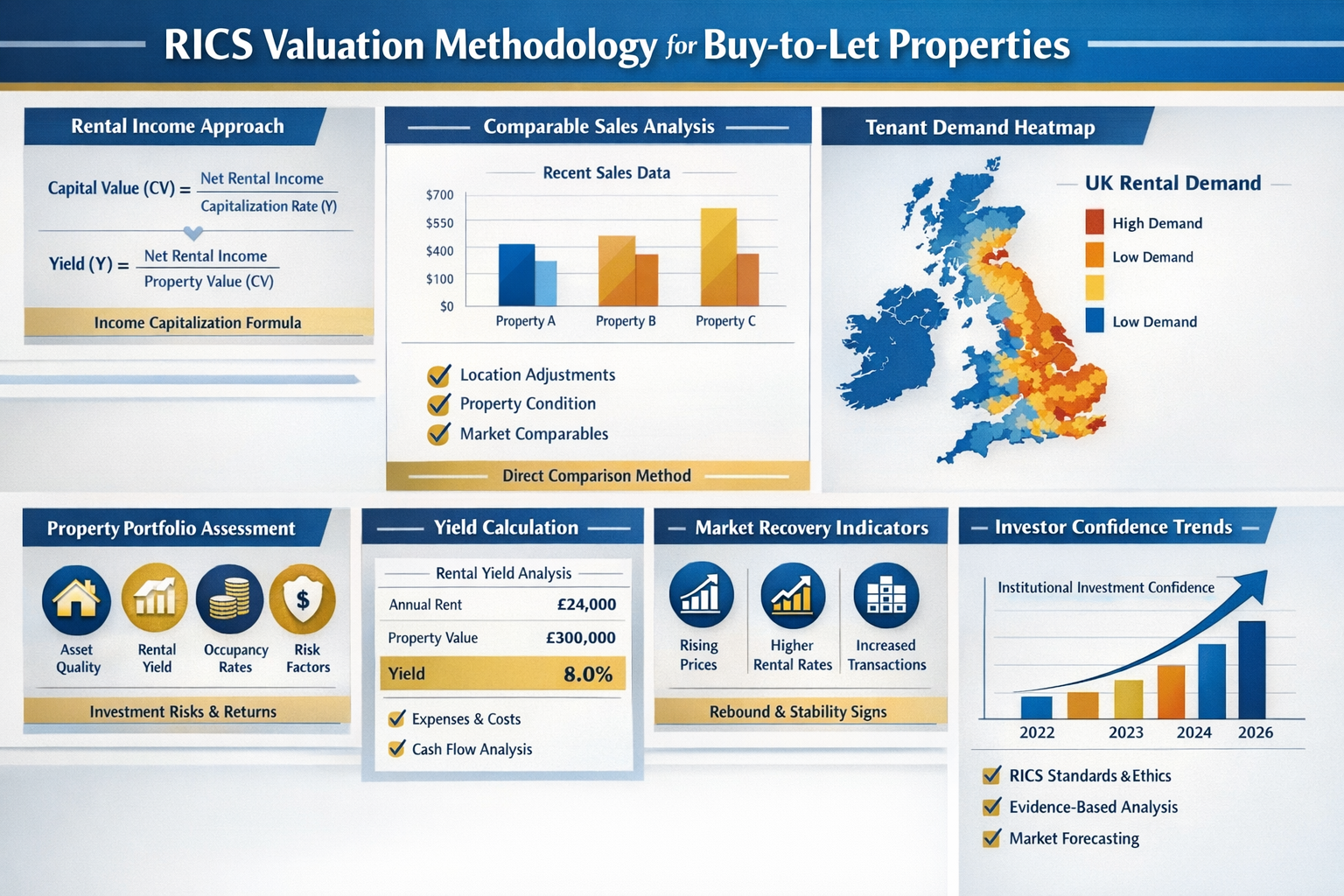
Understanding typical dispute scenarios helps expert witnesses prepare effectively and institutional investors recognize situations requiring expert intervention in Expert Witness Roles in Buy-to-Let Valuation Disputes: Navigating Institutional Investor Confidence 2026.
Purchase Price Disputes Between Buyers and Sellers
Scenario: Institutional buyers and sellers disagree on appropriate purchase prices for buy-to-let portfolios or individual properties, with valuations differing by significant amounts.
Common Causes:
- Different yield assumptions based on risk perception
- Disagreement over appropriate comparable evidence
- Varying views on property condition and required capital expenditure
- Different projections for rental growth or market trends
Expert Witness Role:
Expert witnesses in purchase price disputes must provide independent market analysis that helps parties understand whether their positions reflect reasonable market interpretations or unrealistic expectations. The expert should:
- Identify the specific valuation inputs driving the disagreement
- Present market evidence supporting a reasonable value range
- Explain how different assumptions affect concluded values
- Help parties understand which assumptions align with market evidence
For properties requiring building condition assessment, experts must clearly quantify the value impact of identified defects and necessary repairs.
Lender Valuation Challenges
Scenario: Institutional investors or buy-to-let purchasers dispute lender valuations that come in below expected levels, potentially jeopardizing financing arrangements.
Common Causes:
- Conservative lender valuation approaches prioritizing security
- Lender concerns about market volatility or local conditions
- Different treatment of rental income sustainability
- Regulatory requirements affecting lender risk appetite
Expert Witness Role:
When lender valuations create disputes, expert witnesses must navigate the tension between market value concepts and lending value considerations:
- Distinguish between market value and mortgage lending value
- Explain legitimate reasons for conservative lender approaches
- Identify instances where lender valuations fall outside reasonable ranges
- Provide evidence supporting market value conclusions that may differ from lending values
Understanding property law implications helps experts address legal aspects of lending valuation requirements.
Portfolio Valuation Disagreements
Scenario: Institutional investors acquiring or disposing of buy-to-let portfolios encounter disagreements over aggregate portfolio values, allocation of value among properties, or portfolio premium/discount application.
Common Causes:
- Disagreement over whether portfolio premium or discount applies
- Different views on individual property values within the portfolio
- Varying assumptions about management efficiencies
- Different treatment of vacant properties or problem assets
Expert Witness Role:
Portfolio valuation disputes require expert witnesses to address both individual property values and portfolio-level considerations:
- Value each property individually using consistent methodology
- Analyze whether portfolio characteristics justify premium or discount
- Consider economies of scale in management and maintenance
- Evaluate portfolio diversification benefits or concentration risks
- Address institutional investor preferences for portfolio characteristics
Lease Renewal and Rent Review Disputes
Scenario: Disagreements arise over appropriate rental values at lease renewal or rent review, affecting property valuations and investment returns.
Common Causes:
- Different interpretations of market rent for the specific property
- Disagreement over appropriate comparable rental evidence
- Varying views on tenant improvements and their rent impact
- Different treatment of lease terms and conditions
Expert Witness Role:
Expert witnesses in rent review disputes must focus specifically on rental value determination:
- Analyze comparable rental transactions with appropriate adjustments
- Consider lease terms and their effect on rental value
- Address tenant improvements and rent-free periods
- Explain how determined rent affects overall property value
Those involved in real estate negotiation benefit from understanding how expert testimony can support or challenge negotiating positions.
Maintaining Professional Independence and Objectivity
The credibility of Expert Witness Roles in Buy-to-Let Valuation Disputes: Navigating Institutional Investor Confidence 2026 depends fundamentally on expert witnesses maintaining genuine independence and objectivity throughout the dispute resolution process.
Ethical Obligations and Conflicts of Interest
Expert witnesses face strict ethical obligations that sometimes conflict with commercial pressures or client expectations. RICS standards clearly establish that the expert's primary duty is to the court or tribunal, not to the instructing party [1].
Identifying Potential Conflicts:
Expert witnesses must identify and disclose potential conflicts of interest, including:
- Previous professional relationships with parties to the dispute
- Financial interests in the outcome of the dispute
- Prior valuations or advice regarding the disputed property
- Personal relationships with parties or other experts involved
- Professional relationships that might affect objectivity
Managing Client Pressure:
Instructing parties sometimes pressure expert witnesses to adopt positions that support their case rather than provide genuinely independent opinions. Expert witnesses must:
- Resist pressure to change opinions without legitimate technical justification
- Educate instructing parties about the expert's duties and independence requirements
- Document any attempts to influence opinions inappropriately
- Withdraw from appointments if independence cannot be maintained
Distinguishing Advocacy from Expert Opinion
A critical challenge for expert witnesses involves distinguishing between legitimate expert opinion and inappropriate advocacy for the instructing party's position [2].
Legitimate Expert Opinion:
- Based on technical analysis and professional judgment
- Acknowledges uncertainties and alternative interpretations
- Presents balanced consideration of evidence
- Explains reasoning transparently
- Admits limitations in available data or methodology
Inappropriate Advocacy:
- Selectively presents evidence favoring one party
- Ignores or dismisses contrary evidence without justification
- Adopts extreme positions unsupported by market evidence
- Changes opinions to align with client preferences
- Overstates certainty or expertise
Expert witnesses who maintain this distinction preserve their credibility and enhance institutional investor confidence in the dispute resolution process.
Responding to Opposing Expert Opinions
When opposing experts reach different conclusions, the way expert witnesses respond reveals much about their professionalism and objectivity. Respectful disagreement that focuses on technical differences rather than personal criticism serves the dispute resolution process best [4].
Effective Response Strategies:
Identify Specific Differences: Rather than broadly dismissing opposing opinions, identify the specific assumptions, methodologies, or data interpretations that lead to different conclusions.
Acknowledge Reasonable Alternatives: Where opposing experts adopt reasonable but different approaches, acknowledge the legitimacy of their methodology while explaining why your approach better suits the specific circumstances.
Focus on Evidence: Ground disagreements in market evidence and professional standards rather than personal opinions or preferences.
Participate Constructively in Joint Meetings: When experts meet to narrow issues, approach discussions as opportunities to clarify technical matters rather than debates to win.
Modify Opinions When Appropriate: If opposing expert analysis reveals errors or presents compelling evidence, modify opinions accordingly rather than defending untenable positions.
Documentation and Transparency
Maintaining detailed documentation of the valuation process and analysis supports both professional standards and expert witness credibility [3].
Essential Documentation:
- Instruction records showing what the expert was asked to do
- Research notes documenting market investigations and data sources
- Calculation worksheets showing how conclusions were derived
- Comparable property files with details of each transaction analyzed
- Correspondence regarding scope, assumptions, and limitations
- Draft report versions showing evolution of analysis
This documentation serves multiple purposes:
- Enables the expert to explain and defend their analysis under cross-examination
- Demonstrates professional thoroughness and systematic approach
- Provides transparency about the analytical process
- Supports professional indemnity insurance in case of negligence claims
- Facilitates peer review and quality assurance
Technology and Data Analytics in Expert Witness Practice
The evolution of Expert Witness Roles in Buy-to-Let Valuation Disputes: Navigating Institutional Investor Confidence 2026 increasingly involves sophisticated technology and data analytics that enhance both valuation accuracy and testimony credibility.
Leveraging Property Data Platforms
Modern expert witnesses access comprehensive property data platforms that provide market intelligence far beyond traditional sources. These platforms aggregate:
- Transaction data from Land Registry and private sources
- Rental listings and achieved rental values
- Property characteristics including size, condition, and features
- Demographic data affecting tenant demand
- Economic indicators relevant to local markets
Expert witnesses who effectively leverage these platforms can present data-driven analysis that institutional investors find particularly compelling. The ability to demonstrate that conclusions rest on comprehensive market data rather than limited anecdotal evidence significantly enhances testimony credibility.
Automated Valuation Models (AVMs) and Expert Judgment
Automated Valuation Models use algorithms and statistical techniques to estimate property values based on large datasets. While AVMs provide useful reference points, expert witnesses must understand their limitations and explain when human judgment appropriately overrides algorithmic outputs.
AVM Strengths:
- Process large datasets quickly
- Provide consistent methodology application
- Identify comparable properties efficiently
- Detect market trends and patterns
AVM Limitations:
- Struggle with unique or unusual properties
- May not account for condition variations
- Can lag market changes in volatile conditions
- Limited ability to assess qualitative factors
Expert witnesses should use AVMs as analytical tools that inform but don't replace professional judgment, explaining to decision-makers when and why human expertise adds value beyond algorithmic analysis.
Presenting Complex Data Visually
Data visualization tools enable expert witnesses to present complex market analysis in accessible, compelling formats that enhance understanding and retention [6].
Effective Visualization Techniques:
Heat Maps: Show rental yield variations or tenant demand intensity across geographic areas, helping decision-makers quickly grasp spatial patterns.
Trend Lines: Illustrate rental growth, yield movements, or price appreciation over time, providing context for current valuations.
Scatter Plots: Display relationships between variables (e.g., property size versus rental value) and show where the subject property fits within market patterns.
Comparison Charts: Present subject property versus comparables across multiple dimensions simultaneously, enabling holistic assessment.
Interactive Dashboards: Allow decision-makers to explore data relationships and test assumptions, increasing engagement with expert analysis.
Maintaining Data Integrity and Auditability
As expert witnesses increasingly rely on technology and data analytics, maintaining data integrity and auditability becomes essential for credibility [3].
Best Practices:
- Document data sources with access dates and version information
- Preserve original data before applying filters or transformations
- Explain data cleaning and outlier treatment decisions
- Maintain calculation audit trails showing how raw data becomes conclusions
- Test data accuracy by verifying samples against original sources
- Disclose data limitations including gaps, quality issues, or potential biases
Expert witnesses who demonstrate rigorous data management practices enhance institutional investor confidence in their technology-enabled analysis.
The Future of Expert Witness Roles in Buy-to-Let Valuation
Looking beyond 2026, Expert Witness Roles in Buy-to-Let Valuation Disputes: Navigating Institutional Investor Confidence 2026 will continue evolving in response to market changes, regulatory developments, and technological advances.
Emerging Valuation Challenges
Several emerging trends will create new valuation challenges requiring expert witness expertise:
Sustainability and Energy Efficiency: As regulatory requirements for energy efficiency tighten and tenant preferences shift toward sustainable properties, expert witnesses must develop methodologies for quantifying the value impact of green features and energy performance.
Build-to-Rent Competition: The growth of institutional build-to-rent developments creates new comparable evidence but also raises questions about whether traditional buy-to-let properties face structural disadvantages requiring yield adjustments.
Demographic Shifts: Changing household formation patterns, remote work prevalence, and generational preferences affect tenant demand in ways that expert witnesses must analyze and incorporate into valuations.
Regulatory Evolution: Ongoing changes to buy-to-let taxation, licensing requirements, and tenant protections create valuation uncertainty that expert witnesses must navigate.
Professional Development and Specialization
As valuation disputes grow more complex, expert witnesses will need increasingly specialized knowledge and continuous professional development.
Emerging Specializations:
- Student accommodation valuation expertise
- House in Multiple Occupation (HMO) specific knowledge
- Short-term let valuation and regulatory compliance
- Build-to-rent market analysis and valuation
- Affordable housing and social rent sectors
Expert witnesses who develop deep expertise in specific buy-to-let subsectors will command premium fees and greater credibility when disputes arise in their specialization areas.
Technology Integration and AI
Artificial intelligence and machine learning will increasingly augment expert witness capabilities without replacing human judgment:
Predictive Analytics: AI models will help experts forecast rental growth and tenant demand with greater accuracy, providing more robust long-term value projections.
Natural Language Processing: Analysis of tenant reviews, property descriptions, and market commentary will provide qualitative insights complementing quantitative data.
Image Recognition: Automated property condition assessment from photographs will enable more efficient comparable property analysis.
Scenario Modeling: Advanced modeling tools will allow experts to present multiple valuation scenarios based on different assumption sets, helping decision-makers understand value sensitivity.
Expert witnesses who embrace these technologies while maintaining professional judgment will deliver superior analysis and testimony.
Building Institutional Relationships
As institutional investors expand their buy-to-let presence, expert witnesses who understand institutional requirements and build trusted relationships will thrive.
Relationship Building Strategies:
- Understand institutional investment criteria and decision-making processes
- Deliver consistent quality across multiple engagements
- Communicate proactively about market developments affecting portfolios
- Provide thought leadership through market reports and analysis
- Maintain independence while demonstrating reliability
Expert witnesses who become trusted advisors to institutional investors—while maintaining the independence required for dispute work—position themselves for long-term success.
Practical Steps for Engaging Expert Witnesses

For institutional investors, property professionals, and legal practitioners involved in buy-to-let valuation disputes, understanding how to effectively engage and work with expert witnesses proves essential.
Selecting the Right Expert Witness
Key Selection Criteria:
Relevant Expertise: Ensure the expert has specific experience with buy-to-let properties in the relevant market sector and geographic area. General property expertise may not suffice for specialized buy-to-let disputes.
RICS Accreditation: Verify that the expert holds appropriate RICS qualifications and maintains professional standards through continuing professional development.
Expert Witness Experience: Previous experience providing expert testimony demonstrates understanding of legal procedures and communication skills necessary for effective testimony.
Independence: Confirm that the expert has no conflicts of interest and can provide genuinely independent opinions.
Communication Skills: Assess whether the expert can explain complex concepts clearly to non-specialists, essential for effective testimony.
Availability: Ensure the expert can meet required timelines for report delivery and hearing attendance.
Those seeking professional surveyor services should specifically inquire about expert witness experience and qualifications.
Providing Clear Instructions
Effective expert witness engagement begins with clear, comprehensive instructions that define:
Scope of Work:
- Specific properties or portfolios to be valued
- Valuation date and purpose
- Assumptions or special assumptions to be applied
- Report format and delivery timeline
Background Information:
- Transaction context and dispute history
- Parties' positions and key disagreement points
- Previous valuations or reports
- Relevant documentation (leases, surveys, planning permissions)
Legal Framework:
- Applicable legal standards or tests
- Court or tribunal procedures
- Deadlines for expert reports and meetings
- Requirements for joint expert statements
Clear instructions enable expert witnesses to deliver reports that directly address dispute issues and meet procedural requirements.
Managing the Expert Witness Relationship
Best Practices:
Maintain Appropriate Boundaries: While instructing parties can provide factual information and context, they should not attempt to influence the expert's professional opinions or conclusions.
Facilitate Access: Ensure the expert has access to necessary property inspections, documentation, and market data required for thorough analysis.
Respect Independence: Accept that the expert may reach conclusions that don't fully support your position, and recognize that credible independent analysis serves long-term interests.
Communicate Efficiently: Establish clear communication channels and protocols, ensuring the expert receives necessary information without being overwhelmed by irrelevant material.
Plan for Contingencies: Discuss potential scenarios (settlement negotiations, hearing postponements) and ensure the expert can accommodate changes.
Cost Management and Fee Structures
Expert witness fees represent significant costs in valuation disputes, requiring careful management:
Common Fee Structures:
Hourly Rates: Most expert witnesses charge hourly rates for report preparation, research, and testimony, with rates varying based on experience and specialization.
Fixed Fees: Some experts offer fixed fees for defined scope work, providing cost certainty but requiring clear scope definition.
Retainers: For ongoing institutional relationships, retainer arrangements may provide access to expert advice and priority scheduling.
Typical Cost Components:
- Initial consultation and instruction review
- Property inspection and research
- Report preparation and drafting
- Attendance at expert meetings
- Report amendments and supplementary work
- Hearing preparation and attendance
- Travel time and expenses
Understanding these cost structures enables institutional investors to budget appropriately for expert witness engagement in buy-to-let valuation disputes.
Conclusion
Expert Witness Roles in Buy-to-Let Valuation Disputes: Navigating Institutional Investor Confidence 2026 represents a critical function in today's recovering property market. As institutional capital returns to the buy-to-let sector with renewed enthusiasm, the ability to resolve valuation disputes fairly and efficiently directly impacts market confidence and investment flows.
Expert witnesses who combine technical excellence with professional integrity provide the independent analysis that enables parties to resolve disputes based on market evidence rather than negotiating power. Their testimony bridges the gap between complex property valuation concepts and legal decision-making processes, ensuring that outcomes reflect genuine market value rather than advocacy positions.
The most effective expert witnesses in 2026 demonstrate:
✅ Comprehensive market knowledge specific to buy-to-let property sectors and regional markets
✅ Rigorous methodology grounded in RICS guidelines and professional standards
✅ Clear communication that makes complex analysis accessible to non-specialists
✅ Genuine independence maintained even under client pressure or cross-examination
✅ Technology proficiency that enhances analysis without replacing professional judgment
For institutional investors, understanding how to engage and work effectively with expert witnesses proves essential for navigating the valuation disputes that inevitably arise in large-scale buy-to-let investment. The confidence that comes from knowing disputes can be resolved fairly and efficiently through expert testimony enables the capital deployment that drives market recovery.
Actionable Next Steps
For Institutional Investors:
- Develop relationships with qualified expert witnesses before disputes arise
- Include expert witness provisions in acquisition agreements and dispute resolution clauses
- Budget appropriately for expert witness costs in transaction planning
- Educate investment teams about the expert witness process and how to work effectively with experts
For Property Professionals:
- Pursue RICS expert witness training to develop this valuable specialization
- Build expertise in specific buy-to-let subsectors where expert demand is growing
- Maintain rigorous documentation of valuation work to support potential expert witness roles
- Develop communication skills for explaining technical concepts to non-specialists
For Legal Practitioners:
- Engage expert witnesses early in dispute processes to inform strategy
- Provide clear instructions that enable experts to address key dispute issues
- Facilitate expert independence while ensuring experts understand legal context
- Prepare experts thoroughly for cross-examination and hearing procedures
The buy-to-let market's 2026 recovery creates tremendous opportunities for institutional investors willing to deploy capital with confidence. Expert witnesses who provide credible, independent valuation analysis in dispute situations play an essential role in maintaining that confidence and ensuring the market operates efficiently and fairly.
By understanding Expert Witness Roles in Buy-to-Let Valuation Disputes: Navigating Institutional Investor Confidence 2026, all market participants can contribute to a more transparent, evidence-based approach to resolving the valuation disagreements that inevitably arise in this dynamic sector.
References
[1] Valuation And Advisory – https://www.cushmanwakefield.com/en/united-kingdom/services/valuation-and-advisory
[2] Real Estate Disputes And Advocacy – https://www.hklaw.com/en/services/practices/real-estate-hospitality-and-leisure/real-estate-disputes-and-advocacy
[3] Litigation Support – https://www.pkfod.com/services/advisory/forensics-litigation-and-valuation/litigation-support/
[4] Real Estate Disputes – https://ankura.com/services/real-estate-disputes/
[5] Institutional Buy To Let Valuation Surveys Assessing High Yield Opportunities In The 2026 Recovery – https://nottinghillsurveyors.com/blog/institutional-buy-to-let-valuation-surveys-assessing-high-yield-opportunities-in-the-2026-recovery
[6] Property Dispute Resolution Methods – https://www.realpha.com/blog/property-dispute-resolution-methods
[7] Expert Witness Roles In 2026 Northern Property Disputes Building Cases Amid Regional Price Divergence – https://nottinghillsurveyors.com/blog/expert-witness-roles-in-2026-northern-property-disputes-building-cases-amid-regional-price-divergence