
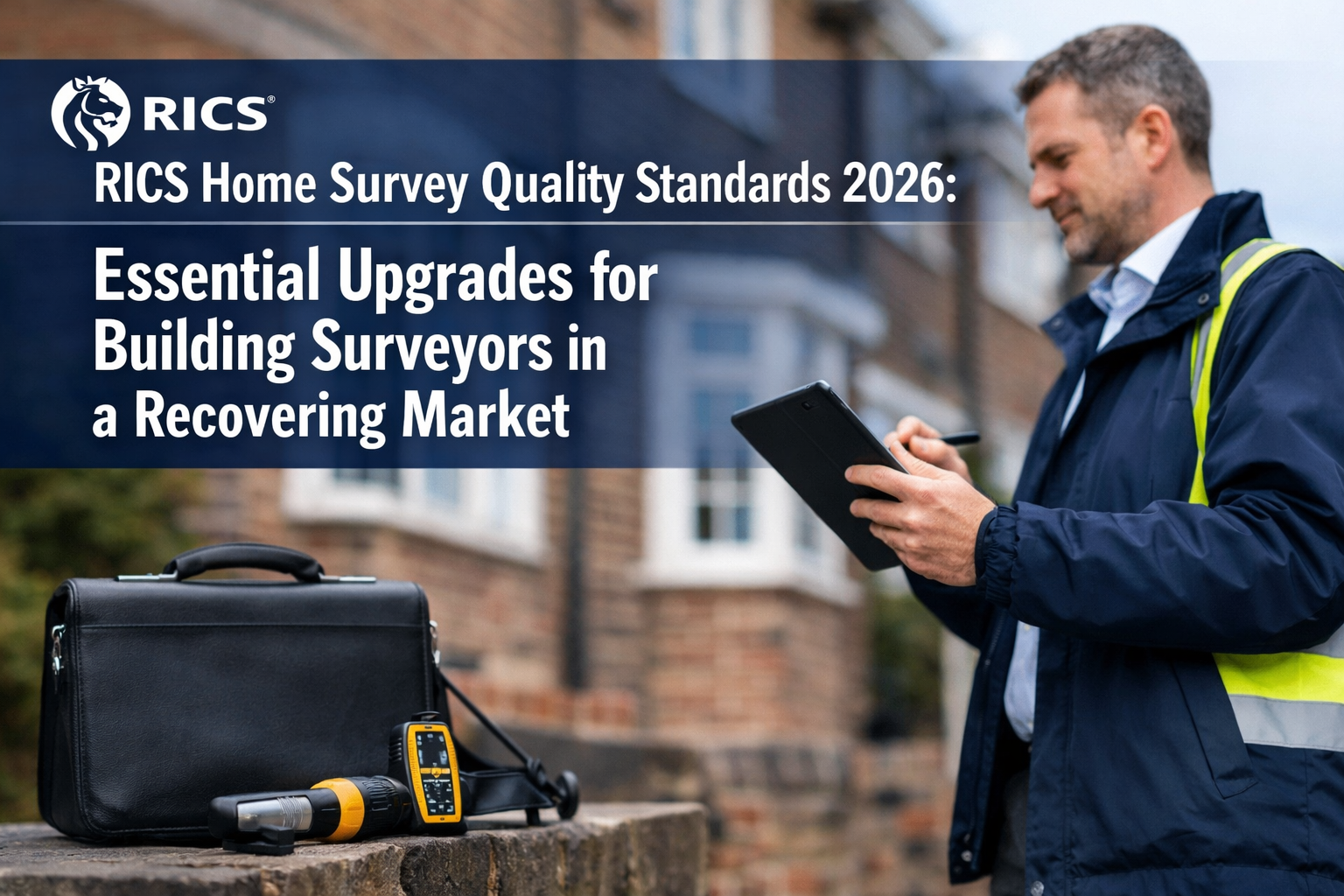
As the UK property market shows signs of recovery in early 2026, building surveyors face a critical juncture. The RICS Home Survey Quality Standards 2026: Essential Upgrades for Building Surveyors in a Recovering Market represents more than just regulatory updates—it embodies a fundamental shift toward consumer-centric practices, technological integration, and enhanced professional accountability. With over 1,000 consultation responses shaping its development, this evolving standard reflects the industry's commitment to meeting rising buyer expectations while maintaining the highest professional benchmarks[2].
The landscape of residential property surveys has transformed dramatically. Today's homebuyers demand transparency, digital accessibility, and comprehensive insights that traditional survey methods struggled to provide. The RICS Home Survey Quality Standards 2026: Essential Upgrades for Building Surveyors in a Recovering Market addresses these expectations head-on, incorporating digital reporting capabilities, clearer communication protocols, and strengthened quality assurance measures that position surveyors as trusted advisors in an increasingly complex property market.
Key Takeaways
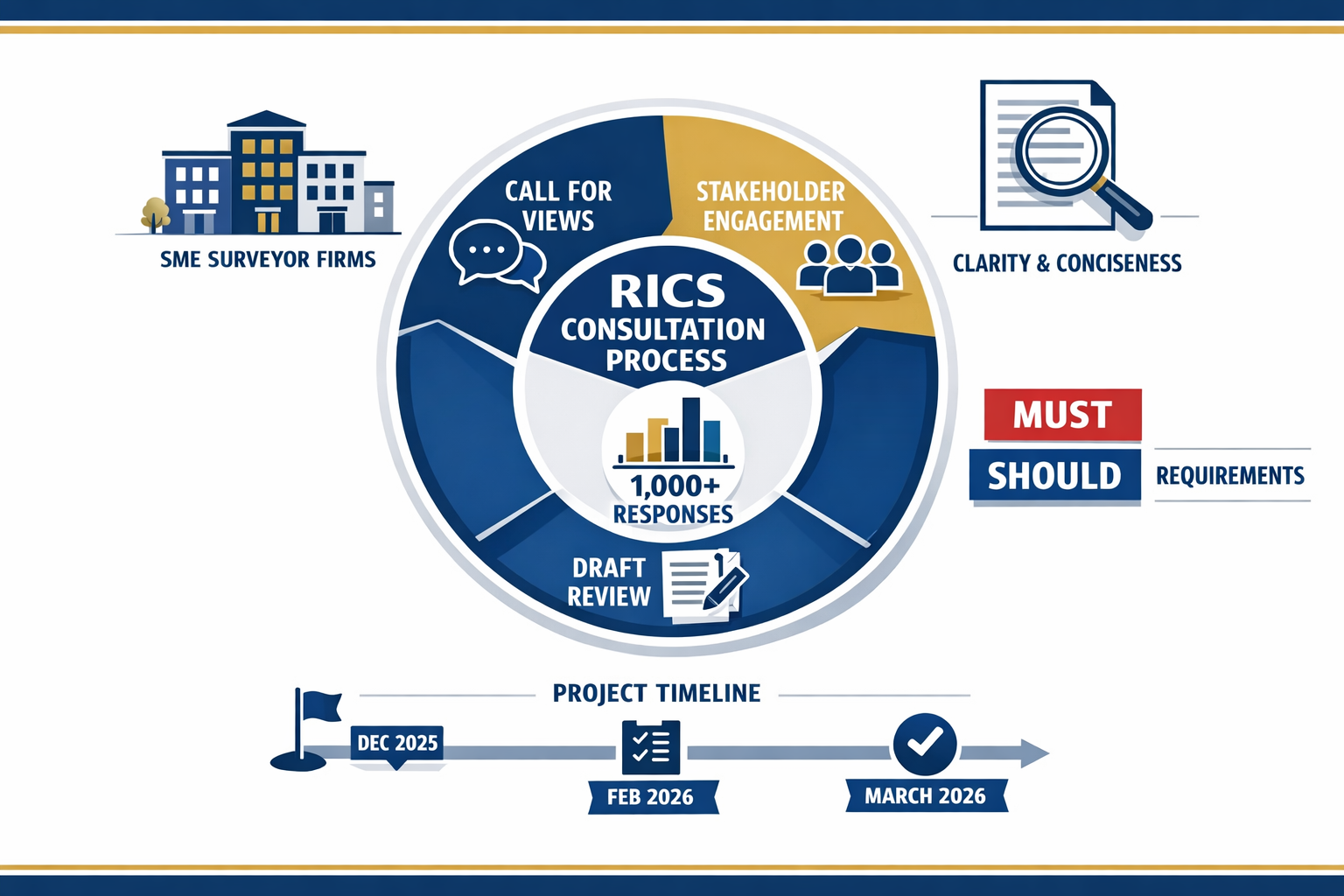
- 📊 Extensive Industry Input: RICS received over 1,000 consultation responses, with SME firms emphasizing the need for clearer, more concise mandatory requirements[2]
- 🔍 Clarity Focus: The updated standard distinguishes between mandatory requirements ('musts') and recommended practices ('shoulds') to ensure surveyors understand obligations while maintaining competitive flexibility[2]
- 💻 Digital Integration: New standards incorporate technological advances and digital reporting capabilities to meet modern consumer expectations
- 📅 Transparent Timeline: RICS committed to providing progress updates by end of March 2026, with the standard currently in detailed analysis phase[2]
- ✅ Consumer Trust Priority: Updates aim to establish best practice standards while fostering public confidence in surveyors' work during market recovery[2]
Understanding the Evolution of RICS Home Survey Standards
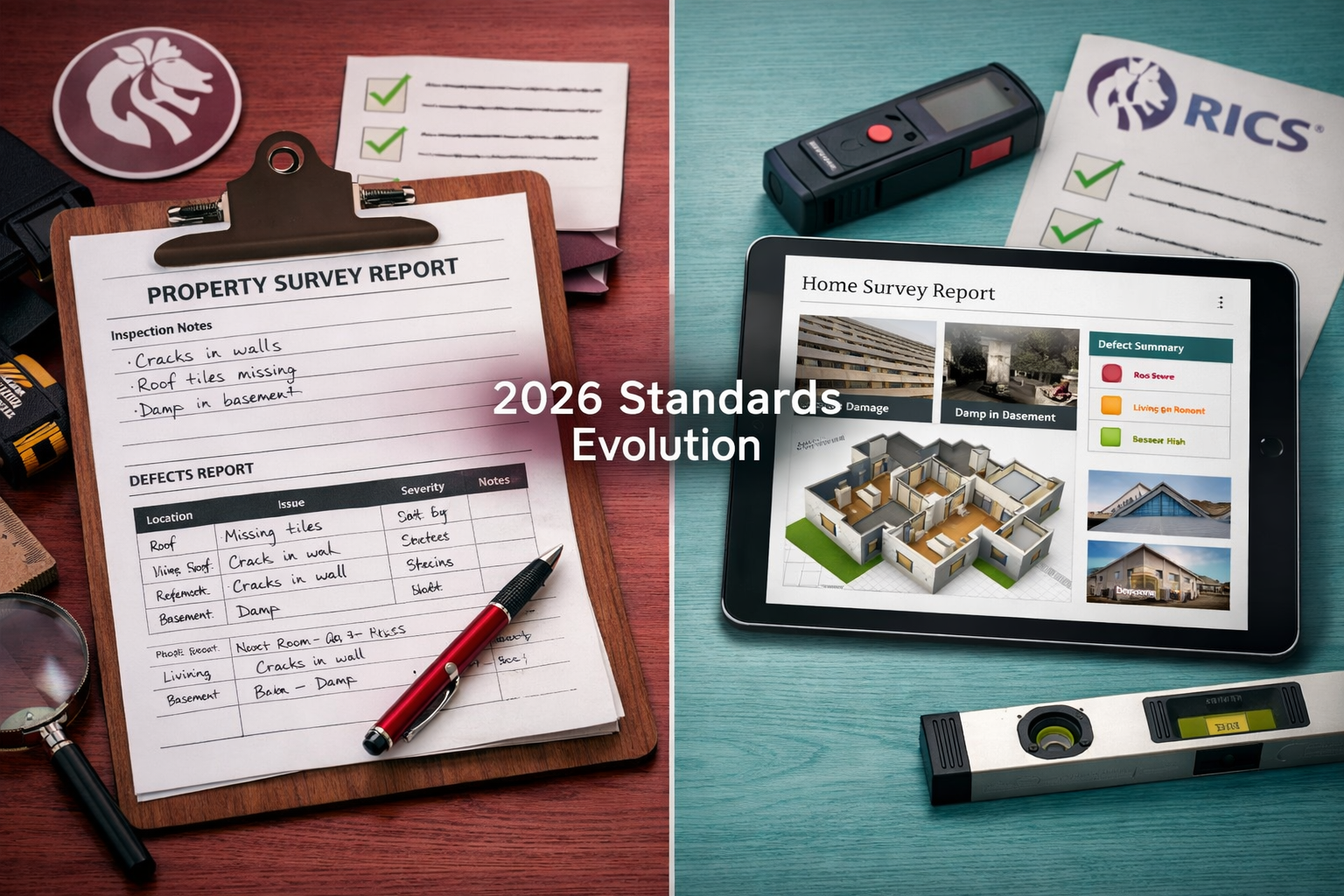
The journey toward the RICS Home Survey Quality Standards 2026: Essential Upgrades for Building Surveyors in a Recovering Market began with recognition that existing frameworks needed modernization. The current Home Survey Standard 2nd edition remains in the analysis phase as of February 2026, with RICS methodically working through consultation responses line-by-line before advancing to further review stages[2].
Historical Context and Market Drivers
The property survey industry has operated under RICS guidance for decades, but recent years have revealed gaps between traditional practices and contemporary consumer needs. The comprehensive program to strengthen home survey standards emerged from several key drivers:
Market Recovery Dynamics 🏠
As the UK property market rebounds in 2026, transaction volumes are increasing, placing greater demands on surveying capacity and quality. Buyers entering the market with heightened awareness of property risks expect detailed, accessible information that supports informed decision-making[8].
Technological Advancement
Digital tools have revolutionized how surveyors conduct inspections and deliver reports. From thermal imaging cameras to drone surveys and 3D modeling software, technology enables more thorough investigations and clearer communication of findings[2].
Consumer Expectations
Modern homebuyers, accustomed to digital experiences across all service sectors, expect survey reports that are interactive, visually engaging, and accessible on multiple devices. The traditional lengthy PDF document no longer meets these expectations.
The Consultation Process: Industry Voices Shape Standards
The development of the RICS Home Survey Quality Standards 2026: Essential Upgeyards for Building Surveyors in a Recovering Market involved unprecedented stakeholder engagement. The consultation phase yielded valuable insights from practicing surveyors, firms of all sizes, consumer advocates, and industry bodies[2].
Primary Feedback Themes
| Feedback Category | Key Concerns | RICS Response Approach |
|---|---|---|
| Clarity | Requirements too verbose and complex | Streamlining language, creating concise directives |
| SME Burden | Compliance costs disproportionate for small firms | Distinguishing mandatory vs. recommended practices |
| Flexibility | Overly prescriptive approaches limiting innovation | Allowing competitive differentiation within quality framework |
| Implementation | Unclear timelines and transition support | Developing phased rollout with guidance materials |
A consistent concern from respondents, particularly small and medium-sized (SME) firms, centered on the need for greater clarity and conciseness in mandatory requirements[2]. These firms, which comprise a significant portion of the surveying profession, emphasized that overly complex standards could create compliance barriers without corresponding quality improvements.
Leadership and Governance Structure
To ensure the standard development benefits from deep industry expertise, RICS appointed a Chartered Surveyor with 20 years of industry experience as project lead in December 2025[2]. This leadership brings practical understanding of surveying challenges alongside regulatory knowledge.
The standard will proceed through multiple review stages, including member-led professional panel groups and boards composed of experts and practitioners, followed by independent regulatory approval. Each stage may result in refinements to ensure the final standard balances rigor with practicality[2].
Core Components of the RICS Home Survey Quality Standards 2026
The RICS Home Survey Quality Standards 2026: Essential Upgrades for Building Surveyors in a Recovering Market encompasses several fundamental components designed to elevate professional practice while maintaining accessibility for firms of all sizes.
Mandatory Requirements vs. Recommended Practices
One of the most significant clarifications in the updated standard involves distinguishing between what surveyors must do and what they should consider. This distinction addresses feedback from the consultation process and provides surveyors with clear compliance baselines while allowing flexibility for value-added services[2].
Mandatory Requirements ('Musts') ✅
These non-negotiable elements form the foundation of professional competence:
- Minimum inspection scope: Specific building elements that must be examined during each survey level
- Reporting timelines: Maximum turnaround times from inspection to report delivery
- Professional indemnity insurance: Coverage levels appropriate to survey type and property value
- Competency standards: Required qualifications, continuing professional development (CPD), and specialization criteria
- Quality assurance protocols: Internal review processes and documentation standards
Recommended Practices ('Shoulds') 💡
These guidance elements represent best practices that enhance service quality without creating rigid compliance obligations:
- Advanced diagnostic techniques (thermal imaging, moisture meters beyond basic requirements)
- Enhanced visual documentation beyond minimum photo requirements
- Detailed maintenance recommendations and cost estimates
- Follow-up consultation services
- Digital interactive report features
This framework allows surveyors to differentiate their services competitively while ensuring all practitioners meet essential quality thresholds. For those seeking comprehensive property assessments, understanding the difference between Level 2 and Level 3 surveys becomes crucial in selecting appropriate service levels.
Digital Reporting and Technology Integration
The RICS Home Survey Quality Standards 2026: Essential Upgrades for Building Surveyors in a Recovering Market acknowledges that technology has fundamentally changed how surveys are conducted and communicated. The updated standards incorporate provisions for digital reporting while maintaining format flexibility.
Digital Report Features 📱
Modern survey reports under the new standards may include:
- Interactive navigation: Clickable table of contents, section links, and cross-references
- Embedded multimedia: Photos, videos, and annotated images directly within report sections
- Layered information: Summary views with expandable detail sections for different reader needs
- Mobile optimization: Reports formatted for smartphone and tablet viewing
- Cloud accessibility: Secure online access allowing clients to review reports anywhere
- Update capability: Ability to append additional information or clarifications post-delivery
These technological enhancements address consumer insights gathered during the standards development process, which revealed that buyers increasingly expect digital-first experiences comparable to other professional services[2].
Survey Level Specifications
The updated standards maintain the three-tier survey structure while refining specifications for each level to reflect current building stock characteristics and inspection methodologies.
Level 1 (Condition Report) 🔍
Designed for conventional properties in reasonable condition, Level 1 surveys provide a basic assessment without detailed advice. The 2026 standards clarify:
- Minimum visual inspection requirements
- Limitations and exclusions that must be explicitly stated
- Condition rating criteria and presentation format
- Circumstances where surveyors must recommend higher-level surveys
Level 2 (HomeBuyer Report) 🏡
The most commonly requested survey type, Level 2 provides more detailed inspection and advice. Enhanced standards address:
- Expanded inspection scope for common defect types
- Market value and insurance rebuild cost guidance
- Defect significance ratings and repair urgency indicators
- Environmental and sustainability considerations
For buyers deciding between survey types, our guide on choosing the right property assessment provides valuable context for matching survey level to property characteristics and buyer concerns.
Level 3 (Building Survey) 🔨
The most comprehensive survey option, Level 3 is appropriate for older, altered, or unconventional properties. The 2026 standards enhance:
- Detailed investigation techniques and accessibility requirements
- Specialized reporting for heritage and listed properties
- Integration with specialist sub-surveys (structural engineering, environmental testing)
- Maintenance planning and long-term cost projections
Understanding what surveyors do during these different survey levels helps property buyers appreciate the value delivered at each tier.
Quality Assurance and Professional Accountability
The RICS Home Survey Quality Standards 2026: Essential Upgrades for Building Surveyors in a Recovering Market strengthens quality assurance mechanisms to build consumer confidence and maintain professional standards.
Internal Quality Control ✓
Firms must implement systematic quality review processes:
- Peer review: Percentage of reports subject to colleague review before delivery
- File documentation: Comprehensive records of inspection notes, photos, and decision rationale
- Template compliance: Standardized report structures ensuring consistent coverage
- Continuing education: CPD requirements specific to residential surveying practice
External Oversight 🛡️
RICS maintains regulatory oversight through:
- Complaint investigation: Structured processes for consumer complaints with transparent outcomes
- Practice audits: Random and targeted reviews of member firms' survey quality
- Disciplinary procedures: Clear consequences for standards violations
- Public accountability: Publication of disciplinary outcomes to maintain transparency
These accountability measures align with the standard's public interest focus, establishing best practice while meeting changing consumer needs and fostering trust in surveyors' work[2].
Implementation Strategies for Building Surveyors in 2026
As the RICS Home Survey Quality Standards 2026: Essential Upgrades for Building Surveyors in a Recovering Market progresses toward finalization, building surveyors must prepare for implementation. The transition period offers opportunities for proactive firms to gain competitive advantages while ensuring compliance.
Preparing for Standards Adoption
Assessment of Current Practices 📋
Surveyors should conduct comprehensive reviews of existing survey processes against anticipated new requirements:
- Documentation review: Compare current report templates and inspection protocols against draft standards
- Gap analysis: Identify areas requiring enhancement or modification
- Resource evaluation: Assess technology, training, and personnel needs for compliance
- Timeline planning: Develop phased implementation schedules aligned with RICS rollout
Technology Investment Decisions 💻
The digital reporting emphasis in the new standards may require technology upgrades:
- Survey software platforms: Cloud-based systems supporting digital report creation and delivery
- Inspection tools: Modern diagnostic equipment (thermal cameras, moisture meters, laser measurers)
- Photo management: Systems for organizing, annotating, and embedding inspection images
- Client portals: Secure platforms for report delivery and client communication
For surveyors offering specialized services, understanding surveyor responsibilities across different engagement types helps ensure comprehensive compliance.
Training and Professional Development
The updated standards create CPD opportunities and requirements for practicing surveyors.
Core Competency Areas 🎓
- Modern construction methods: Understanding contemporary building techniques and materials
- Defect diagnosis: Enhanced skills in identifying and assessing building pathology
- Digital literacy: Proficiency with survey software and digital reporting tools
- Client communication: Effective explanation of technical findings to non-specialist audiences
- Regulatory knowledge: Current building regulations, energy performance, and safety standards
Specialization Pathways
The 2026 standards recognize that complex properties may require specialized expertise:
- Heritage and listed buildings
- Modern methods of construction (MMC)
- Environmental and sustainability assessments
- Commercial-to-residential conversions
- Complex structural issues
Surveyors developing specializations can differentiate their practices while meeting the standards' competency requirements.
Business Model Adaptations
The RICS Home Survey Quality Standards 2026: Essential Upgrades for Building Surveyors in a Recovering Market may influence how surveying firms structure their services and pricing.
Service Tiering Strategies 📊
Firms can leverage the mandatory vs. recommended distinction:
- Standard compliance tier: Meeting all mandatory requirements at competitive pricing
- Enhanced service tier: Including recommended practices and value-added features
- Premium tier: Comprehensive investigations with specialist consultations and extended support
This approach allows firms to serve diverse market segments while maintaining quality baselines across all offerings.
Pricing Considerations
Implementation costs (technology, training, enhanced processes) may affect pricing structures:
- Cost recovery: Transparent communication about quality investments justifying fees
- Value demonstration: Emphasizing how enhanced standards benefit clients
- Market positioning: Competitive analysis ensuring pricing aligns with service differentiation
Understanding how RICS surveys can help negotiate property prices helps surveyors articulate value to cost-conscious buyers.
SME-Specific Implementation Challenges
Small and medium-sized surveying firms face unique challenges implementing the RICS Home Survey Quality Standards 2026: Essential Upgrades for Building Surveyors in a Recovering Market, which the consultation process highlighted[2].
Resource Constraints ⚖️
SMEs often operate with limited administrative support and technology budgets:
- Phased implementation: Prioritizing mandatory requirements before recommended enhancements
- Collaborative approaches: Sharing technology platforms or training costs with peer firms
- Outsourcing options: Utilizing third-party services for specialized report production or quality review
- RICS support: Leveraging guidance materials and implementation tools provided by RICS
Maintaining Competitiveness
SMEs must balance compliance costs with market competitiveness:
- Niche specialization: Focusing on specific property types or geographic areas
- Personal service emphasis: Highlighting direct client relationships and local expertise
- Efficiency optimization: Streamlining processes to minimize compliance overhead
- Technology leverage: Using digital tools to enhance productivity without proportional cost increases
The standards' clarity improvements specifically address SME concerns, ensuring compliance requirements are proportionate and achievable for firms of all sizes[2].
Market Recovery Context and Consumer Expectations
The RICS Home Survey Quality Standards 2026: Essential Upgrades for Building Surveyors in a Recovering Market arrives at a pivotal moment in UK property market evolution. Understanding the market context helps surveyors align their practices with buyer needs and expectations.
The 2026 Property Market Landscape
Recovery Indicators 📈
Early 2026 data suggests the UK property market is experiencing renewed activity after previous years' challenges:
- Transaction volume increases: More buyers entering the market with improved confidence
- First-time buyer activity: Government schemes and market conditions supporting new entrants
- Mortgage availability: Lending criteria stabilization encouraging purchase decisions
- Price stabilization: Regional variations with some areas showing growth, others consolidating
According to RICS market monitoring, 2026 presents specific opportunities across different property segments, with surveyors positioned to support informed decision-making in this evolving landscape[8].
Buyer Profile Changes 👥
The composition of property buyers in 2026 reflects demographic and economic shifts:
- Digital natives: Younger buyers expecting technology-enabled services
- Remote work influence: Changing location priorities affecting property selection criteria
- Sustainability focus: Growing emphasis on energy efficiency and environmental performance
- Risk awareness: Heightened concern about property condition following market volatility
These buyer characteristics directly influence survey expectations, with demand for comprehensive information, digital accessibility, and clear communication of findings and implications.
Consumer Trust and Professional Reputation
The updated standards specifically aim to foster trust in surveyors' work, recognizing that consumer confidence underpins market health[2].
Trust Factors 🤝
Research into consumer attitudes toward property surveys reveals key trust drivers:
- Transparency: Clear explanation of what surveys include and exclude
- Accessibility: Reports written in understandable language with technical terms explained
- Thoroughness: Confidence that inspections are comprehensive and rigorous
- Independence: Assurance that surveyors provide impartial assessments
- Accountability: Knowledge that surveyors face professional consequences for substandard work
The RICS Home Survey Quality Standards 2026: Essential Upgrades for Building Surveyors in a Recovering Market addresses each of these factors through enhanced requirements for communication, scope clarity, quality assurance, and professional oversight.
Reputation Management ⭐
In the digital age, surveyor reputation extends beyond traditional professional networks:
- Online reviews: Client feedback on platforms influencing buyer selection decisions
- Social proof: Testimonials and case studies demonstrating expertise and service quality
- Professional credentials: RICS membership and compliance with updated standards as differentiators
- Educational content: Surveyors providing market insights and property guidance building authority
Firms that proactively embrace the new standards can position themselves as quality leaders, leveraging compliance as a marketing advantage during the market recovery phase.
Integration with Home Buying and Selling Reform
The survey standards update forms part of broader RICS initiatives to improve the home buying and selling process in the UK[5].
Connected Reforms 🔗
Survey quality improvements complement other reform areas:
- Material Information: Requirements for sellers to provide comprehensive property information upfront
- Transaction timelines: Efforts to reduce delays and fall-through rates
- Digital conveyancing: Technology integration across the transaction chain
- Consumer protection: Enhanced safeguards throughout the buying process
These interconnected reforms create an ecosystem where high-quality surveys play a central role in transaction efficiency and buyer protection. Surveyors who understand their position within this broader reform context can better articulate their value to clients and transaction partners.
Collaboration Opportunities
The reform environment encourages collaboration between surveyors and other professionals:
- Estate agents: Early survey commissioning to support accurate property marketing
- Conveyancers: Survey findings informing legal due diligence and contract negotiations
- Mortgage lenders: Survey reports meeting lender requirements while serving buyer interests
- Building professionals: Survey recommendations connecting buyers with qualified contractors
For buyers seeking to leverage survey findings, understanding negotiation strategies based on survey results can maximize transaction value.
Technological Innovation and Digital Transformation
A defining feature of the RICS Home Survey Quality Standards 2026: Essential Upgrades for Building Surveyors in a Recovering Market is its embrace of technological advancement while maintaining professional judgment primacy.
Digital Reporting Platforms
Modern survey software platforms offer capabilities that transform report creation and delivery:
Cloud-Based Systems ☁️
- Template management: Standardized report structures ensuring consistency and compliance
- Mobile data capture: On-site recording of findings using tablets or smartphones
- Photo integration: Automatic organization and embedding of inspection images
- Collaboration features: Multi-surveyor projects with coordinated input
- Version control: Tracking report revisions and maintaining audit trails
Client-Facing Features 📲
- Interactive navigation: Intuitive report browsing with search and filter capabilities
- Multimedia content: Embedded videos, annotated photos, and explanatory diagrams
- Summary dashboards: Visual overviews highlighting key findings and priorities
- Action tracking: Tools for buyers to monitor recommended repairs and maintenance
- Secure sharing: Controlled access for buyers, lenders, and other authorized parties
These platforms enable surveyors to meet consumer expectations for digital experiences while enhancing efficiency and quality control.
Advanced Inspection Technologies
Beyond reporting software, inspection technologies enhance surveyors' diagnostic capabilities:
Thermal Imaging 🌡️
- Insulation defects: Identifying heat loss and thermal bridging
- Moisture detection: Locating hidden dampness and water penetration
- Heating system performance: Assessing radiator and underfloor heating function
- Air leakage: Detecting drafts and ventilation issues
Drones and Aerial Inspection 🚁
- Roof access: Inspecting difficult-to-reach roof areas safely
- Chimney assessment: Detailed examination of chimney condition
- Site context: Documenting property surroundings and access
- Large buildings: Comprehensive coverage of extensive or complex structures
Moisture and Damp Detection 💧
- Electronic meters: Quantitative moisture measurement in building materials
- Hygrometers: Ambient humidity assessment
- Calcium carbide testing: Definitive moisture content analysis for critical decisions
For properties with suspected moisture issues, specialized damp surveys complement standard home surveys with focused investigation.
Data Analytics and Predictive Insights
Emerging technologies enable surveyors to provide forward-looking insights beyond traditional condition reporting:
Building Performance Modeling 📊
- Energy efficiency projections: Estimating heating costs and improvement benefits
- Maintenance forecasting: Predicting component replacement timelines and costs
- Climate resilience: Assessing flood risk, overheating potential, and adaptation needs
- Lifecycle analysis: Long-term ownership cost modeling
Comparative Market Data 📈
- Defect prevalence: Contextualizing findings against typical conditions for property type and age
- Repair cost benchmarking: Providing realistic cost estimates based on regional data
- Value impact analysis: Quantifying how identified issues affect property value
These analytical capabilities transform surveys from static snapshots into dynamic decision-support tools, aligning with the standards' consumer insight integration[2].
Balancing Technology and Professional Judgment
While the RICS Home Survey Quality Standards 2026: Essential Upgrades for Building Surveyors in a Recovering Market embraces technology, it maintains that professional judgment remains central to quality surveying.
Technology as Enhancement, Not Replacement ⚖️
- Diagnostic tools: Technology aids investigation but doesn't substitute expertise
- Interpretation primacy: Surveyors must analyze and contextualize technological findings
- Limitation awareness: Understanding when technology provides definitive answers vs. indicators
- Human communication: Technology cannot replace clear, empathetic client explanation
The standards ensure technology serves surveyors and clients without diminishing the professional expertise that underpins trusted advice.
Regulatory Approval and Implementation Timeline
Understanding the path from draft standards to implementation helps surveyors prepare effectively for the RICS Home Survey Quality Standards 2026: Essential Upgrades for Building Surveyors in a Recovering Market.
Current Development Status
As of February 16, 2026, the Home Survey Standard 2nd edition remains in the detailed analysis phase[2]. This methodical approach ensures consultation feedback receives thorough consideration.
Analysis Process 🔍
RICS is working through consultation responses line-by-line, addressing each comment and suggestion systematically. This granular review ensures:
- Comprehensive consideration: No feedback overlooked or dismissed without evaluation
- Consistency: Responses to similar comments treated uniformly
- Transparency: Clear rationale for accepting, modifying, or rejecting suggestions
- Quality: Final standard reflects balanced judgment across diverse stakeholder perspectives
The over 1,000 consultation comments represent substantial input requiring careful analysis[2], explaining the extended timeline for this phase.
Upcoming Review Stages
Following analysis completion, the standard will proceed through multiple review and approval stages[2]:
Professional Panel Review 👥
Member-led professional panel groups composed of experienced practitioners will:
- Evaluate revised draft incorporating consultation feedback
- Assess practical implications and implementation feasibility
- Recommend further refinements based on field expertise
- Ensure standards reflect current best practices
Board Approval ✅
RICS boards will review the standard for:
- Alignment with RICS strategic objectives
- Public interest protection
- Professional standards consistency
- Regulatory compliance
Independent Regulatory Approval 🏛️
External regulatory review ensures:
- Consumer protection adequacy
- Competition law compliance
- Proportionality of requirements
- Public accountability
Each stage may result in refinements, with the process prioritizing quality over speed[2].
Transparency and Communication
RICS committed to providing a progress update on next steps by the end of March 2026[2], demonstrating ongoing transparency throughout the development process.
Stakeholder Communication 📢
- Regular updates: Progress reports on development milestones
- Consultation feedback summary: Publication of key themes and RICS responses
- Draft availability: Opportunities for continued stakeholder input at key stages
- Implementation guidance: Advance materials helping surveyors prepare for adoption
Basis for Conclusions Document 📄
The final standard will include a comprehensive Basis for Conclusions summarizing:
- Consultation responses received
- How feedback was addressed
- Rationale for key decisions
- Alternative approaches considered and rejected
This document provides transparency and accountability, helping stakeholders understand the development process and final standard rationale[2].
Anticipated Implementation Timeline
While specific dates remain subject to the review process, surveyors can anticipate a general timeline:
2026 Milestones 📅
- Q1 2026: Analysis phase completion, progress update publication
- Q2 2026: Professional panel review and board consideration
- Q3 2026: Independent regulatory review
- Q4 2026: Final standard publication with implementation guidance
2027 Implementation 🚀
- Q1 2027: Transition period begins with guidance and training resources
- Q2-Q3 2027: Phased adoption with early implementers gaining market advantages
- Q4 2027: Full compliance expected across RICS membership
This timeline remains provisional, with RICS prioritizing thorough development over arbitrary deadlines.
Practical Guidance for Different Surveyor Segments
The RICS Home Survey Quality Standards 2026: Essential Upgrades for Building Surveyors in a Recovering Market affects different surveyor segments uniquely, requiring tailored implementation approaches.
Solo Practitioners
Individual surveyors operating independently face distinct challenges and opportunities:
Advantages ✨
- Agility: Quick decision-making and process adaptation
- Personal client relationships: Direct communication and service customization
- Niche specialization: Focused expertise in specific property types or areas
- Low overhead: Minimal administrative burden for compliance implementation
Challenges ⚠️
- Technology costs: Full expense burden for software and equipment investments
- Time constraints: Balancing fee-earning work with compliance preparation
- Peer review: Arranging quality assurance without internal colleagues
- Knowledge gaps: Limited resources for comprehensive training and development
Implementation Strategies 🎯
- Prioritize mandatory requirements: Focus resources on non-negotiable compliance elements
- Leverage RICS resources: Utilize guidance materials, templates, and training provided
- Collaborate informally: Arrange peer review partnerships with trusted colleagues
- Adopt scalable technology: Choose platforms with entry-level pricing and upgrade paths
- Communicate value: Emphasize standards compliance in marketing to justify fees
Small and Medium Firms
SME surveying practices represent a significant portion of the industry and were vocal during consultation[2].
Firm Characteristics 🏢
- 2-10 surveyors: Sufficient scale for specialization but limited administrative support
- Regional focus: Strong local market knowledge and relationships
- Generalist approach: Broad service offerings across survey types and property categories
- Competitive pressure: Balancing quality with price-sensitive market segments
Implementation Priorities 📋
- Internal standardization: Develop firm-wide templates and processes ensuring consistency
- Shared technology investment: Distribute platform costs across multiple users
- Training coordination: Group CPD activities maximizing efficiency and knowledge sharing
- Quality systems: Formalize peer review and file documentation procedures
- Client communication: Update service descriptions and terms reflecting new standards
Resource Optimization 💡
- Template development: Create compliant report structures reducing per-survey effort
- Process documentation: Standardize inspection protocols ensuring thorough coverage
- Technology training: Ensure all surveyors proficient with adopted platforms
- Marketing alignment: Update websites and materials highlighting standards compliance
Large Practices and National Firms
Larger organizations have different implementation dynamics:
Organizational Advantages 🌟
- Dedicated compliance teams: Specialists managing standards implementation
- Technology budgets: Resources for comprehensive platform adoption
- Training infrastructure: Established CPD programs and knowledge management
- Quality assurance systems: Existing review and audit processes
Complexity Challenges 🔄
- Multi-location coordination: Ensuring consistent implementation across offices
- Legacy system integration: Updating established processes and technology
- Staff communication: Engaging diverse surveyor populations with varying experience
- Change management: Overcoming organizational inertia and resistance
Strategic Approaches 📊
- Pilot programs: Test implementation in selected offices before firm-wide rollout
- Champions network: Identify enthusiastic adopters supporting colleagues
- Phased deployment: Systematic rollout with clear milestones and support
- Performance metrics: Track compliance and quality indicators across organization
- Continuous improvement: Regular review and refinement of implementation approach
Case Studies: Preparing for Standards Implementation
Examining how different firms are preparing for the RICS Home Survey Quality Standards 2026: Essential Upgrades for Building Surveyors in a Recovering Market provides practical insights.
Case Study 1: Solo Practitioner in Southeast England
Background 📖
A Chartered Surveyor with 15 years' experience operating independently in a competitive suburban market, primarily conducting Level 2 HomeBuyer Reports.
Preparation Approach
- Technology adoption: Invested in mid-tier survey software with digital reporting capabilities
- Template development: Created compliant report templates incorporating mandatory requirements
- CPD focus: Attended training on modern construction methods and digital tools
- Marketing update: Revised website emphasizing RICS compliance and digital report delivery
- Peer arrangement: Established reciprocal peer review agreement with trusted colleague
Outcomes ✅
- Maintained competitive pricing while enhancing service quality
- Received positive client feedback on digital report accessibility
- Secured referrals from estate agents impressed by professional presentation
- Positioned as quality leader in local market ahead of standards implementation
Case Study 2: Regional SME Practice
Background 🏢
A 6-surveyor firm covering a large rural and suburban area, offering all survey levels plus specialist services.
Preparation Approach
- Firm-wide assessment: Conducted gap analysis comparing current practices to draft standards
- Investment decision: Selected enterprise survey platform with multi-user licensing
- Process standardization: Developed firm protocols for inspection, documentation, and review
- Training program: Organized group CPD sessions covering technology and updated requirements
- Quality system: Formalized peer review rotation and file audit procedures
Outcomes ✅
- Achieved consistent report quality across all surveyors
- Reduced report production time through efficient digital workflows
- Enhanced firm reputation with solicitors and estate agents
- Created competitive differentiation in regional market
Case Study 3: National Practice Network
Background 🌐
A multi-office practice with 50+ surveyors across England and Wales, serving both consumer and commercial markets.
Preparation Approach
- Compliance team: Designated project manager and working group for implementation
- Technology procurement: Conducted comprehensive platform evaluation and selection
- Pilot program: Tested implementation in three offices representing different market types
- Training rollout: Developed comprehensive training program with online and in-person elements
- Change management: Established communication plan and support resources for all staff
Outcomes ✅
- Successful pilot identified implementation challenges before firm-wide rollout
- Consistent standards adoption across all locations
- Enhanced brand reputation for quality and professionalism
- Improved client satisfaction scores and reduced complaint rates
Consumer Benefits and Market Impact

The RICS Home Survey Quality Standards 2026: Essential Upgrades for Building Surveyors in a Recovering Market ultimately serves consumer interests, with market-wide benefits extending beyond individual transactions.
Direct Consumer Benefits
Enhanced Report Quality 📄
- Clarity: Information presented in accessible language with technical terms explained
- Comprehensiveness: Thorough coverage of property condition with clear scope statements
- Accessibility: Digital formats enabling easy review and sharing with advisors
- Actionability: Clear recommendations with priority ratings and cost guidance
Improved Decision Support 🎯
- Risk awareness: Better understanding of property condition and implications
- Negotiation leverage: Evidence supporting price discussions with sellers
- Maintenance planning: Guidance on immediate and long-term property needs
- Confidence: Assurance that surveys meet rigorous professional standards
For buyers seeking to maximize survey value, understanding how to use RICS surveys in price negotiations can yield significant financial benefits.
Market-Wide Impacts
Transaction Efficiency ⚡
- Reduced fall-throughs: Earlier identification of significant issues preventing late-stage collapses
- Faster completions: Clear information supporting quicker decision-making
- Fewer disputes: Comprehensive disclosure reducing post-purchase conflicts
- Lender confidence: Quality surveys supporting mortgage approval processes
Professional Standards Elevation 📈
- Competitive quality improvement: Standards raising baseline across all practitioners
- Consumer trust: Enhanced confidence in surveying profession
- Market differentiation: Quality-focused firms gaining competitive advantages
- Innovation encouragement: Technology adoption and service enhancement
Economic Contributions 💷
- Property market health: Informed buyers supporting sustainable market activity
- Maintenance investment: Survey recommendations driving property improvement spending
- Professional employment: Demand for quality surveys supporting surveyor careers
- Risk reduction: Fewer costly surprises reducing financial stress for homeowners
Future Developments and Ongoing Evolution
The RICS Home Survey Quality Standards 2026: Essential Upgrades for Building Surveyors in a Recovering Market represents a milestone in an ongoing evolution rather than a static endpoint.
Anticipated Future Enhancements
Sustainability Integration 🌱
Future standards iterations will likely expand environmental and sustainability considerations:
- Energy performance: Enhanced assessment and improvement recommendations
- Climate resilience: Flood risk, overheating, and adaptation guidance
- Material sustainability: Consideration of embodied carbon and circular economy principles
- Biodiversity: Garden and site ecological value assessment
Technology Evolution 🚀
As technologies mature, standards may incorporate:
- Artificial intelligence: Automated defect detection and pattern recognition
- Building information modeling: Integration with BIM data for new properties
- IoT sensors: Remote monitoring and ongoing condition assessment
- Virtual reality: Immersive property tours with annotated findings
Data Integration 📊
Broader data ecosystem connections could enable:
- Benchmarking: Property condition comparison against regional and national norms
- Predictive analytics: Maintenance forecasting based on large datasets
- Market intelligence: Property value implications of specific defect types
- Policy insights: Aggregated data informing housing policy and building regulations
Continuous Improvement Mechanisms
RICS maintains ongoing standards review processes ensuring relevance:
Periodic Review Cycles 🔄
- Regular updates: Scheduled reviews every 3-5 years
- Interim guidance: Technical notes addressing emerging issues between formal updates
- Stakeholder consultation: Continued engagement with surveyors, consumers, and industry bodies
- Research integration: Incorporation of academic and industry research findings
Feedback Mechanisms 💬
- Practitioner input: Channels for surveyors to report implementation challenges
- Consumer complaints: Analysis of complaint patterns identifying standards gaps
- Regulatory oversight: Monitoring by independent bodies ensuring public interest protection
- Market monitoring: Tracking property market trends and surveying practice evolution
Conclusion: Embracing Standards for Professional Excellence
The RICS Home Survey Quality Standards 2026: Essential Upgrades for Building Surveyors in a Recovering Market represents a transformative moment for the surveying profession. As the UK property market recovers in 2026, these enhanced standards position surveyors as trusted advisors delivering the transparency, quality, and digital accessibility that modern consumers expect.
The extensive consultation process, incorporating over 1,000 stakeholder responses, ensures the standards balance rigor with practicality[2]. The clear distinction between mandatory requirements and recommended practices addresses SME concerns while maintaining quality baselines across all practitioners[2]. The emphasis on digital integration and consumer insights reflects the profession's commitment to meeting evolving market needs[2].
For building surveyors, the path forward involves proactive preparation, strategic investment, and commitment to professional excellence. Whether operating as solo practitioners, SME firms, or large practices, surveyors who embrace these standards will differentiate themselves in a competitive market while contributing to consumer protection and market health.
Actionable Next Steps
For Surveyors 🎯
- Stay informed: Monitor RICS communications for progress updates and implementation timelines
- Assess current practices: Conduct gap analysis comparing existing processes to anticipated requirements
- Plan investments: Evaluate technology and training needs, developing phased implementation budgets
- Engage with peers: Participate in professional discussions and knowledge sharing about standards preparation
- Communicate proactively: Update clients and referral partners about commitment to enhanced standards
For Property Buyers 🏠
- Understand survey options: Learn about different survey levels and their appropriateness for specific properties
- Select qualified surveyors: Choose RICS-registered professionals committed to quality standards
- Leverage survey findings: Use comprehensive reports to inform purchase decisions and price negotiations
- Maintain relationships: Consider ongoing surveyor relationships for post-purchase advice and future projects
For Industry Stakeholders 🤝
- Support implementation: Estate agents, lenders, and conveyancers should understand and accommodate enhanced standards
- Collaborate effectively: Work with surveyors to integrate quality surveys into efficient transaction processes
- Promote awareness: Educate consumers about survey value and quality indicators
- Provide feedback: Contribute to ongoing standards evolution through consultation participation
The RICS Home Survey Quality Standards 2026: Essential Upgrades for Building Surveyors in a Recovering Market will establish new benchmarks for professional practice, consumer protection, and market confidence. By embracing these standards, the surveying profession demonstrates its commitment to excellence, innovation, and public service in an evolving property landscape.
As RICS works toward final standard publication with transparent timelines and stakeholder engagement[2], the surveying community has opportunities to shape implementation approaches and lead the profession into a new era of digital-enabled, consumer-focused practice. The recovering market of 2026 provides the perfect context for these essential upgrades, positioning quality surveys as foundations for informed property decisions and sustainable market growth.
For comprehensive property assessments meeting the highest professional standards, explore our RICS surveys and building survey services, delivered by experienced Chartered Surveyors committed to quality, clarity, and client service excellence.
References
[1] The New Rics Home Survey Standard Explained – https://www.surveymerchant.com/blog/the-new-rics-home-survey-standard-explained
[2] Home Survey Standard 2nd Edition A Progress Update – https://www.rics.org/news-insights/home-survey-standard-2nd-edition-a-progress-update
[3] Home Survey Standards – https://www.rics.org/profession-standards/rics-standards-and-guidance/sector-standards/building-surveying-standards/home-surveys/home-survey-standards
[4] 2026 Alta Nsps Land Title Survey Standards – https://www.partneresi.com/resources/references/standards-regulations/2026-alta-nsps-land-title-survey-standards/
[5] Home Buying And Selling Reform Hub – https://www.rics.org/news-insights/current-topics-campaigns/home-buying-and-selling-reform-hub
[6] Cih Responds To Rics Residential Stock Condition Survey Code Of Practice – https://www.cih.org/news/cih-responds-to-rics-residential-stock-condition-survey-code-of-practice/
[7] 2026 Alta Nsps Land Title Survey Updates What Surveyors And Clients Must Know Before The February Deadline – https://nottinghillsurveyors.com/blog/2026-alta-nsps-land-title-survey-updates-what-surveyors-and-clients-must-know-before-the-february-deadline
[8] Rics Monitor Why 2026 Is A Market Of Specific Opportunities – https://www.commercialsearch.com/news/rics-monitor-why-2026-is-a-market-of-specific-opportunities/