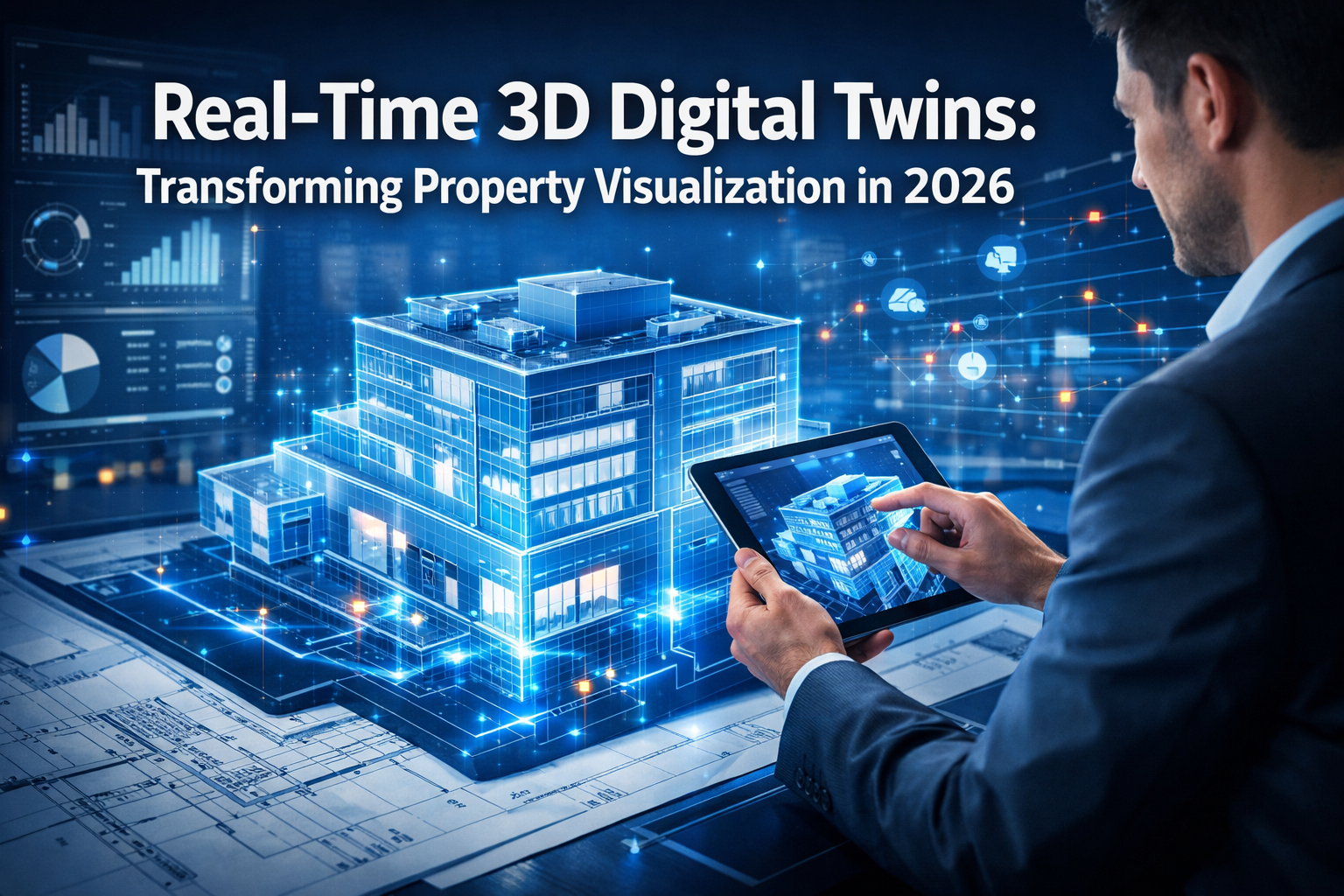
The property development landscape is experiencing a fundamental shift. Gone are the days when stakeholders relied solely on static blueprints and imagination to envision completed projects. Real-Time 3D Digital Twins: Transforming Property Visualization and Decision-Making in 2026 represents the convergence of cutting-edge technology and practical property management, creating interactive models that update continuously with live data from sensors, IoT devices, and connected systems. These living, data-driven replicas enable developers, investors, and community members to simulate environmental impacts, test development scenarios, and make evidence-based decisions without constructing physical prototypes.
As 2026 emerges as a pivotal year for digital twin adoption, property professionals are discovering unprecedented capabilities that extend far beyond traditional visualization tools. These dynamic virtual replicas don't just show what a building will look like—they demonstrate how it will perform, adapt, and evolve throughout its entire lifecycle.[7]
Key Takeaways
- Digital twins function as living, data-driven replicas that continuously integrate real-time information from sensors and IoT devices, maintaining perfect alignment with physical properties through regular point cloud validation[1][2]
- Operating costs are declining 10-20% for companies implementing digital twins in construction and property operations through improved predictive maintenance and performance monitoring[5]
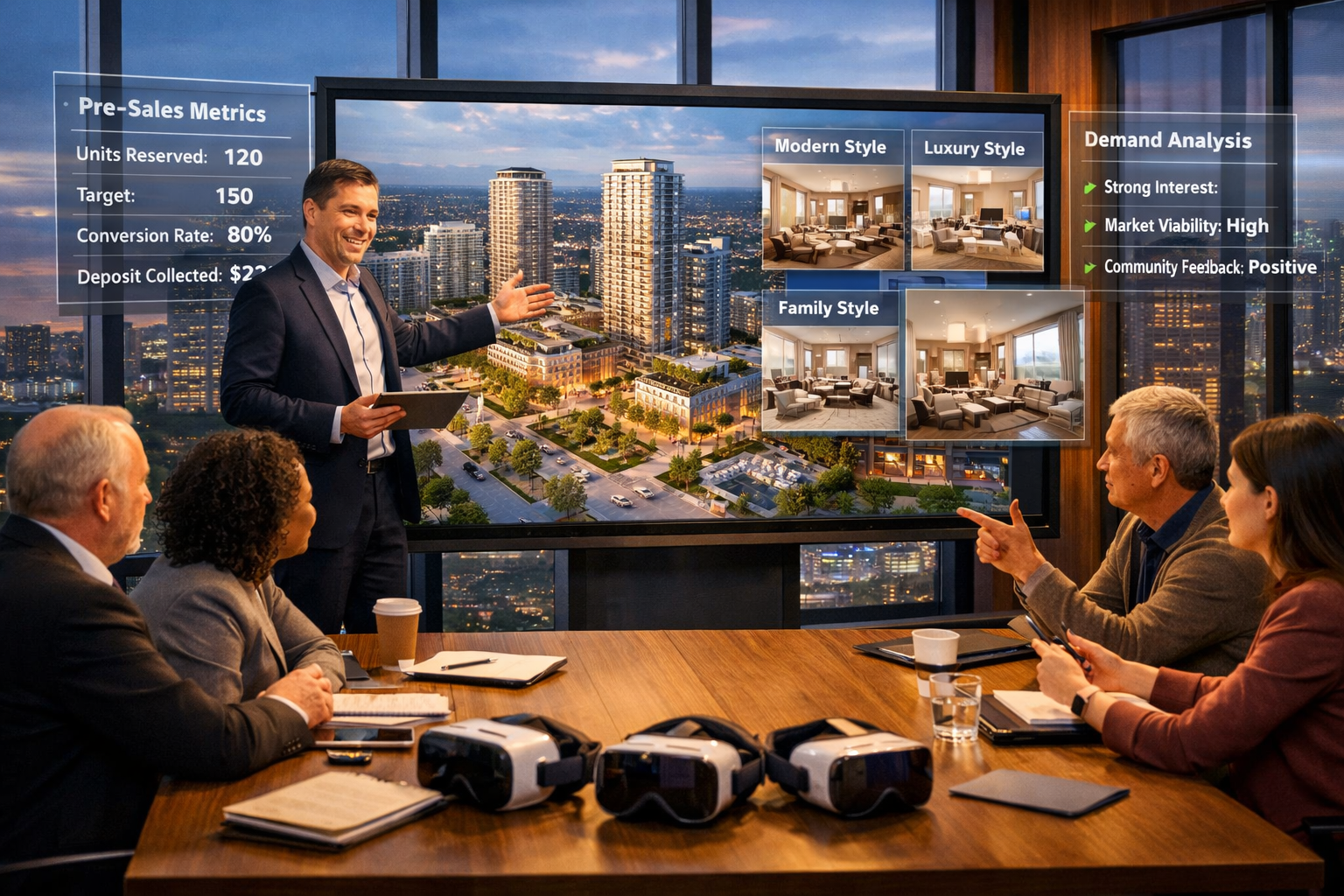
- Pre-sales acceleration and market validation occur when buyers explore properties before construction begins, visualizing different finishing options and configurations to provide developers with validated demand data[1]
- Extended reality applications enable immersive stakeholder engagement through VR property tours and AR construction coordination, reducing installation errors and accelerating approval processes[1][2]
- Evidence-based decision-making allows cities and developers to test interventions within digital twins before physical implementation, observing effects on traffic flow, environmental impact, and community integration[1]
Understanding Real-Time 3D Digital Twins in Property Development
What Makes Digital Twins "Living" Models?
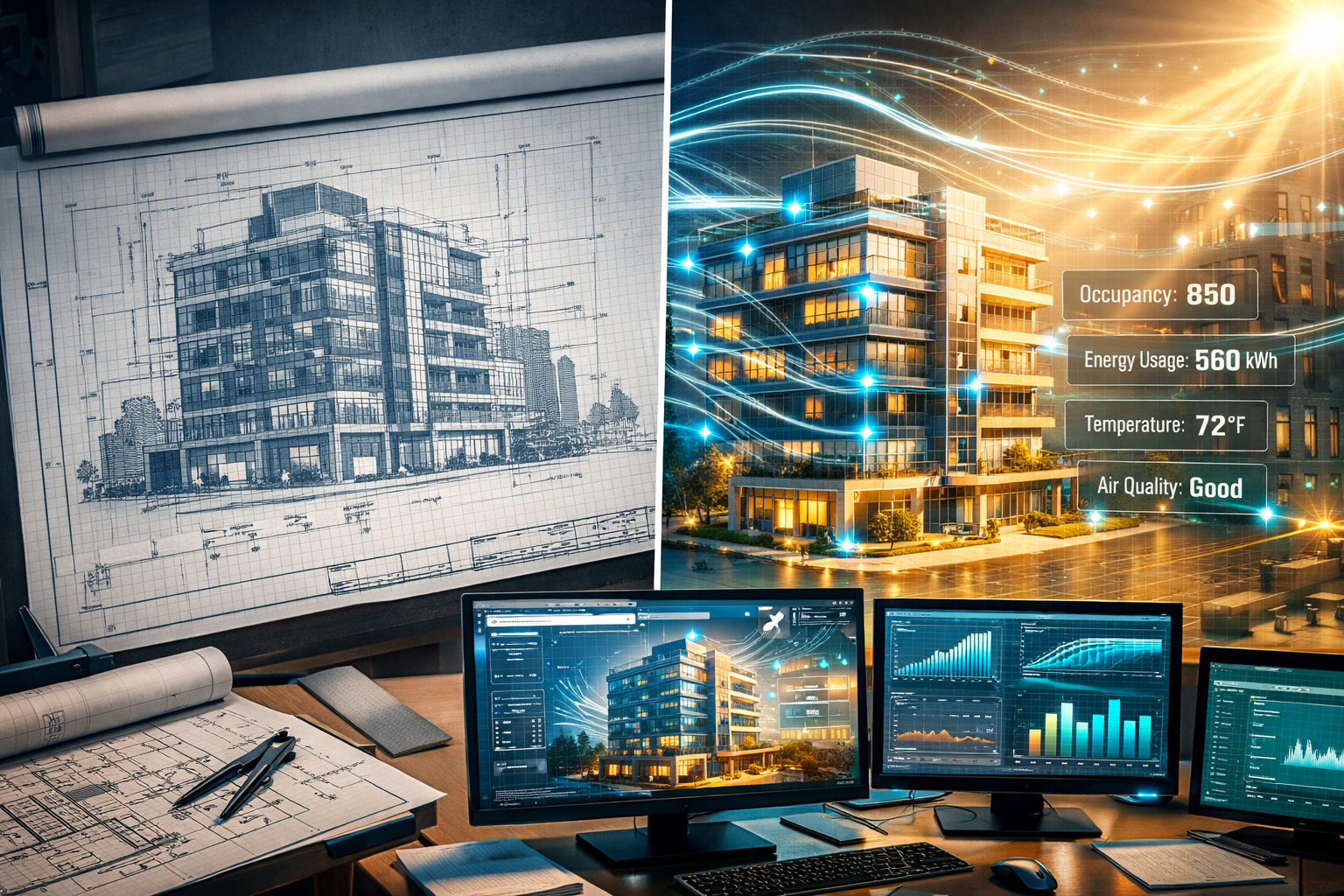
Digital twins represent a fundamental departure from traditional 3D architectural renderings and static CAD models. While conventional visualization tools capture a single moment in time, digital twins function as "living, data-driven replicas" rather than static models.[1][2] This distinction proves critical for property professionals seeking to maintain accurate representations throughout a building's lifecycle.
The continuous integration of information from multiple sources creates the "living" quality that distinguishes digital twins:
- IoT sensor networks monitoring temperature, humidity, occupancy, and structural stress
- Building management systems tracking HVAC performance, energy consumption, and equipment status
- Point cloud data from regular laser scanning ensuring virtual models maintain accuracy over time[5]
- Weather stations providing environmental data affecting building performance
- Smart meters delivering real-time utility usage information
This constant data flow creates a feedback loop that keeps digital representations perfectly aligned with physical reality. When a sensor detects a temperature anomaly in a specific zone, the digital twin updates immediately, allowing facility managers to investigate and respond before minor issues escalate into costly repairs.
The Critical Role of Point Cloud Validation
Point cloud data serves as the critical validation layer for digital twins, ensuring that virtual models remain accurate as buildings age and undergo modifications.[5] Professional property surveyors conduct periodic laser scanning to capture millions of precise measurements, creating detailed three-dimensional representations of existing conditions.
This validation process proves especially valuable for:
| Application | Benefit |
|---|---|
| Renovation Planning | Comparing current conditions against original design to identify structural changes |
| Compliance Verification | Confirming as-built conditions match approved plans and building regulations |
| Maintenance Documentation | Creating accurate records of building modifications over time |
| Dispute Resolution | Providing objective measurements for property boundary disputes and construction claims |
The integration of point cloud data with real-time sensor information creates a comprehensive understanding of property conditions that static surveys cannot match. This combination enables property professionals to track how buildings actually perform versus how they were designed to function.
How Real-Time 3D Digital Twins Transform Property Visualization and Decision-Making in 2026
Evidence-Based Development Planning
Real-time data integration enables evidence-based decision-making by allowing cities and developers to test interventions within the digital twin environment before committing to physical implementation.[1] This capability transforms the development approval process from subjective debate into objective analysis.
Consider a mixed-use development proposal near a busy intersection. Traditional planning methods rely on traffic studies, environmental impact reports, and public hearings—all based on theoretical projections. With digital twins, planners can:
✅ Simulate traffic patterns with the new development in place, testing different access point configurations
✅ Model pedestrian flow to identify potential congestion points and optimize walkway placement
✅ Analyze shadow impacts throughout different seasons, showing exactly which properties experience reduced sunlight
✅ Test noise propagation from commercial spaces to residential units under various occupancy scenarios
✅ Evaluate emergency vehicle access during peak traffic conditions
This evidence-based approach accelerates approval processes because stakeholders can see precisely how proposed developments would function rather than imagining potential impacts from technical drawings. Community members provide more substantive feedback when they can visualize changes from their actual perspective.[1]
Accelerating Pre-Sales and Market Validation
Property developers are moving beyond static blueprints and embracing dynamic virtual replicas that provide unprecedented market intelligence before construction begins.[6] This shift fundamentally changes how developers assess market demand and reduce financial risk.
Digital twins enable sophisticated pre-sales strategies:
🏢 Virtual show homes allow prospective buyers to explore properties in photorealistic detail before foundation work begins
🎨 Customization visualization shows buyers exactly how different finishing options, furniture arrangements, and color schemes appear in their specific unit
🌅 Time-of-day simulation demonstrates natural lighting conditions throughout the day and across seasons
📍 View orientation from specific floors and units, helping buyers understand what they're actually purchasing
🏗️ Construction progress tracking keeps buyers engaged with real-time updates showing their investment taking physical form
This capability provides developers with validated demand data before committing to full construction expenditures.[1] When 60% of units receive firm commitments based on digital twin exploration, developers gain confidence that their project meets market needs. Conversely, if certain unit configurations generate little interest, developers can adjust designs before incurring construction costs.
The financial impact proves substantial. Developers report 25-40% faster sales cycles when buyers can thoroughly explore properties through digital twins rather than relying on sample units or imagination. This acceleration reduces carrying costs and improves project cash flow.
Immersive Stakeholder Engagement Through Extended Reality
Virtual and augmented reality provide more immersive interaction methods that transform how stakeholders engage with property development projects.[2] These technologies leverage digital twins to create experiences that static presentations cannot match.
Virtual Reality (VR) Applications:
Prospective tenants don VR headsets to walk through virtual apartments with accurate lighting, textures, and spatial relationships. Unlike traditional 3D renderings viewed on screens, VR creates a genuine sense of scale and proportion. Viewers naturally turn their heads to examine details, walk through doorways to test circulation patterns, and stand at windows to assess views.
Architects collaborate with clients using VR to review design iterations. Rather than explaining changes through technical drawings, designers guide clients through virtual spaces, making real-time adjustments based on feedback. This interactive design process reduces revision cycles and ensures final designs meet client expectations.
Augmented Reality (AR) Applications:
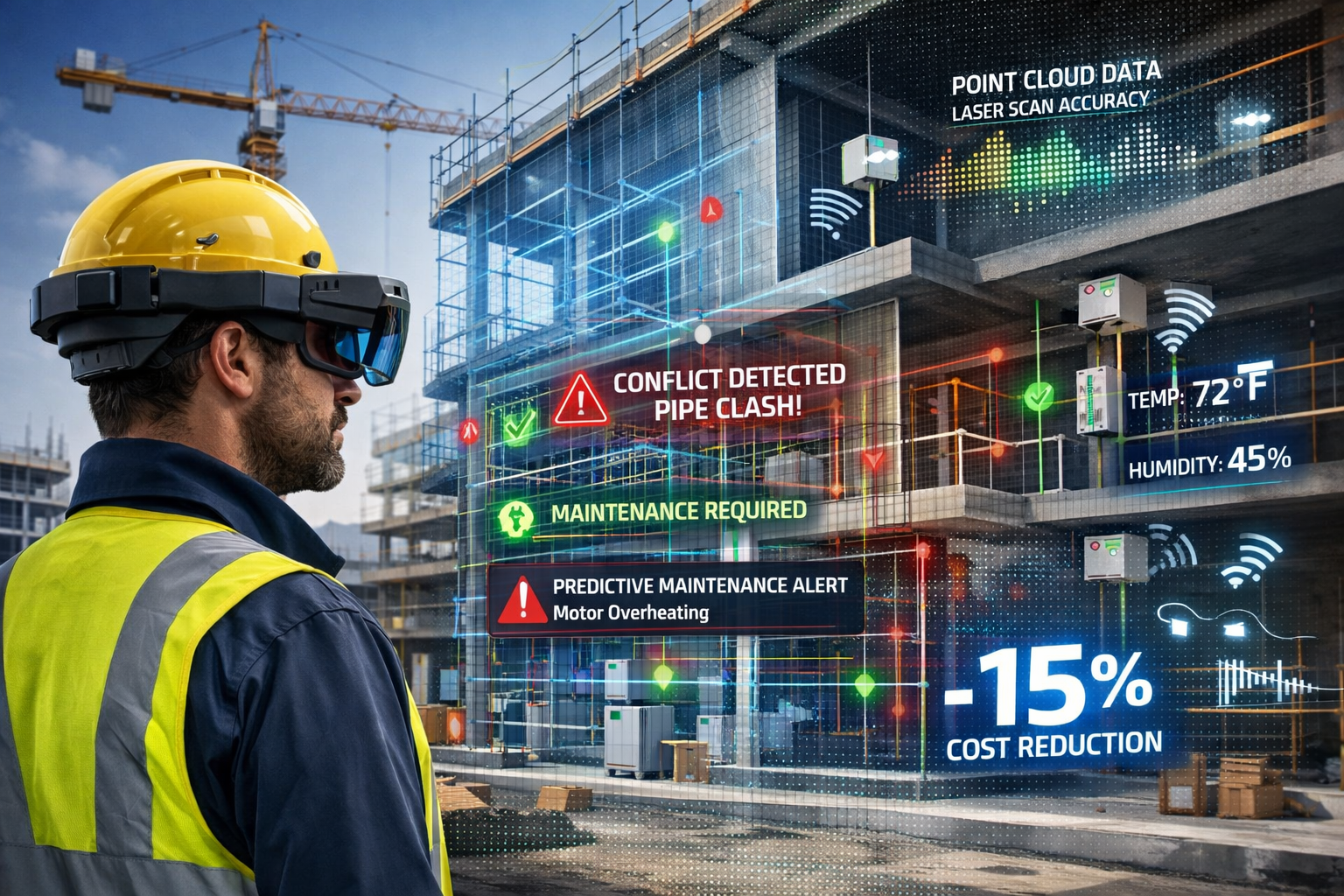
Extended reality applications in construction coordination allow workers to wear AR headsets displaying the digital twin aligned with actual sites.[1] This overlay reveals:
- Hidden infrastructure behind walls and beneath floors
- Precise installation points for electrical, plumbing, and HVAC systems
- Conflicts between planned installations and existing conditions
- Quality control checkpoints for inspection verification
Construction teams using AR coordination report 30-50% reductions in installation errors compared to traditional methods relying on paper plans. Workers see exactly where components belong in three-dimensional space rather than interpreting two-dimensional drawings.
For commercial property inspections, AR overlays enable inspectors to compare current conditions against original specifications, immediately identifying unauthorized modifications or maintenance deficiencies.
Operational Benefits: From Construction to Building Management
Reducing Operating Costs Through Predictive Maintenance
Operating costs are declining 10-20% for companies using digital twins in construction and operations through improved predictive maintenance and performance monitoring.[5] This cost reduction stems from shifting maintenance strategies from reactive repairs to predictive interventions.
Traditional building management relies on scheduled maintenance based on manufacturer recommendations or reactive repairs when equipment fails. Digital twins enable a superior approach:
Predictive Maintenance Workflow:
- Continuous monitoring of equipment performance through integrated sensors
- Anomaly detection when performance deviates from normal operating parameters
- Trend analysis identifying gradual degradation before failure occurs
- Automated alerts notifying maintenance teams of developing issues
- Prioritized scheduling based on actual condition rather than arbitrary timelines
A heating system might show gradually increasing energy consumption while maintaining temperature setpoints—an early indicator of reduced efficiency. The digital twin alerts facility managers, who schedule maintenance during a convenient period rather than experiencing an emergency failure during peak winter demand.
This approach extends equipment lifespan, reduces energy consumption, and prevents costly emergency repairs. Property managers using digital twins for monitoring surveys report significant improvements in tenant satisfaction as building systems maintain consistent performance.
Creating Living Records for Property Lifecycle Management
Real estate stakeholders now use digital twins as a "living record" of properties, which when integrated with smart building technology, can monitor data across the property lifecycle and offer real-time notifications about predictive maintenance.[4] This comprehensive documentation proves invaluable for property transactions, renovations, and long-term asset management.
Traditional property records consist of original construction documents, permit applications, and maintenance logs stored in filing cabinets or disconnected digital systems. Digital twins consolidate this information into a single, accessible platform that updates continuously.
Lifecycle Documentation Benefits:
📋 As-built verification showing actual construction versus original plans
🔧 Maintenance history linked to specific building components and systems
🏗️ Renovation records documenting modifications with before-and-after comparisons
📊 Performance data tracking energy efficiency, occupancy patterns, and system reliability
⚖️ Compliance documentation for building codes, safety regulations, and accessibility standards
When properties change ownership, digital twins transfer comprehensive knowledge that paper records cannot match. New owners immediately understand building systems, maintenance requirements, and performance characteristics. This transparency reduces due diligence periods and provides buyers with confidence in their investment.
For properties undergoing stock condition surveys, digital twins provide baseline data that makes condition assessment faster and more accurate than traditional inspection methods.
Implementation Considerations for Property Professionals
Technology Requirements and Integration Challenges
Implementing real-time 3D digital twins requires careful consideration of technology infrastructure, data management, and integration with existing systems. Property professionals must evaluate several key components:
Essential Technology Stack:
- 3D modeling platform capable of handling complex building geometries and large datasets
- IoT sensor network providing continuous monitoring of building systems and environmental conditions
- Data integration middleware connecting sensors, building management systems, and the digital twin platform
- Cloud computing infrastructure supporting real-time data processing and visualization
- Visualization interfaces including web browsers, mobile devices, VR headsets, and AR displays
The integration challenge intensifies when connecting digital twins with legacy building management systems. Older properties may require sensor retrofits and communication protocol updates to enable real-time data flow. However, the long-term benefits typically justify these initial investments.
Property professionals should consider partnering with experienced building surveyors who understand both traditional assessment methods and emerging digital twin technologies. This combination ensures accurate baseline data and effective ongoing monitoring.
Data Security and Privacy Considerations
Real-time digital twins generate and store vast quantities of data about building performance, occupancy patterns, and system operations. This information requires robust security measures to protect against unauthorized access and cyber threats.
Critical Security Measures:
🔒 Encryption of data transmission between sensors and central platforms
👤 Access controls limiting who can view or modify digital twin data
🛡️ Network segmentation isolating building control systems from general IT networks
📝 Audit logging tracking all access and modifications to digital twin systems
🔄 Regular security updates addressing emerging vulnerabilities
Privacy concerns arise when digital twins track occupancy patterns and individual behaviors within buildings. Property managers must establish clear policies about data collection, retention, and usage that comply with privacy regulations while delivering operational benefits.
Cost-Benefit Analysis for Different Property Types
The financial case for digital twin implementation varies significantly across property types. Understanding these differences helps property professionals make informed investment decisions.
Residential Properties:
Single-family homes typically don't justify comprehensive digital twin implementation due to limited complexity and lower operating costs. However, luxury properties and high-rise residential buildings benefit from enhanced marketing capabilities and operational efficiency.
Commercial Office Buildings:
Strong candidates for digital twin adoption due to complex systems, high operating costs, and tenant demands for modern amenities. The 10-20% operating cost reduction[5] generates rapid return on investment for buildings exceeding 50,000 square feet.
Industrial and Warehouse Facilities:
Excellent applications for digital twins due to critical environmental controls, complex material handling systems, and regulatory compliance requirements. Real-time monitoring prevents costly production disruptions and ensures consistent operating conditions.
Mixed-Use Developments:
Perhaps the strongest case for digital twin implementation, as these properties combine residential, commercial, and retail spaces with complex interactions between systems and diverse stakeholder needs.
Property professionals should conduct thorough cost-benefit analyses considering initial implementation costs, ongoing maintenance expenses, and projected savings from improved operations and accelerated sales cycles.
Future Developments and Emerging Trends
Photorealistic Rendering and Visual Accuracy
Photorealistic rendering has become essential for stakeholder confidence, eliminating the need for mental translation and making the implications of proposed changes "immediately apparent" through visual accuracy.[1] The gap between digital twins and physical reality continues to narrow as rendering technologies advance.
Modern rendering engines simulate:
- Material properties including reflectivity, translucency, and surface texture
- Natural lighting with accurate sun position calculations throughout the year
- Artificial lighting showing how interior and exterior fixtures illuminate spaces
- Weather effects demonstrating how rain, snow, and fog affect visibility and ambiance
- Aging and weathering projecting how materials change appearance over time
This visual fidelity proves particularly valuable for community consultations and planning approvals. When residents can see exactly how a proposed development appears from their property, feedback becomes more specific and constructive. Objections based on misunderstandings decrease, while legitimate concerns receive proper attention.
Artificial Intelligence and Automated Analysis
Artificial intelligence integration represents the next evolution in digital twin capabilities. AI algorithms analyze the continuous data streams from sensors and building systems, identifying patterns and opportunities that human observers might miss.
AI-Enhanced Capabilities:
🤖 Automated optimization of HVAC systems based on occupancy patterns and weather forecasts
📈 Predictive analytics forecasting equipment failures weeks or months in advance
💡 Energy efficiency recommendations identifying specific actions to reduce consumption
🔍 Anomaly detection flagging unusual patterns that might indicate problems
📊 Performance benchmarking comparing building performance against similar properties
These AI capabilities transform digital twins from passive monitoring tools into active management partners that continuously seek improvement opportunities.
Integration with Smart City Infrastructure
2026 is described as a "pivotal year" for digital twins, with the technology moving from experimentation into everyday building operations.[7] This maturation coincides with broader smart city initiatives that create opportunities for property-level digital twins to connect with municipal infrastructure.
Integrated smart city ecosystems enable:
- Traffic management systems coordinating with building occupancy data to optimize signal timing
- Emergency services accessing building digital twins for faster, safer responses
- Utility networks balancing energy distribution based on real-time building demand
- Environmental monitoring tracking air quality, noise levels, and other factors across neighborhoods
- Public transportation adjusting service frequency based on building occupancy patterns
Property developers who design digital twins with smart city integration capabilities position their buildings for long-term relevance as urban infrastructure evolves.
Real-World Applications and Case Studies
Urban Planning and Community Development
Municipal planners increasingly rely on digital twins to evaluate development proposals and test urban design interventions. Cities can simulate how new bike lane configurations, revised traffic signal timing, or pedestrian zone expansions affect overall flow before implementation.[1]
This capability proves especially valuable for controversial projects where community opposition stems from uncertainty about impacts. Digital twins provide objective data that moves discussions from speculation to evidence-based evaluation.
Planners can demonstrate:
- Traffic impacts showing actual changes to congestion and travel times
- Pedestrian safety improvements from proposed crosswalk and sidewalk modifications
- Economic effects modeling how development changes affect property values and tax revenue
- Environmental benefits quantifying reductions in vehicle emissions and energy consumption
Property Development and Sales Optimization
Forward-thinking developers use digital twins throughout the entire development lifecycle, from initial concept through construction and sales to ongoing operations. This comprehensive approach maximizes return on investment while reducing risk.
Development Phase Applications:
During planning, digital twins enable rapid iteration of design concepts. Architects test different building orientations, massing options, and facade treatments to optimize solar gain, views, and aesthetic appeal. Stakeholders review these options through immersive VR experiences rather than abstract drawings.
Construction Phase Applications:
Digital twins serve as coordination platforms where general contractors, subcontractors, and suppliers verify that their work aligns with overall project requirements. AR-enabled quality control reduces defects and rework costs.
Sales and Marketing Phase Applications:
Buyers explore properties before construction completion, customizing finishes and visualizing furniture arrangements. This engagement accelerates sales and provides developers with validated demand data that reduces market risk.[1]
Operations Phase Applications:
Post-construction, digital twins transition to facility management tools that optimize building performance, reduce operating costs, and maintain comprehensive property records for future transactions.
Facility Management and Maintenance Optimization
Property managers leveraging digital twins report transformative improvements in operational efficiency and tenant satisfaction. The shift from reactive to predictive maintenance fundamentally changes how buildings operate.
A commercial property manager might receive an alert that a rooftop air handling unit shows gradual performance degradation. The digital twin provides:
- Equipment history including installation date, previous maintenance, and performance trends
- Manufacturer specifications for normal operating parameters
- Sensor data showing exactly which metrics deviate from expected values
- Maintenance recommendations based on similar situations in other buildings
- Cost projections comparing repair versus replacement options
This comprehensive information enables informed decisions about maintenance timing, budget allocation, and long-term equipment planning. Tenants experience fewer disruptions, energy costs decrease, and equipment lasts longer.
Overcoming Adoption Barriers
Addressing Skill Gaps and Training Needs
The transition to digital twin-enabled property management requires new skills that many property professionals haven't yet developed. Organizations must invest in training and potentially hire specialists with expertise in data analysis, 3D modeling, and IoT systems.
Essential Skill Development Areas:
- 3D visualization understanding how to navigate and interpret digital twin interfaces
- Data analysis recognizing patterns and anomalies in building performance data
- Sensor technology knowing how IoT devices collect and transmit information
- System integration connecting digital twins with existing building management platforms
- Stakeholder communication presenting digital twin insights to non-technical audiences
Progressive organizations establish internal training programs and partner with technology vendors who provide comprehensive onboarding support. This investment in human capital proves as important as the technology itself.
Managing Change Resistance
Property professionals accustomed to traditional methods may resist digital twin adoption, viewing it as unnecessary complexity or questioning return on investment. Successful implementation requires change management strategies that address these concerns.
Effective Change Management Approaches:
✅ Demonstrate quick wins by implementing digital twins for specific, high-value applications before expanding
✅ Involve skeptics in pilot projects so they experience benefits firsthand
✅ Share success metrics showing measurable improvements in costs, efficiency, and stakeholder satisfaction
✅ Provide adequate support ensuring team members feel confident using new tools
✅ Celebrate achievements recognizing individuals and teams who effectively leverage digital twins
Organizations that treat digital twin adoption as a cultural transformation rather than merely a technology upgrade achieve better long-term results.
Establishing Industry Standards and Best Practices
The digital twin industry continues maturing, with professional organizations developing standards for data formats, interoperability, and quality assurance. Property professionals should engage with these standardization efforts to ensure their implementations remain compatible with evolving best practices.
Key standards development areas include:
- Data schemas defining how building information is structured and shared
- Interoperability protocols enabling different digital twin platforms to exchange information
- Security requirements establishing minimum protections for building data
- Accuracy specifications determining acceptable tolerances for spatial and performance data
- Lifecycle management defining how digital twins transition between development phases and ownership changes
Participation in industry associations and standards bodies helps property professionals stay informed about emerging requirements and influence standards development to reflect practical needs.
Conclusion: Embracing the Digital Twin Revolution
Real-Time 3D Digital Twins: Transforming Property Visualization and Decision-Making in 2026 represents far more than a technological novelty—it fundamentally reshapes how property professionals plan, develop, market, and manage buildings throughout their entire lifecycle. The convergence of IoT sensors, point cloud validation, artificial intelligence, and immersive visualization creates capabilities that were impossible just a few years ago.
The evidence clearly demonstrates substantial benefits: 10-20% operating cost reductions,[5] accelerated sales cycles, improved stakeholder engagement, and evidence-based decision-making that reduces risk and enhances outcomes. As 2026 emerges as a pivotal year for digital twin adoption,[7] property professionals face a critical choice: embrace this transformation or risk competitive disadvantage as the industry evolves.
Actionable Next Steps
For property professionals ready to explore digital twin implementation:
-
Assess current capabilities by evaluating existing building management systems, data infrastructure, and team skills to identify gaps that require attention
-
Start with pilot projects focusing on specific, high-value applications such as pre-sales visualization for new developments or predictive maintenance for critical building systems
-
Engage qualified partners including experienced property surveyors who understand both traditional assessment methods and digital twin technologies
-
Invest in training ensuring team members develop skills needed to effectively leverage digital twin platforms and interpret building performance data
-
Plan for integration considering how digital twins will connect with existing systems and support long-term property management objectives
-
Measure results establishing clear metrics for success including cost savings, time reductions, and stakeholder satisfaction improvements
-
Stay informed about emerging standards, best practices, and technological advances that will shape digital twin evolution
The transformation from static blueprints to living, data-driven replicas marks a fundamental shift in property development and management. Organizations that embrace this change position themselves for success in an increasingly competitive, technology-driven industry. Those that delay risk falling behind as digital twins become the expected standard rather than an innovative advantage.
The future of property visualization and decision-making has arrived. The question isn't whether to adopt digital twin technology, but how quickly and effectively organizations can implement these powerful tools to deliver superior outcomes for stakeholders, tenants, and communities.
References
[1] Unlocking The Future Of Urban Planning With 3d Digital Twins – https://www.thedigitalbunch.com/blog/unlocking-the-future-of-urban-planning-with-3d-digital-twins
[2] Immersive Digital Twins In Real Estate – https://www.cuubstudio.com/blog/immersive-digital-twins-in-real-estate/
[4] Real Estate – https://matterport.com/learn/digital-twin/real-estate
[5] Virtual Design Construction Vdc Trends 2026 Ai Digital Twins Technology – https://www.clearedge3d.com/blogs/virtual-design-construction-vdc-trends-2026-ai-digital-twins-technology/
[6] Real Time 3d Digital Twins For Property Development Interactive Models That Update Live – https://nottinghillsurveyors.com/blog/real-time-3d-digital-twins-for-property-development-interactive-models-that-update-live
[7] What Do Digital Twins Hold For 2026 From Visualisation To Smart Building Operations – https://www.twinview.com/insights/what-do-digital-twins-hold-for-2026-from-visualisation-to-smart-building-operations